Shining a Light
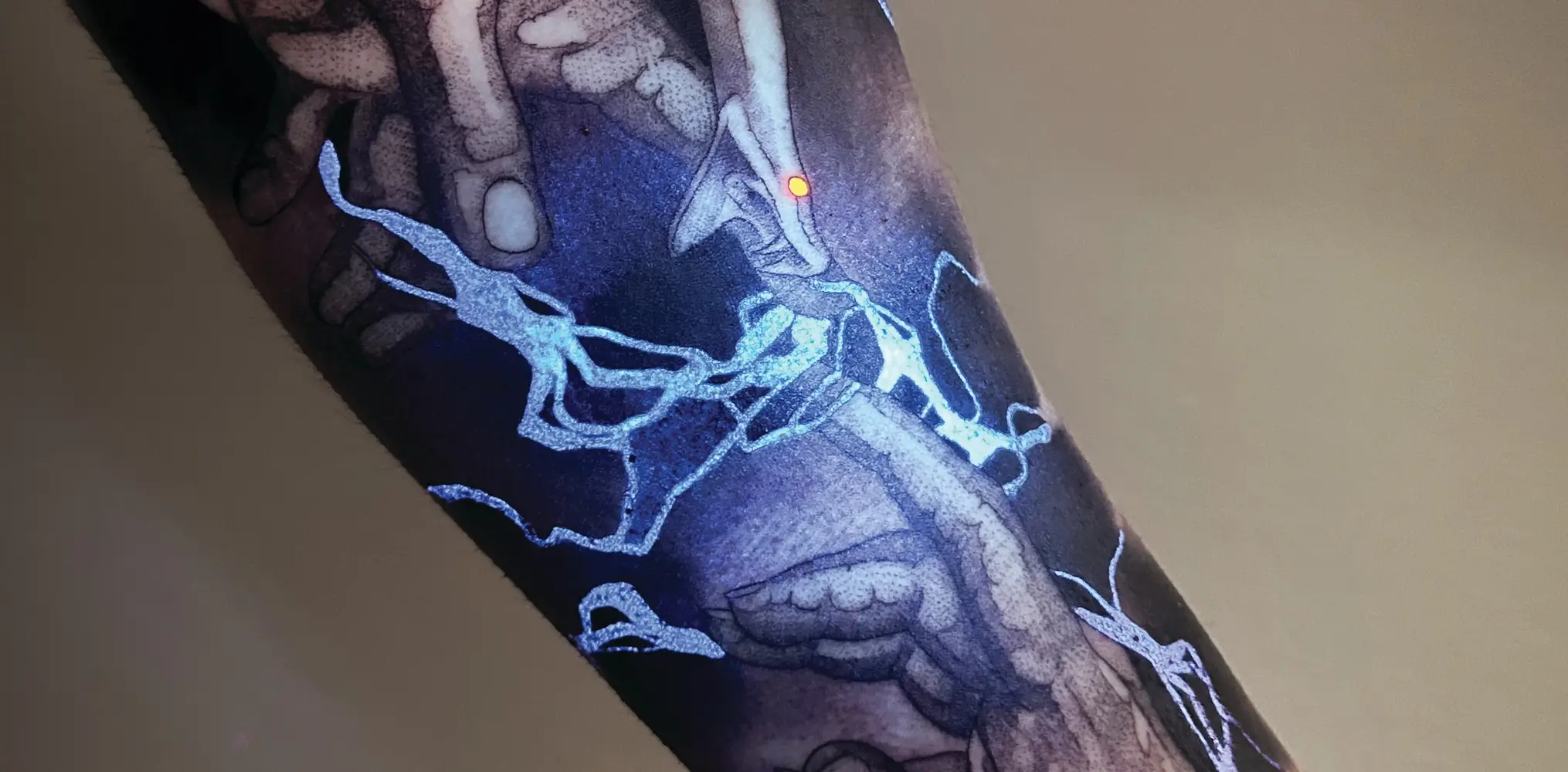
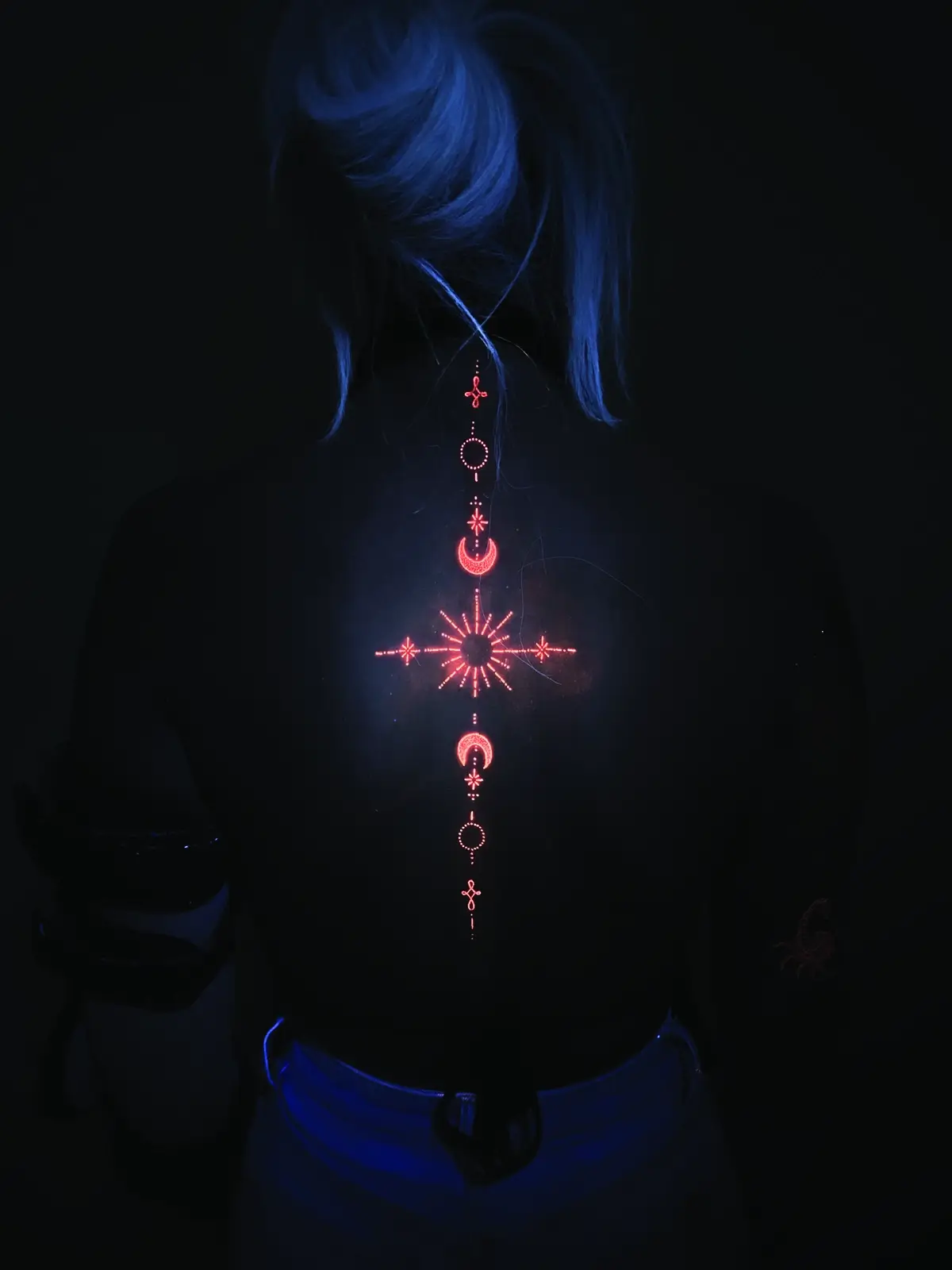
Glow-in-the-dark tattoos may have been a fad, but the technology behind — and ongoing interest in — UV tattoos is pushing tattooing ink forward.
To heavily paraphrase that one Ben Franklin quote, in the world of tattooing, nothing is certain except ink and fads. Fine-line is in; glow-in-the-dark tattoos are out. Even UV tattoos, the much broader group of styles to which glow-in-the-dark tattoos belong, were highly popular a decade ago before waning. Now, though, they’re back and better than ever.
Case in point is Jonny Hall, the highly popular Sydney-based artist innovating the “UVealism” style in which UV inks comprise a substantial part of highly realistic pieces. He innovated this style in early 2020, just over four years after he first started tattooing. Although some people were initially skeptical, his pivot paid off.
“People felt obligated to message me when I first started my journey and tell me that UV was a fad and it was tacky and dangerous,” Hall says. Now, he’s at over 570,000 Instagram followers and booked out four to five months in advance. “I get a healthy amount of people flying internationally for my work,” he says. “People just think it’s cool from what they tell me.”
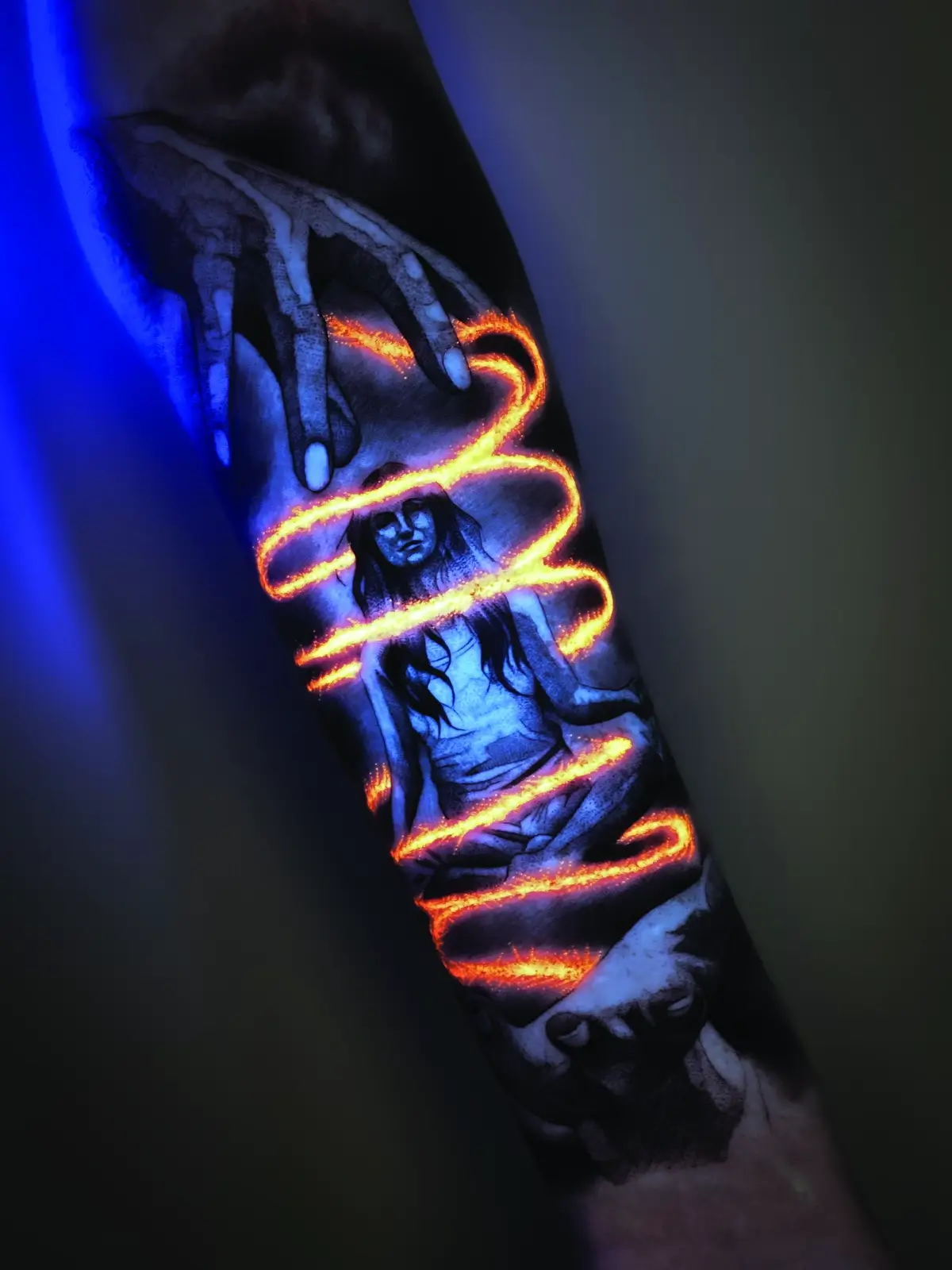
UV tattoos aren’t just experiencing a renaissance. They’re here to stay, and the reasons why people seek them out are as universal as with other tattoo styles.
“The most common reason is originality and the desire to make an impression,” says tattoo artist Julia Penza, who began working with UV inks at the start of her career. “Since this technique is still relatively uncommon, it tends to create a strong impact on people, especially when seen in person.
“Another reason,” she adds, “is the desire to have a tattoo created in memory of someone, or a piece with a deeply personal meaning — something like an amulet that remains hidden from other people’s eyes.” Since some of these tattoos’ features only display under very direct ultraviolet light, they’re like a well-kept secret among the person who gets them, their tattoo artist, and anyone else they choose to let in. “These are very intimate tattoos,” Penza says, “made primarily for the wearer rather than for public display.”
This poignancy draws people of all ages and genders to this tattooing style. “I’ve had girls and boys who have just turned 18, who want the first small piece to test the waters, to 50-, 60-, 70-year-old clients hit me up,” Hall says. “I’ve had bikers message me and ask me what I can do with their 1% symbol, if I can add UV to that.”
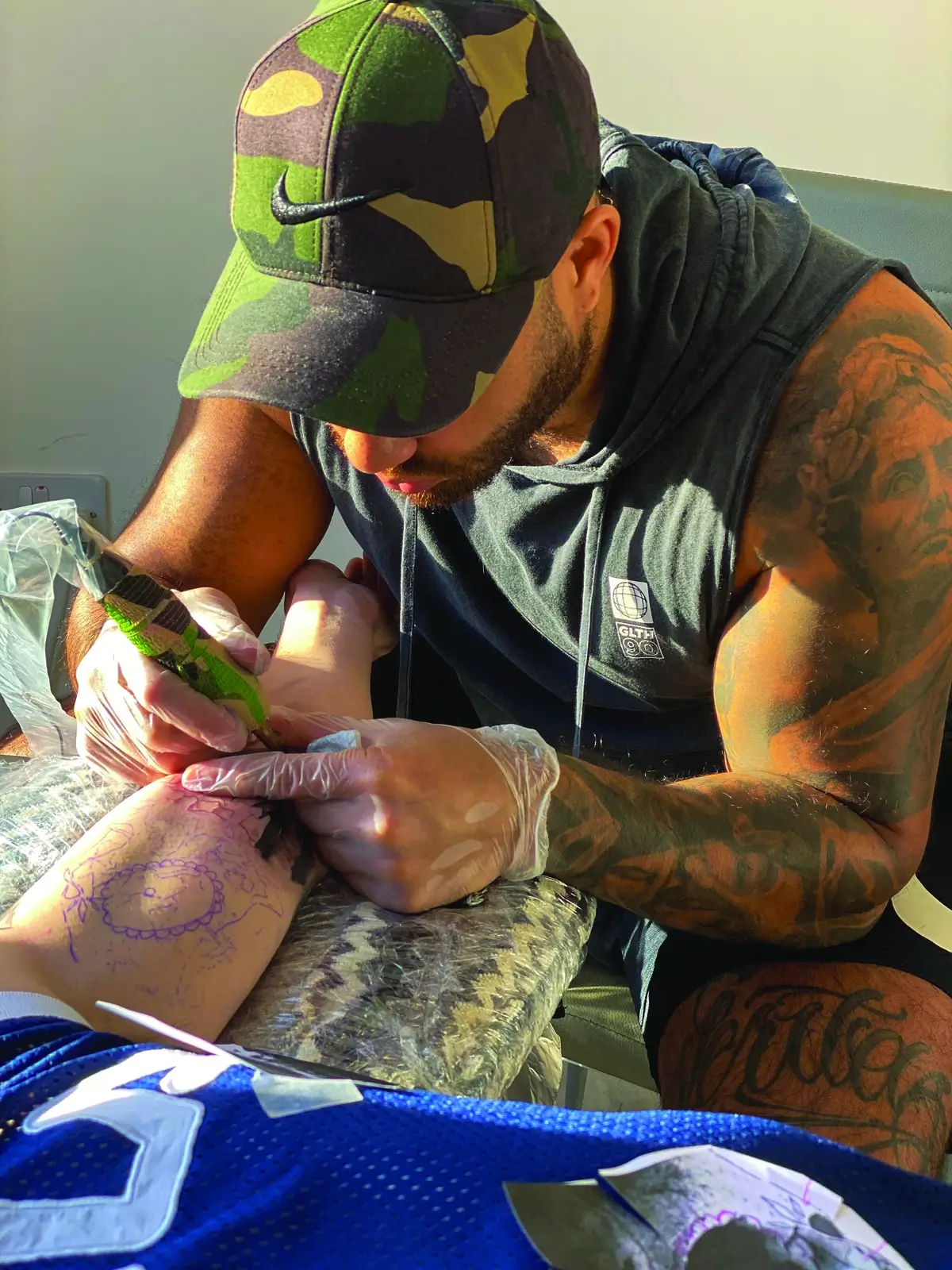
“I get a Healthy amount of people flying internationally for my work. People just think it’s cool from what they tell me.” – Jonny Hall
UV Protections
Although there’s a widespread desire for UV tattoos, there might be even greater demand were there no safety concerns around the phosphorescent and fluorescent inks that powered the bygone glow-in-the-dark fad. Most UV tattoo artists disavow the former ink and work with the latter.
“For a tattoo to glow in complete darkness, a phosphorescent pigment would be required,” Penza says. “However, such substances are unstable and unsafe for the human body, which is why they are not used in professional tattoo practice.”
“People have a misconception that fluorescence must be dangerous,” Hall says, adding that the phenomenon of fluorescence occurs throughout nature. But Dr. Carson Bruns, co-founder, president, and chief science officer at the nanotechnology and bioscience company HYPRSKN — which is known for Magic Ink, an emerging UV-based ink that’s rewritable, erasable, and reprogrammable — offers a different perspective.
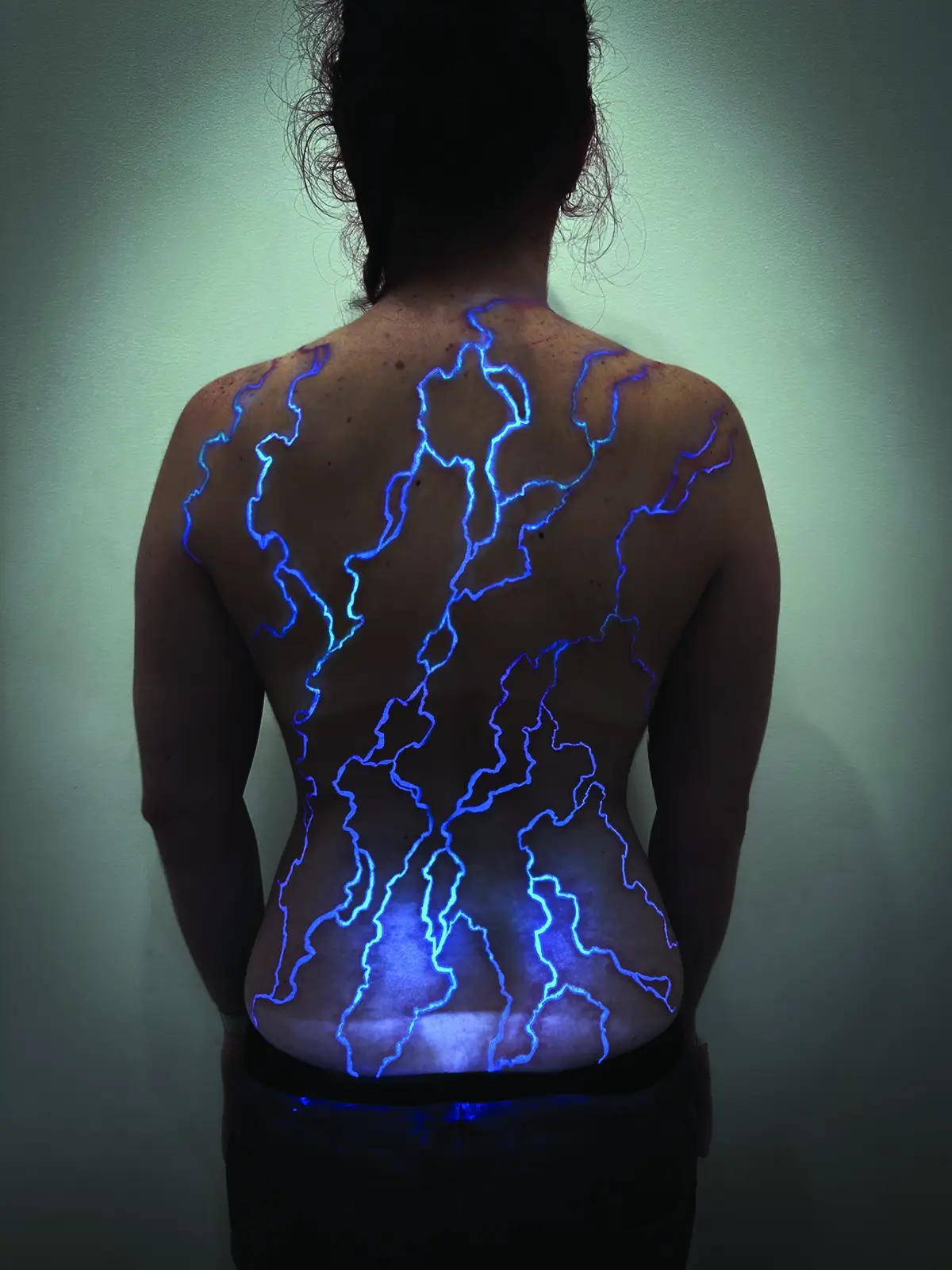
“Fluorescent versus phosphorescent, I wouldn’t necessarily say one’s safe and one’s unsafe, or one’s more safe than the other,” Bruns says. “I don’t think there’s enough rigorous scientific testing to really decide one way or another which, if any, are safe or how safe they are.”
Bruns doesn’t mean to suggest that getting a UV tattoo or any kind of ink is dangerous. If anything, he says, as an abundance of people continue to get tattoos, including UV pieces, few continue to report significant adverse effects.
“Even though there’s this lack of (regulatory) oversight, and even though there’s very little safety testing for any particular pigment that you’ll find in any given tattoo ink, tattoos as a whole have this very long history of being applied quite safely,” Bruns says. “It’s pretty rare for something bad to happen after you get a tattoo, and even when it does, which might be 1 to 2% of the time, it’s always a non-life-threatening thing, and it’s usually not the pigment’s fault. It’s usually because of a bad practice or poorly sterilized ink or something like that.”
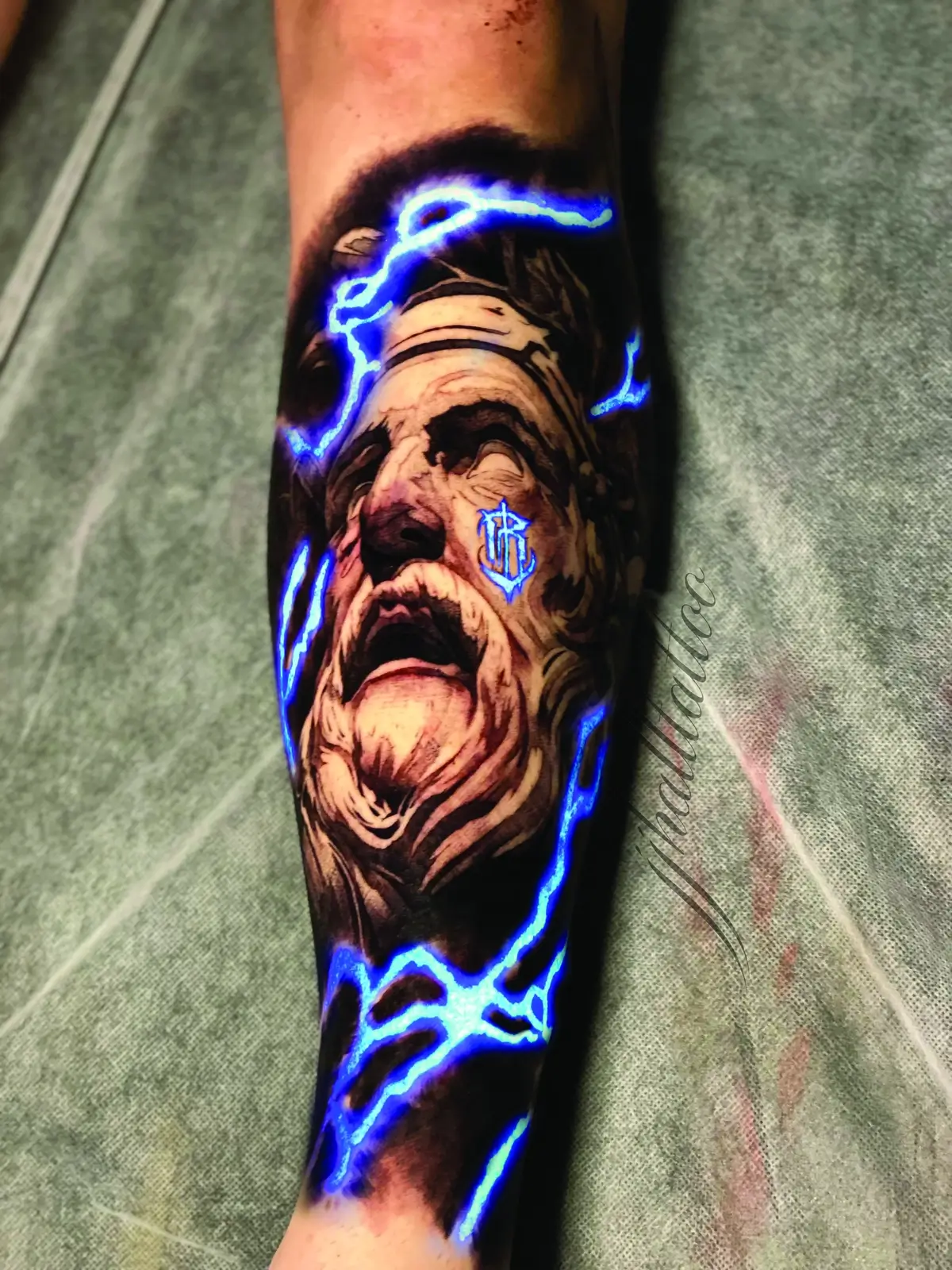
Magic Ink, in particular, is exceptionally safe since it’s the first tattoo ink made from pharmaceutical-grade, medical-grade, implant-grade materials. Bruns says the photochromic materials in the ink have gone through rigorous safety testing and a dermatological clinical trial. The word “photochromic,” in particular, explains this futuristic UV tattooing technology’s unparalleled abilities.
“(It means) an organic dye that, when it absorbs the right color of UV light, (its) molecular structure undergoes this sort of rearrangement,” Bruns explains. “It almost reacts with it, in a way, and changes shape a little bit and changes properties, which is what makes it change color.
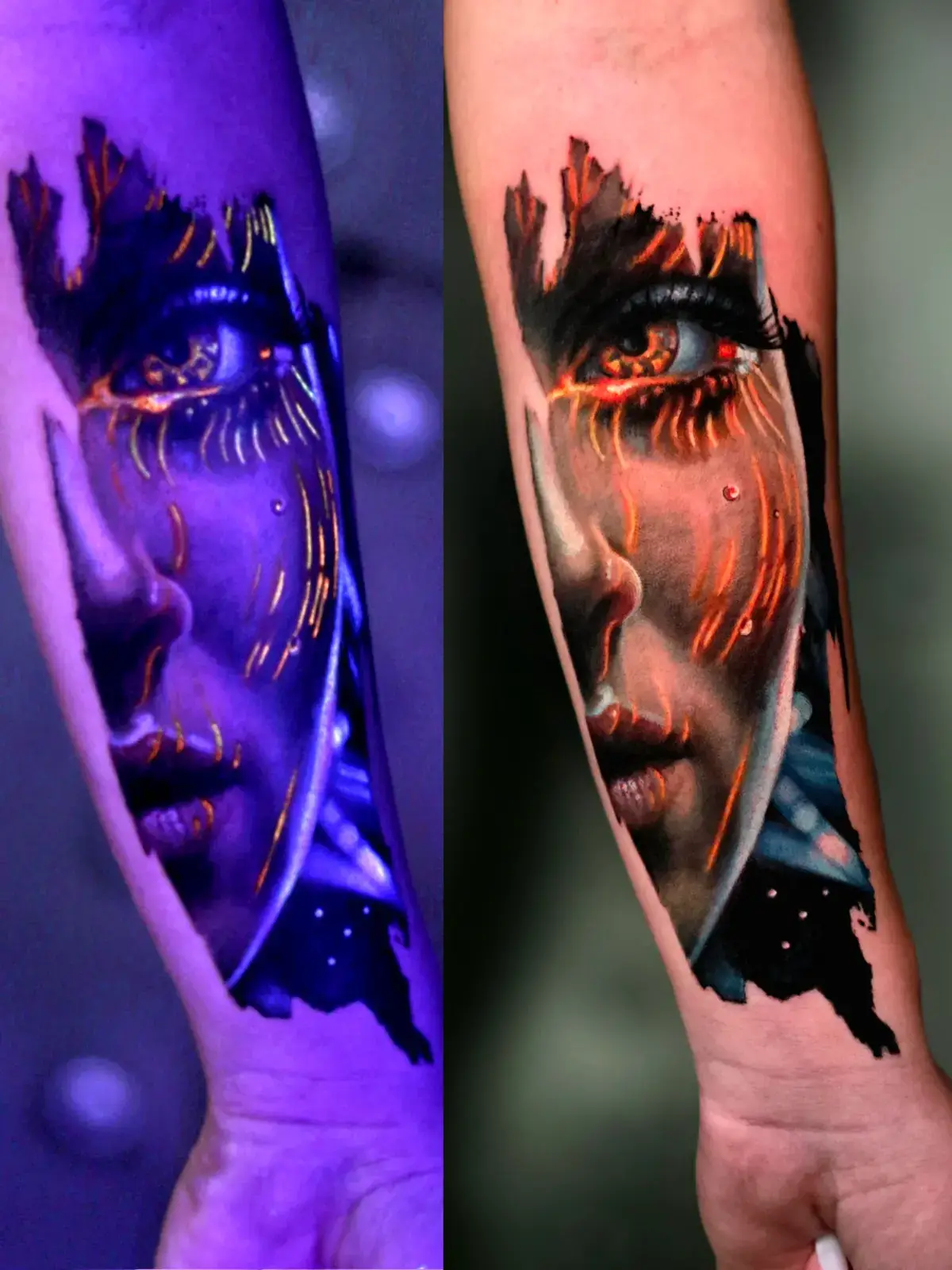
“Magic Ink doesn’t glow at all in UV light, but it does change color under UV light,” he adds. With other inks, he explains, “as soon as you remove the UV light, they’re going to stop glowing almost right away. With Magic Ink, you remove the UV light, and it’s going to continue to be the color that it changed to until you’re ready to turn it off yourself with a bright white light or if you go out in the sunshine.”
Ink That Endures
From the jaw-dropping shapeshifting pieces possible with Magic Ink to the stationary yet still breathtaking art made with more widely used inks, it’s clear that UV tattooing technology is a big reason why this style is here to stay. So too is the everyday person’s interest in these tattoos.
“If more public spaces were equipped with UV lighting, the number of UV tattoos would definitely increase,” Penza says. “And if tattoos that truly glowed in complete darkness ever became possible and safe, the effect would undoubtedly be explosive.”
Hall says that his inbox is blowing up with questions from other tattoo artists asking him how they can get into UVealism. “People thought it was important to tell me how dangerous (UV ink) was and (that I) shouldn’t be using it,” he says of how people reacted to his past work. “Now, I’ve had artists from top shows, art shows at Ink Masters, slip in my DMs and say, ‘What ink are you using?’”
Bruns agrees that UV tattoos are of both the present and future. “As a scientist, I’m not that excited about fluorescent or phosphorescent inks just because (they’re) almost old news, but I do think that people are making really cool art with it and that they’re going to continue (doing so),” he says. He also envisions a world in which Magic Ink becomes just as commonplace: “I hope that, in 20 years, people will be like, ‘Oh, that’s an old thing that’s kind of been around for a long time. But we’re still doing new stuff with it.’”
Editor's Picks

Aging Beautifully
The mainstreaming of tattoos has ended the longtime stigma around having ink in older age.
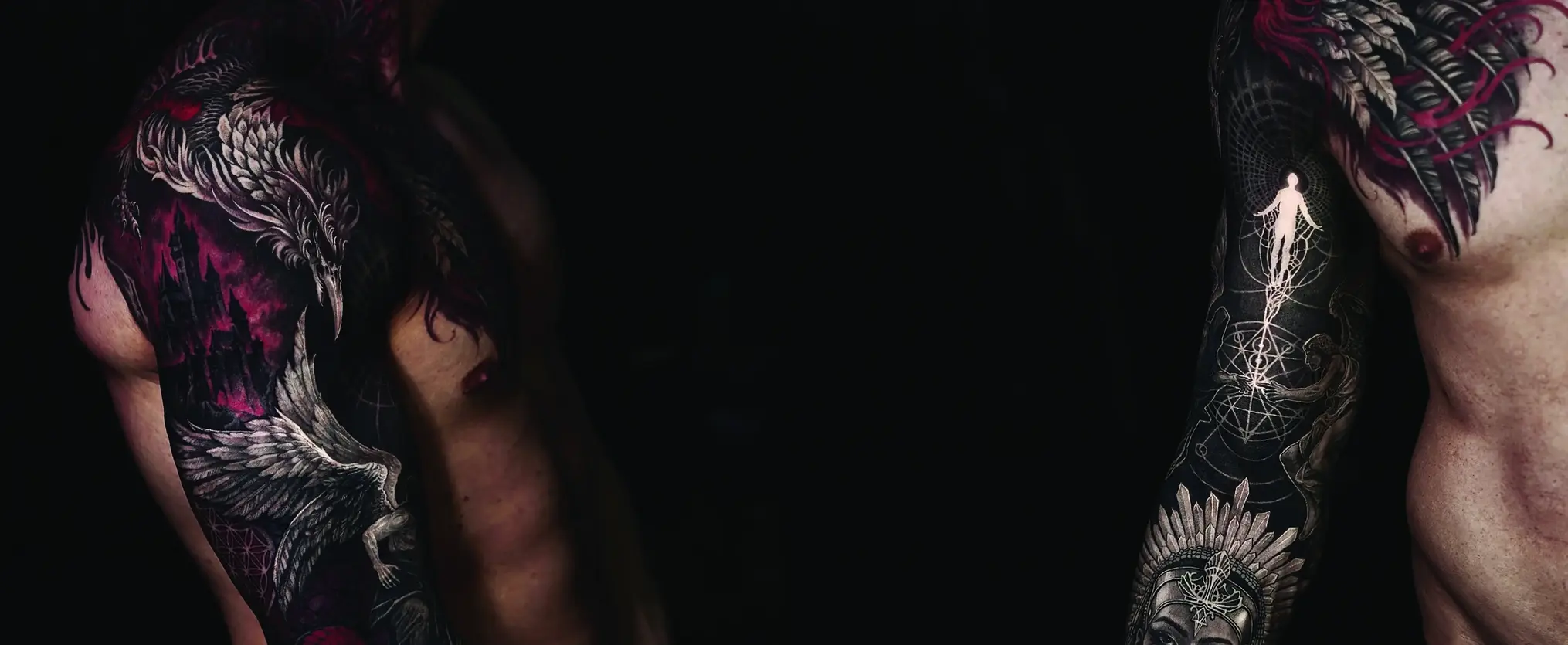
The Art of Perseverance
Not even war can stop Ukrainian artist Dmitriy Tkach from designing tattoos of breathtaking size and detail.

More From Art
Eminem Tattoos Every Fan Should See
October 17, 2026
Must-See Zombie Tattoos for Spooky Season
October 15, 2026
Inked Tattoos Of the Week
October 12, 2026
Must See Harry Potter and the Sorcerer’s Stone Tattoos
October 7, 2026