Inked Mag Staff
May 12th, 2026
This Artist Is Engineering Tattoos That Can’t Be Replicated
In a space driven by trends, Nakkab’s work is built to resist repetition
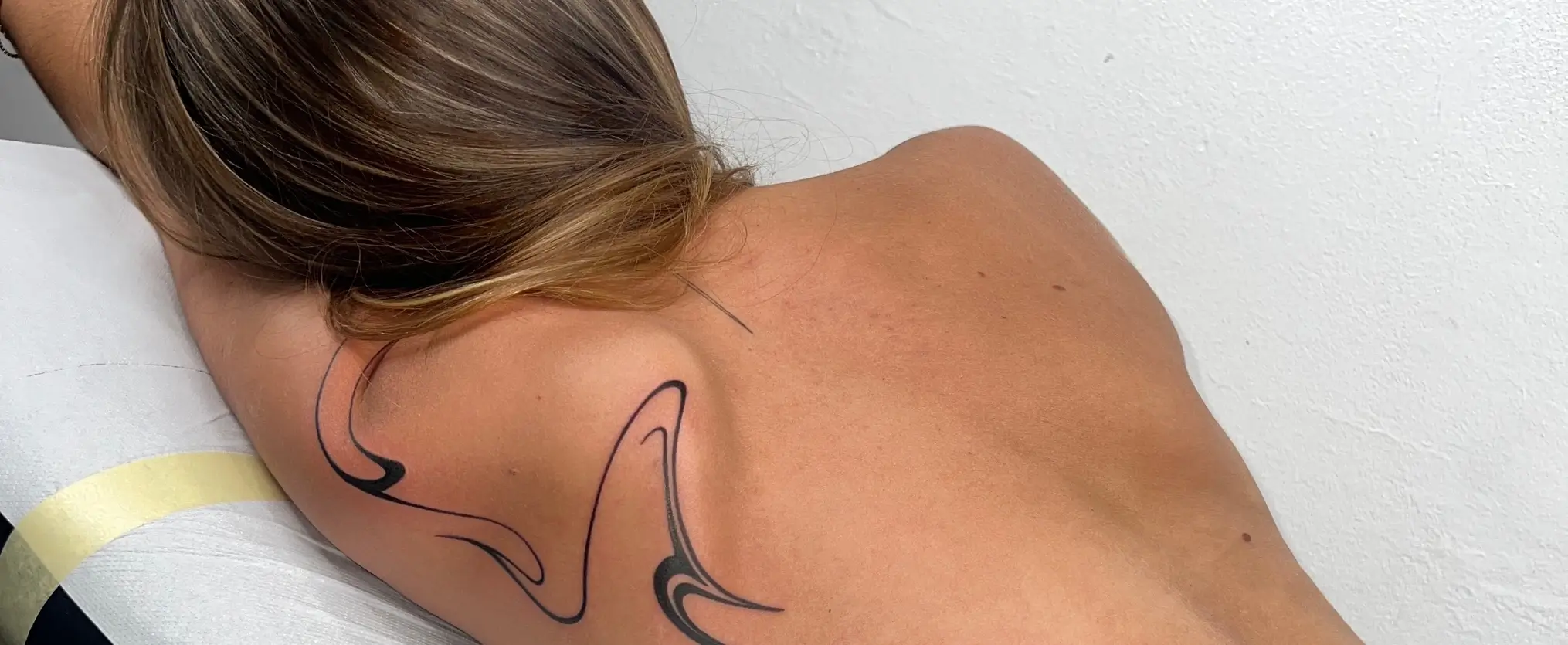
There’s a difference between tattoos that look spontaneous and tattoos that only appear that way. The fluid linework coming out of Nakkab’s studio is often mistaken for freehand, but it’s built through a one-of-a-kind system that isn’t improvised and doesn’t repeat.
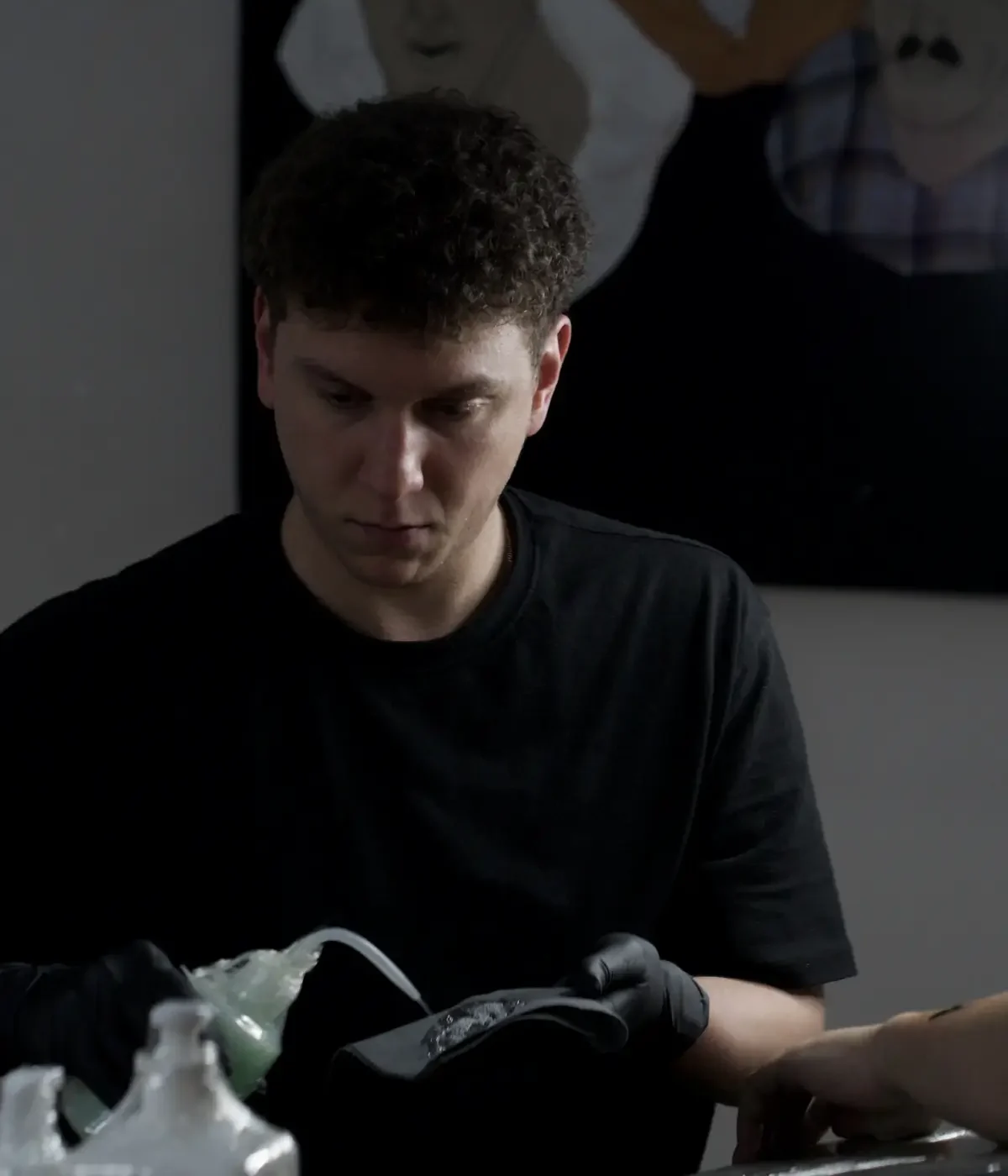
Nakkab didn’t arrive at that process immediately. Like most artists, his early years were spent taking on whatever came through the door. From 2015 through 2019, he worked across styles, moving through realism, illustrative work, and florals, building technical control while trying to figure out what actually felt like his.
The shift came when a client gave him full control on a neck and shoulder piece. What came out of that session wasn’t just a new direction, it made something clear. He kept coming back to linework, movement, and designs that followed the body instead of sitting on top of it.
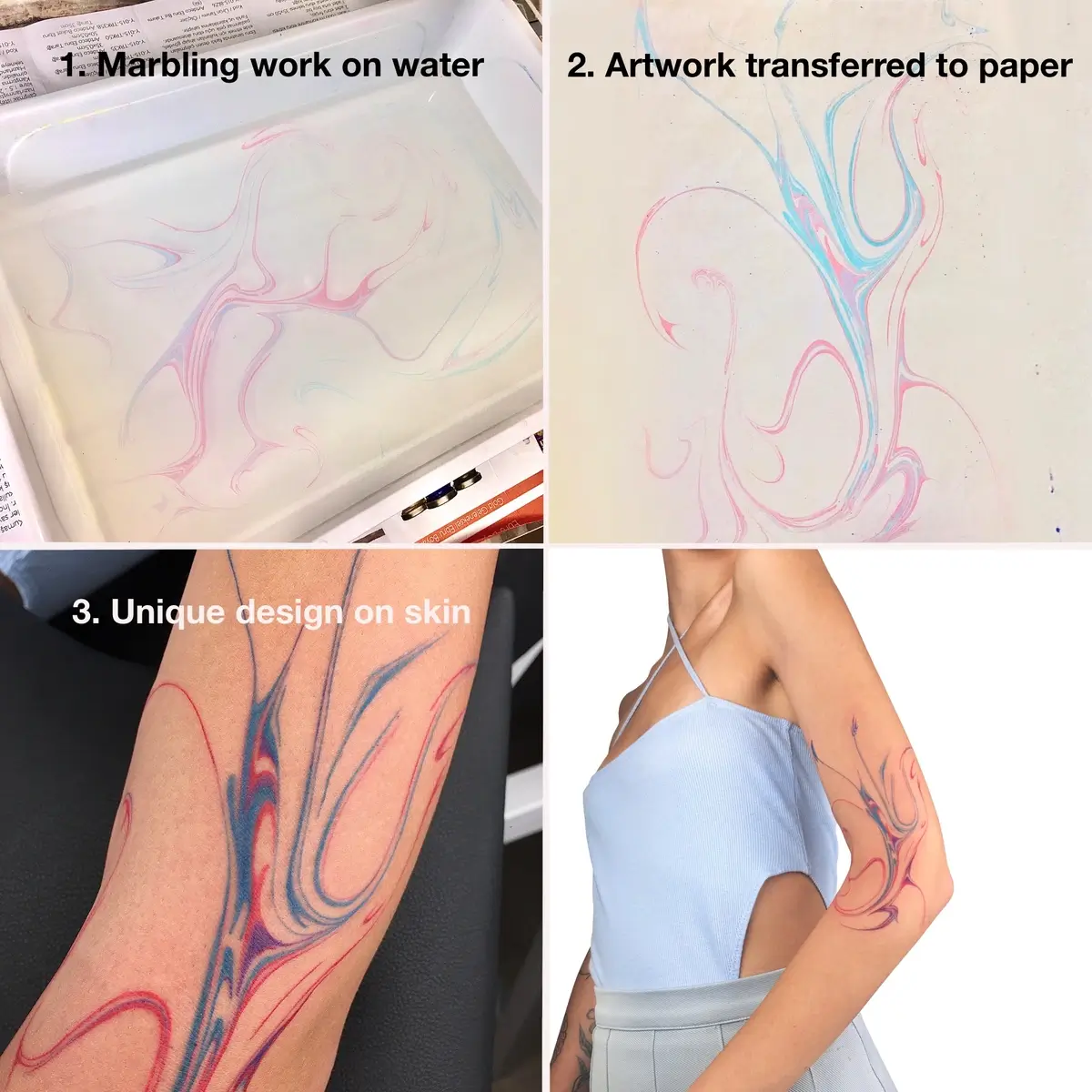
That moment became the foundation for a unique creative process called Sernakkab, a technique that merges traditional Turkish marbling, known as Ebru, with tattooing. It is a new approach that Nakkab introduced to the tattoo world in 2019, built around a process that prioritizes structure, movement, and individuality over repetition. The method is direct. He creates physical marbling pieces first, scans them, and pulls usable forms from them. From there, shapes are selected and adjusted to match a client’s anatomy, down to how the design will sit when the body is relaxed versus when it is in motion.
“I approach it like an engineer,” Nakkab says. “The lines only make sense when they’re on the body they were designed for.”
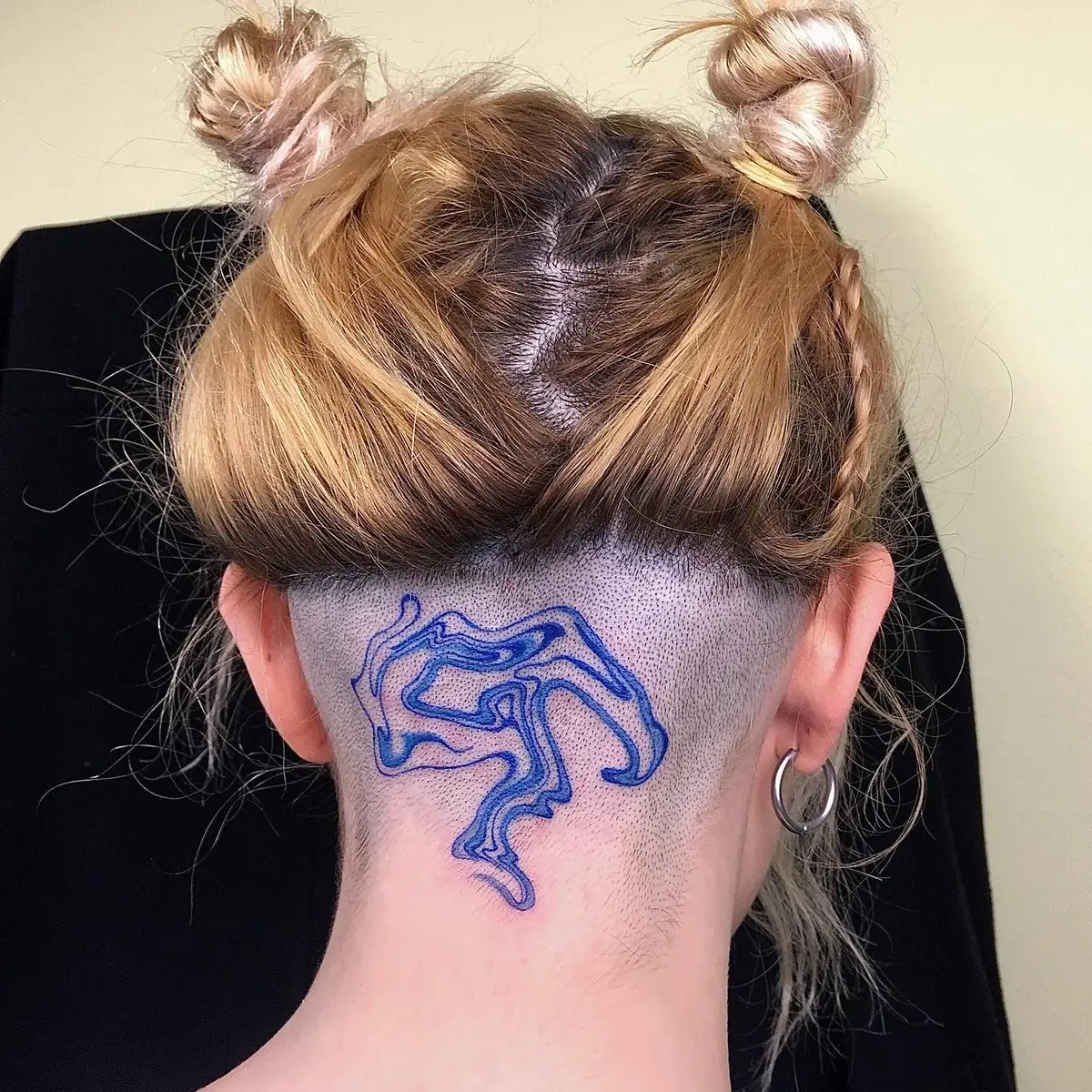
That’s where the work separates itself. On paper, many of his designs look incomplete or purely abstract. Once they’re on the body, they settle. Lines follow muscle groups, shift with movement, and lock into place in a way that feels intentional, not decorative.
The process starts before the appointment, but not in a generic way. Clients send photos of the area in a relaxed position, along with a loose direction on mood, color, and placement. From there, Nakkab builds the design on his own and sends it ahead of time. By the time they meet, the structure is already set for that specific body.
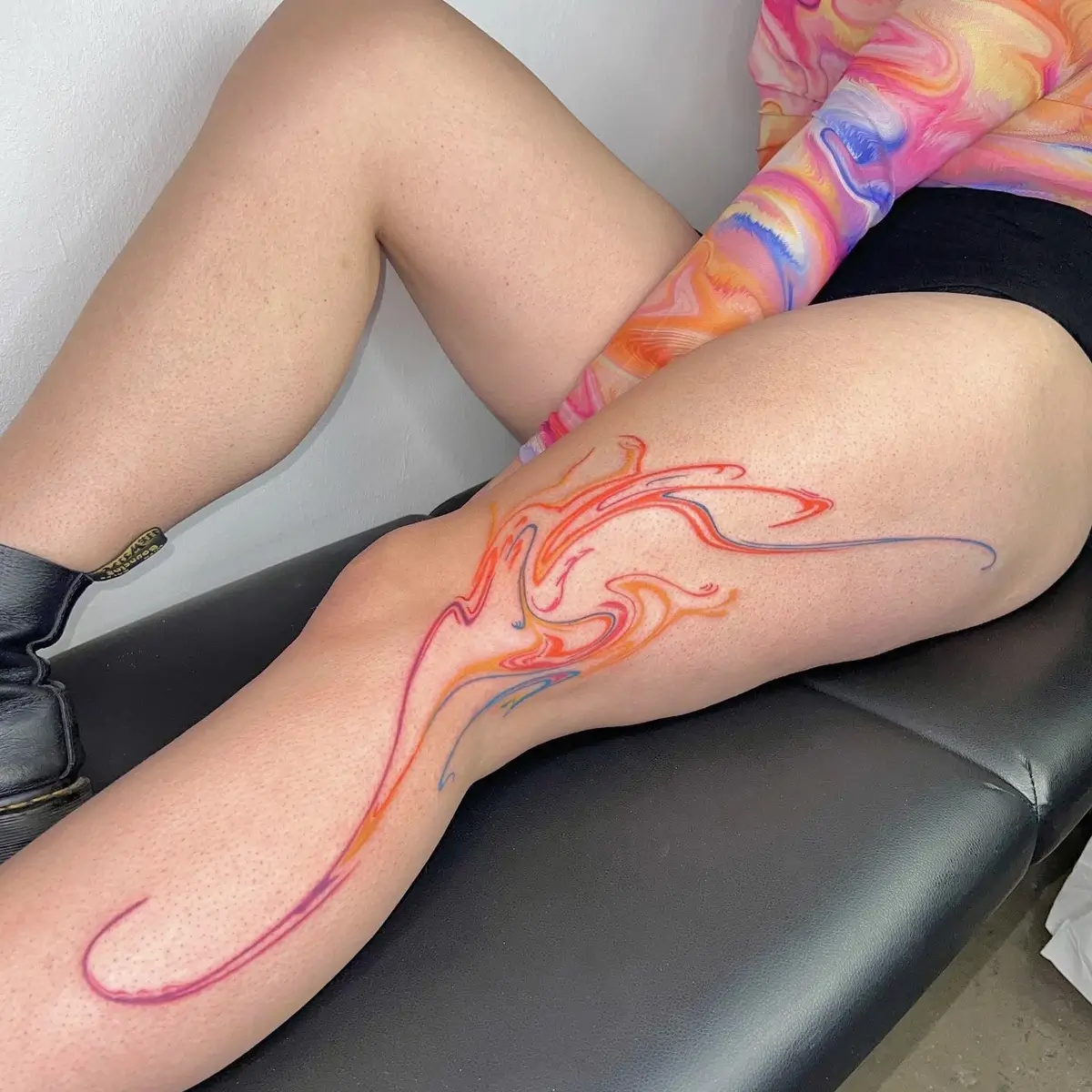
There’s very little room to improvise once it gets to skin. Minor adjustments can happen after the stencil goes on, but the focus is execution. The linework has to be clean and consistent from start to finish. In this style, there’s nothing to hide behind, and no easy way to fix it if it’s off.
Nakkab first encountered Ebru while studying at a fine arts academy in Istanbul. What started as a class requirement turned into something more. The material doesn’t behave the way most mediums do. Even experienced artists have to adjust constantly depending on the density of the liquid, the pigment, and how everything moves in the moment.
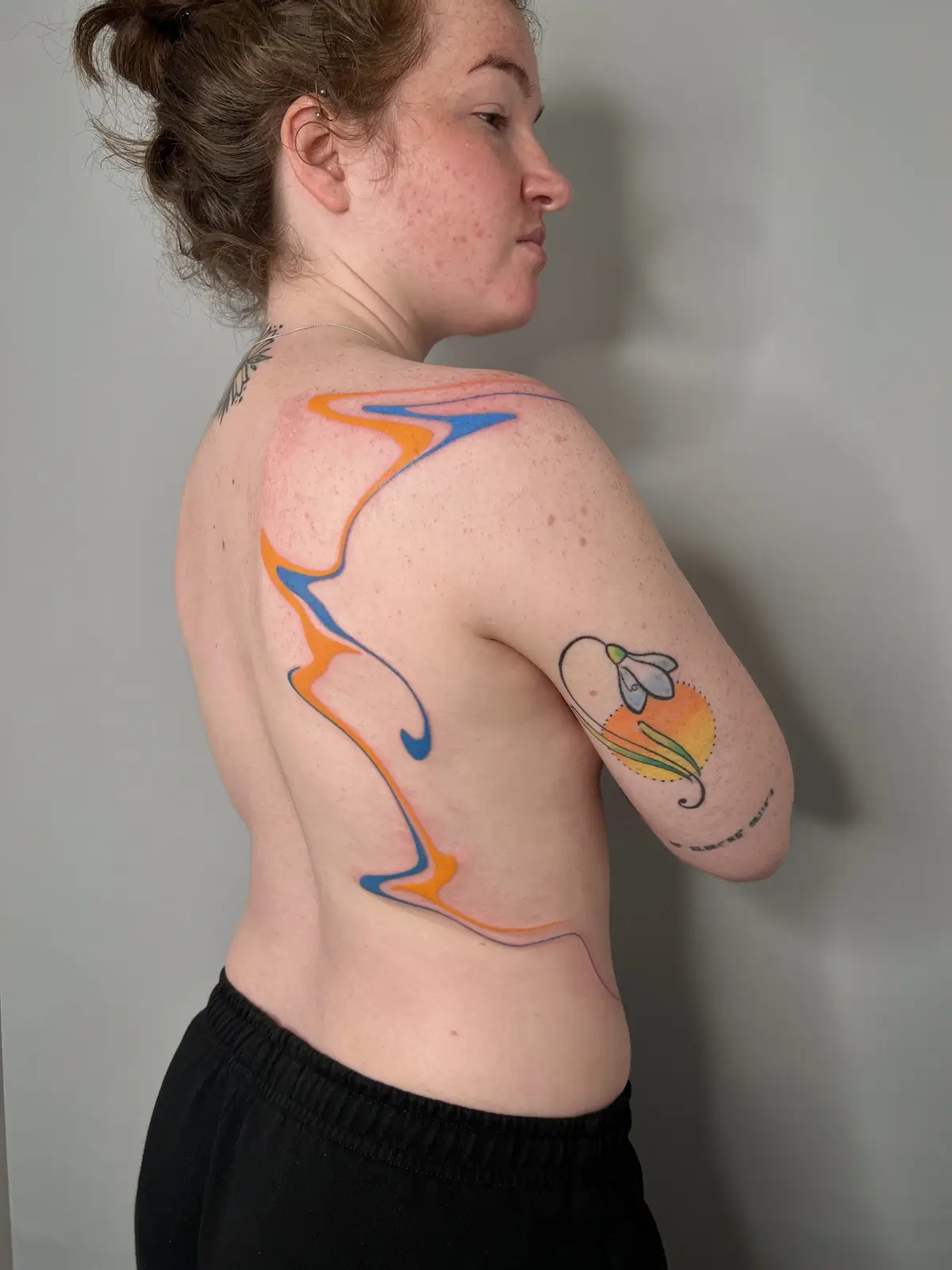
He carried that into tattooing by treating marbling as a starting point, not a finished image. The forms come from the marbling, but the structure comes from the body. Without that second step, the work doesn’t land the same way.
Over time, the approach has built its own recognition. In cities like Istanbul and Berlin, where he was previously based, people began recognizing the work in public without context. The style became specific enough that even similar-looking tattoos started getting traced back to him.
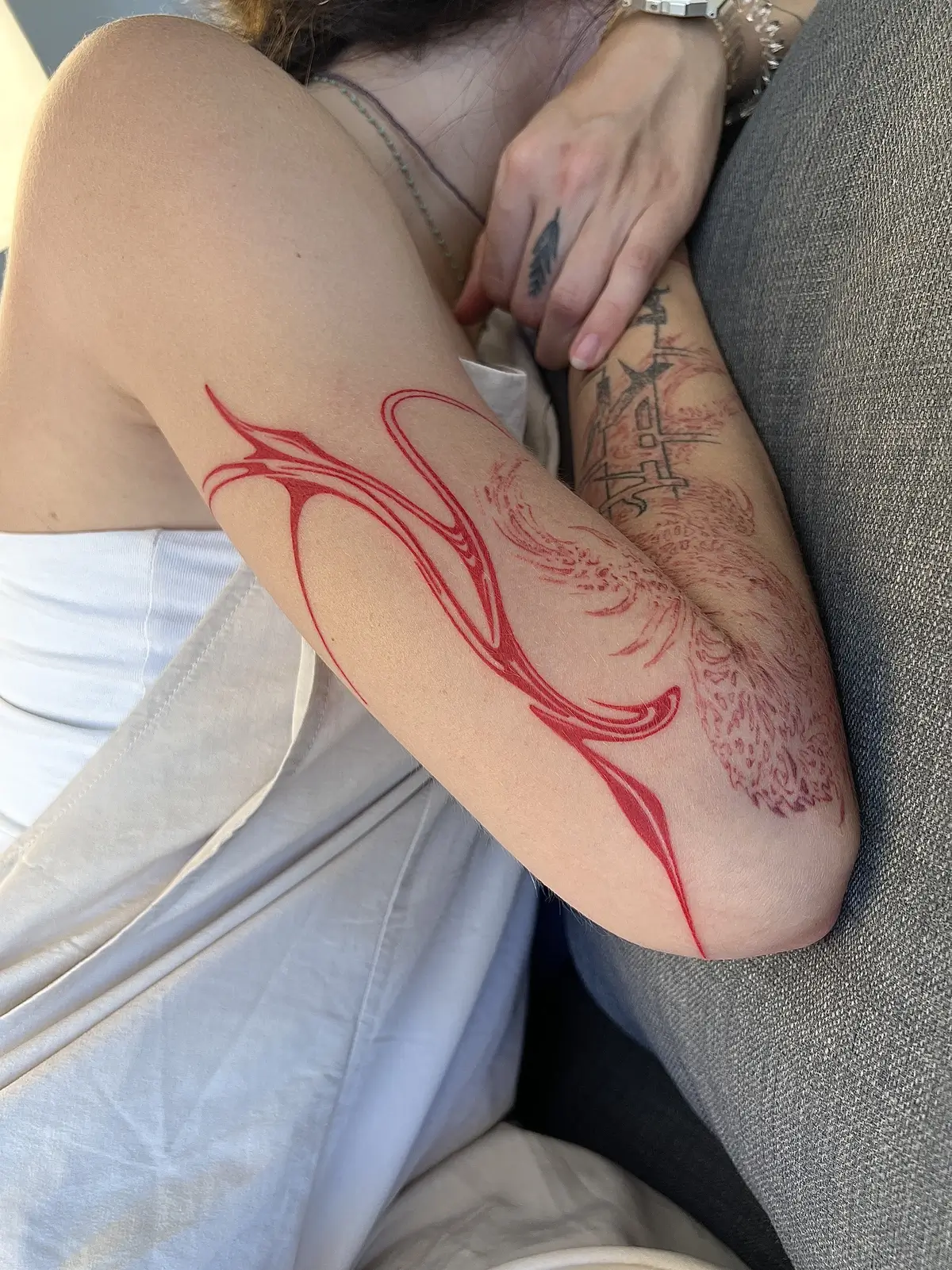
That visibility also comes with a downside. Variations of the work have been copied, repeated, and passed around, sometimes several layers removed from the original. It’s a familiar pattern in tattooing. The surface gets replicated. The process behind it usually doesn’t.
Now working between New York and Los Angeles, Nakkab is bringing that same method into a different market without changing how he works. No flash. No shortcuts. No designs that exist outside the body they’re built for.
Consistency, in this case, isn’t about repeating the same look. It’s about repeating the system that makes the work hold.
Editor's Picks
Eminem Tattoos Every Fan Should See
In celebration of Eminem’s birthday, we’re looking at the tattoos fans have dedicated to the rap legend and his lasting legacy.
Halloween Essentials to Die For
From haunting pours to killer looks and accessories, these are the picks made for spooky season.
More From Art
Eminem Tattoos Every Fan Should See
October 17, 2026
Must-See Zombie Tattoos for Spooky Season
October 15, 2026
Inked Tattoos Of the Week
October 12, 2026
Must See Harry Potter and the Sorcerer’s Stone Tattoos
October 7, 2026