Inked Mag Staff
October 7th, 2026
When the Relationship Ends but the Tattoo Stays
90 Day Fiancé personality and stand-up comedian Sarper Güven opens up about the lips tattoo on his neck, permanent decisions made in love, and finding humor in his next chapter.
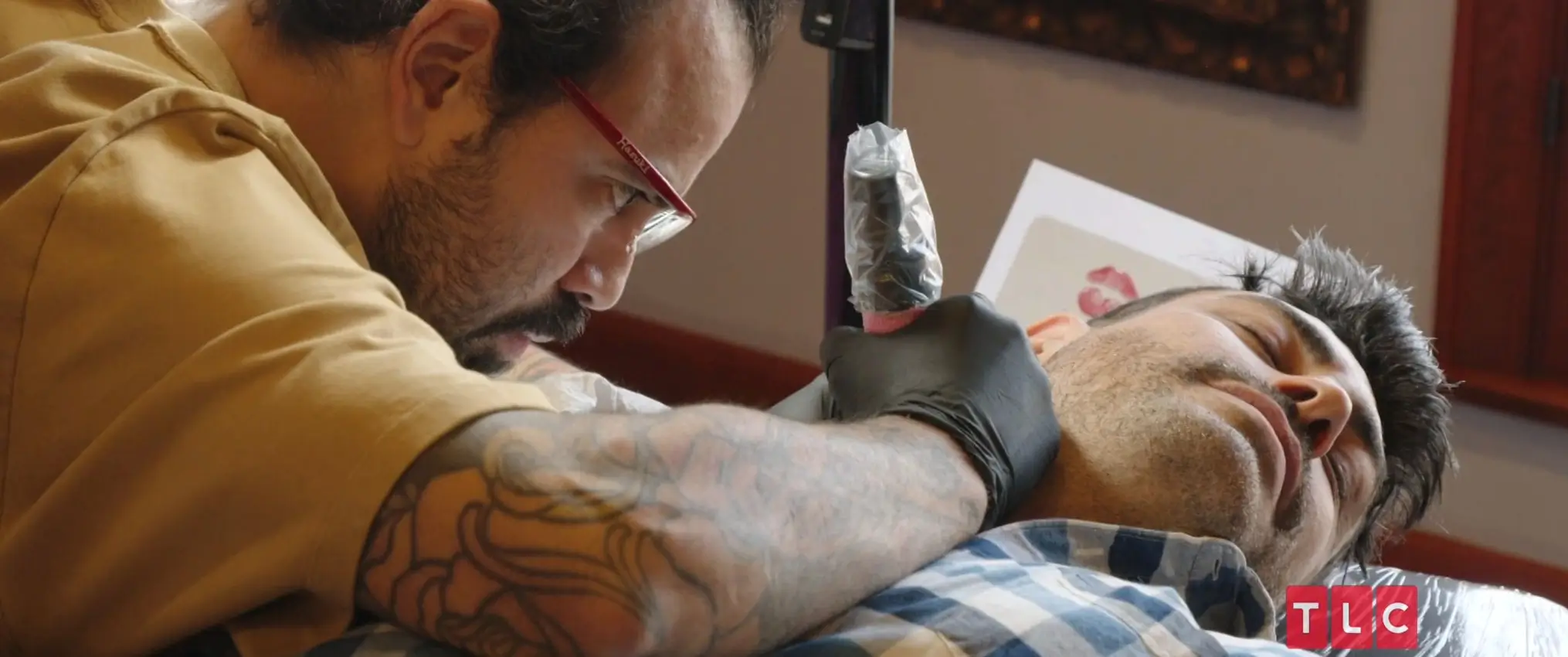
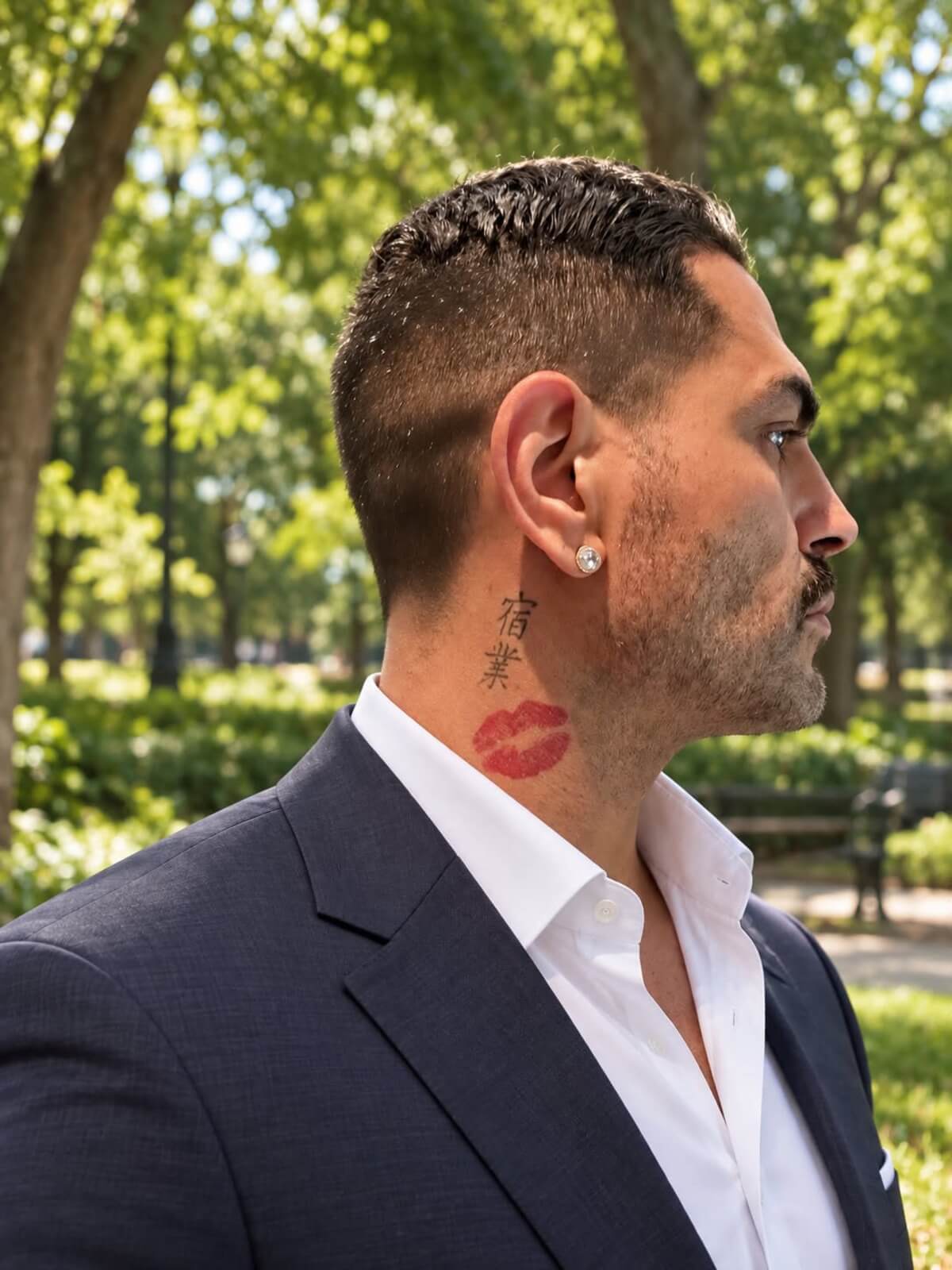
A relationship can end long before the tattoo you got to celebrate it fades. For Sarper Güven, that reminder is a large pair of red lips on his neck, modeled after his wife, Shekinah, from whom he is separated. Familiar to viewers of 90 Day Fiancé and, most recently, 90 Day: The Last Resort, he’s now considering what to do with a declaration of love he once wanted everyone to see. “Well, I learned that permanent decisions and temporary emotions are not always a good combination! But I don’t regret loving somebody. I just wish I had chosen a slightly smaller tattoo.”
At the time, visibility was the point. Sarper wanted the tattoo to be a declaration of commitment, and his placement and color followed that intention. “At that time, I was in love, and I wanted to do something very special and permanent. I chose my neck because it was visible. I didn’t want to hide it. I wanted everybody to see my commitment. And red because lips are red, love is red, passion is red…Unfortunately, nobody told me red is also the color of warning signs!”

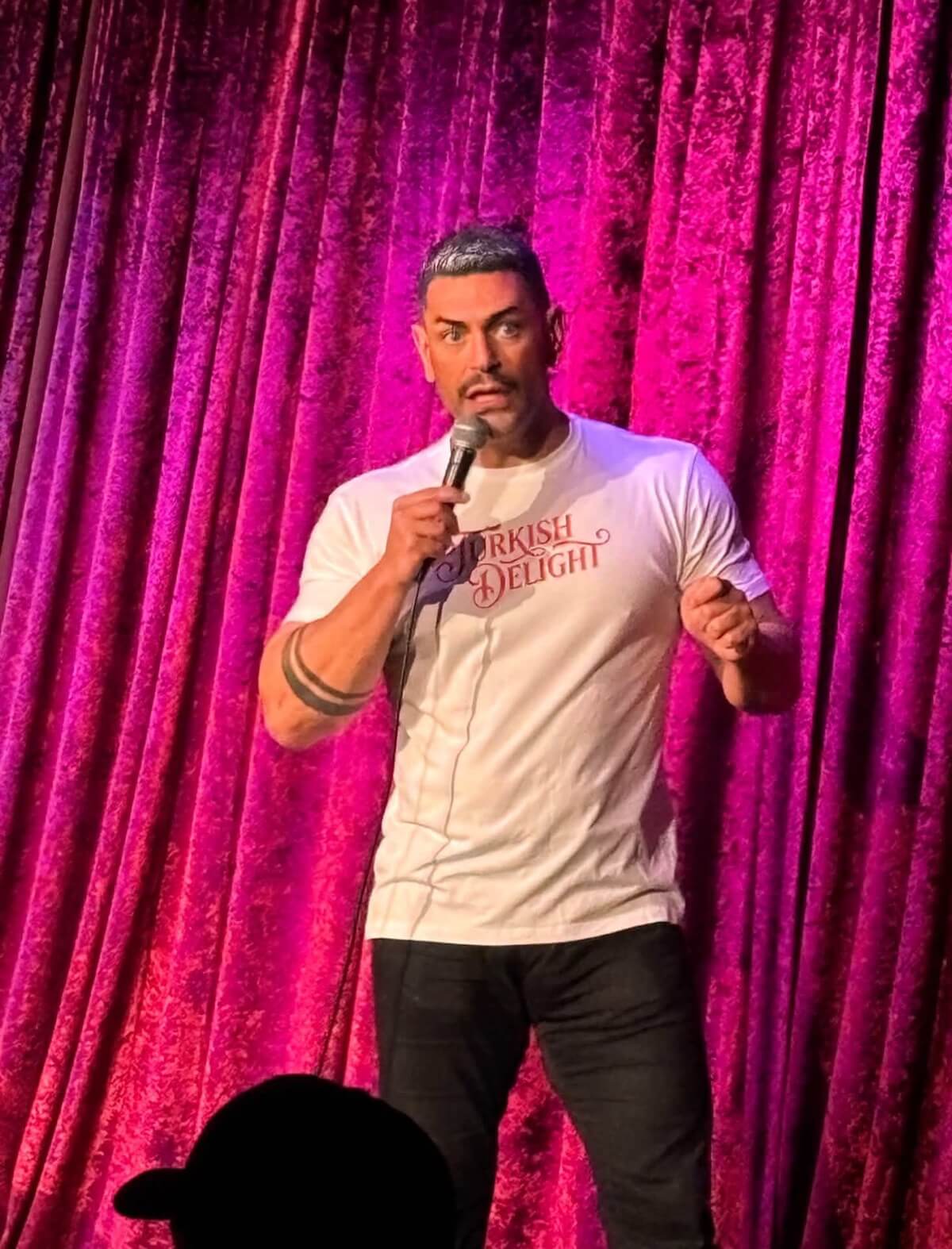
These days, audiences at comedy clubs across the United States and Canada are getting a close look at that commitment. Sarper has performed more than 250 headlining shows, including 48 in 26 days on his Canadian tour, with 46 selling out and more than 7,500 attendees. At 47, he’s building a second career in his second language.
“In the beginning, people came mostly to see Sarper from 90 Day Fiancé. Now many people come to see Sarper the comedian.”
The tattoo, meanwhile, remains recognizable enough to stop people in their tracks.
“I am visible from all states with my red big lips. People stop when they see me, maybe they think I’m a traffic light pole.”
For anyone who has worn a former partner’s name, initials, or likeness after a breakup, the question is familiar: what do you do with something permanent when its meaning changes? Sarper can joke about the scale of his decision without dismissing the feelings behind it.
“At that time it was a symbol of my love. It was real for me, and I don’t want to disrespect my feelings from that period.”
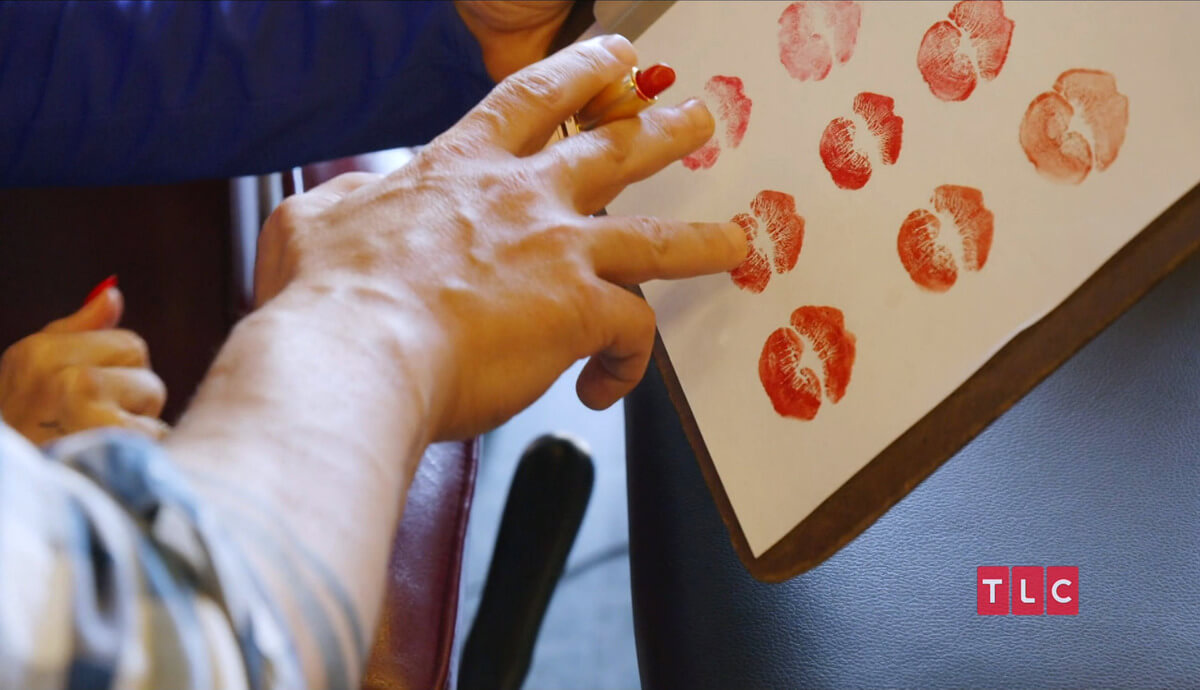
Living with it now brings a different intimacy with the past.
“It’s a strange feeling. Sometimes I forget it’s there, but then I look in the mirror and boom! My past is saying good morning to me! Of course, it reminds me of an important chapter of my life.”
During the Last Resort tell-all, Sarper expressed uncertainty about what to do with the tattoo and said Shekinah had told him red ink couldn’t be removed. He’s now interested in investigating his options with the experts.
“I know tattoo removal technology has improved, and red ink can sometimes be treated too. But I need to research it properly and speak with specialists.”
His preferred outcome is clear.
“Ideally, I would like to have a clean neck again. Not because I want to erase my memories. Memories can stay in my mind.”
He hasn’t settled on removal or a cover-up, and the size and visibility of the tattoo make him reluctant to rush.
“It’s a big tattoo in a very visible area, so I don’t want to make another impulsive decision. Imagine I try to cover it and end up with a giant dragon on my neck. Then next year we will have another interview about why I have a dragon!”
That instinct to find the joke in an uncomfortable situation has become central to his working life. Long before television, Sarper’s life in Turkey included dancing, modeling, fitness, and different jobs. His father, an accountant, wanted him to attend a top university and pursue accounting or finance. Sarper says he went to school to satisfy his father’s wishes, but performing was what he loved, a choice his parents eventually came to understand. He describes a colorful upbringing, with childhood experiences that differ from those of younger generations.
“We didn’t have gentle parenting. But we were still happy.”
On television, viewers were laughing at things he said, sometimes when he wasn’t trying to be funny. Eventually, he recognized that his accent, cultural observations, and life experiences could become stand-up material.
The effort fans make to attend his shows matters to him.
“Some people drive five or six hours just to see me. That means so much to me.”
Meeting those audiences has become an experience of its own.
“I have very interesting fans. Especially during meet and greets. Sometimes women have absolutely no filter! They tell me their personal stories, marriage problems, sex lives. Things I’m sure even their husbands don’t know. I thought I was selling comedy tickets. Apparently, I opened a marriage counseling clinic and the funniest part is sometimes I am supposed to be the inappropriate one, but my fans make me look like an innocent little boy.”
Asked about women approaching him after shows, Sarper acknowledges enjoying the attention, though a long performance and meet-and-greet can leave him with other priorities.
“Well, around 75% of my audience is female. Women can be very direct, believe me. Sometimes much more direct than men. Of course, I enjoy attention, I am not going to pretend I don’t. But I always try to be respectful and friendly. And listen, I am 47. After performing 90 minutes and doing a long meet and greet, sometimes the sexiest thing waiting for me in my hotel room is my pillow.”
At the tell-all, Sarper described a man’s role in Middle Eastern culture as providing, protecting, and what happens in the bedroom, while women were responsible for everything else. We asked whether that was still the kind of partnership he wanted and whether he could find it with an American woman.
“First of all, I still believe a man should provide, protect and f… , and the third one is very important! But seriously, I think relationships need balance. I grew up with a more traditional mentality, and I cannot completely change my personality just because I moved to another country. However, I also learned a relationship is not about one person making all the rules. For me, compatibility is more important than a passport.”
He says living in America has changed his perspective on women’s independence and the space each person needs.
“Yes, definitely. I learned a lot. I still enjoy taking care of my partner. It makes me feel good as a man. But I also understand that women want independence, their own choices and their own space. I think I became more flexible. Not completely Americanized, of course. I still have Turkish software inside me. But I received some updates! Sometimes the system still crashes, though.”
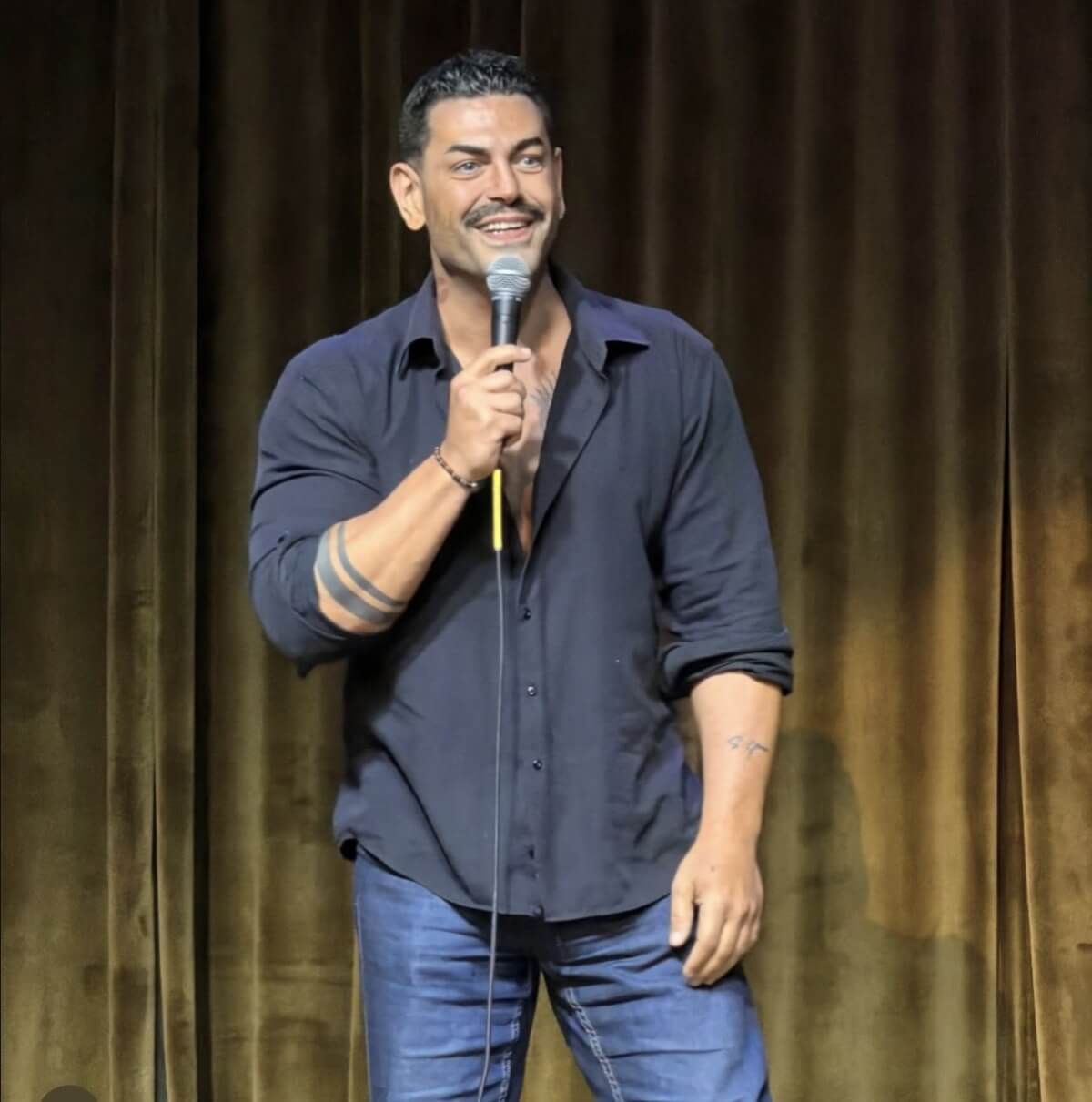
Looking ahead, he’d like to try acting, particularly in a comedy role. He also hopes to bring his stand-up to audiences in Turkey, where his family and friends are happy to see what he’s achieved. Performing in both languages would let him bring his observations about American culture home and give him a welcome break from thinking about pronunciation.
Outside work, his ambitions are quieter: peace, happiness, and time to focus on himself after a period of change. The tattoo’s future remains undecided, but he sounds ready for whatever follows.
“I am 47, but honestly, I feel like I am just starting a new chapter. And I don’t think 47 is old. I prefer to say I am a 27-year-old man with 20 years of experience and some problems!”
“I don’t know exactly what life is preparing for me next, but I am excited to find out. And hopefully, whatever happens, I can turn it into a good joke.”
Editor's Picks

Must See Harry Potter and the Sorcerer’s Stone Tattoos
Celebrating the film that introduced us to the wizarding world.

The Best Kind of Rebellion Is the Kind You Can Taste
What started as a refusal to settle became something much bigger.
More From Culture

Marina Volk’s Painterly Color Realism Is Made for the Body
October 7, 2026
Automation Should Take the Paperwork and Leave the Craft Alone
October 5, 2026
The Best Kind of Rebellion Is the Kind You Can Taste
October 1, 2026
Inking the Impossible
September 28, 2026