Jillian Dara
November 18th, 2026
Walking the Fine Line
In a state of constant reinvention, artist Eden Kozo’s work remains grounded in fine art.
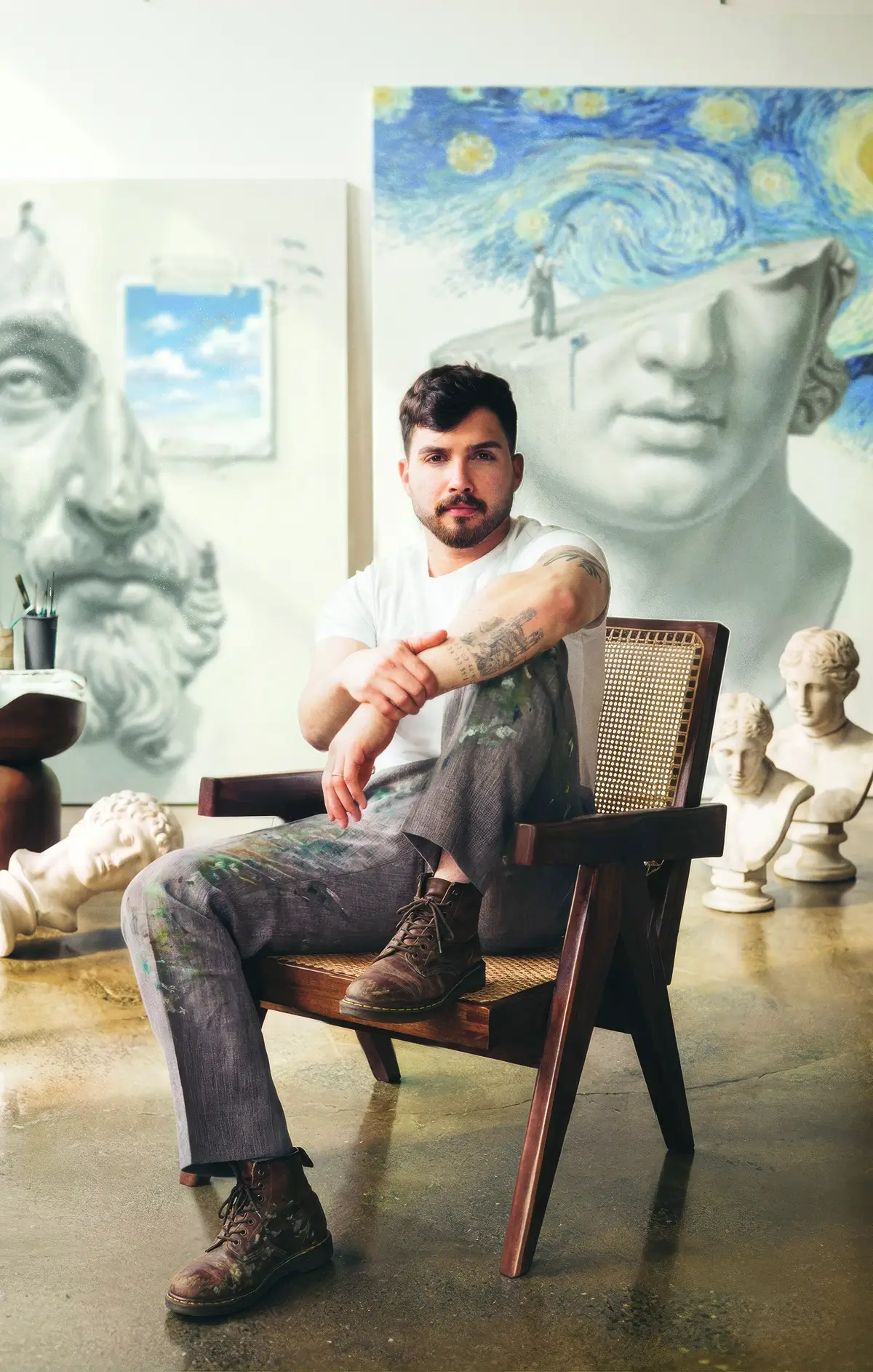
Growing up, Eden Kozo was “always interested in anything visual.” The 28-year-old micro-realistic tattoo artist was born and raised in Tel Aviv, a coastal city on Israel’s Mediterranean reputed for its striking concentration of Bauhaus architecture. It wasn’t necessarily this backyard design that inspired him, though, as he remembers browsing comic books from the age of 10 and feeling the poignancy of classical art.
“I was collecting books to just look at the pictures,” Kozo shared. “There’s something about a beautiful composition with classical and academic techniques that moved me.”
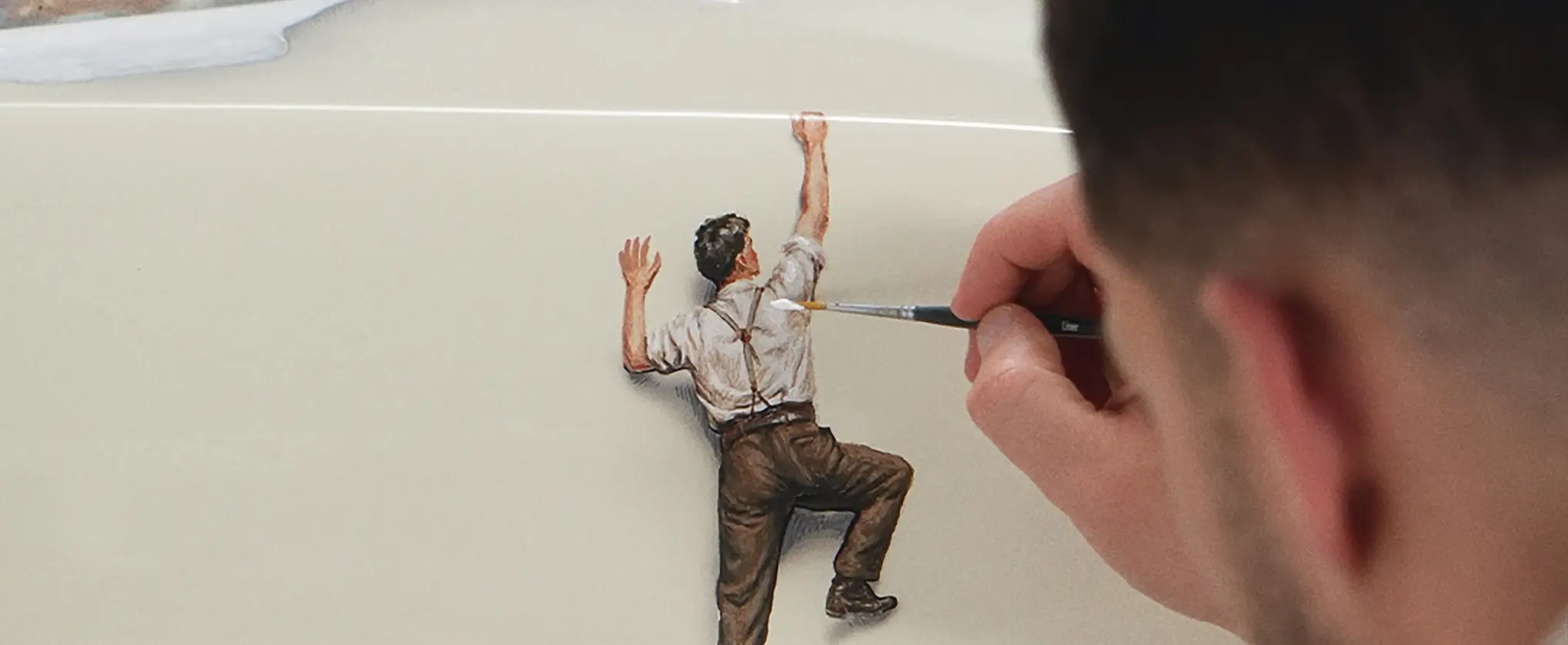
Today, these techniques are prevalent in his portfolio of ink, where the likes of a 3-inch replica of the Mona Lisa or a canvas-to-skin translation of Salvador Dali’s “The Persistence of Memory” sparked his contemporary style. “I was fascinated that I could create these works in a smaller size,” Kozo said.
At the age of 14, Kozo made the jump from comic book collector and art admirer to an aspiring artist as he began drawing his friends in colored pencil. Two years later, Kozo extended his self-expression to underground culture. “I was really into skateboarding, which reminds me of art in many ways — there’s no rules.”
Skateboarding drew Kozo into the world that comes with it: graffiti, tattoos and music. Soon, Kozo was tattooing his friends’ feet — a more temporary location for tattoos — with a cheap machine he purchased on eBay and a method he learned from watching a DVD tutorial on tattooing. “I knew I had a passion,” he said. As he honed this hobby, he became obsessed with defining his personal style. Practice was as much about a steady hand and fine lines as it was about finding a panache that felt authentic to him.
Having spent his formative teenage years studying the techniques of classical paintings, Kozo felt there wasn’t enough artistic anonymity in the traditional tattoos of this era. He started with Pokémon Poké Balls and flash-sheet roses before second-guessing a career path as a tattoo artist. “I felt like painting had way more opportunity to express myself,” he said.
The 16-year-old stuck with it, though, creating and designing every day for five years; at the same time, tattoo culture changed drastically. Thanks to new equipment and single needle technique, there was more room for artists and creatives to enter the space. “People were able to make much more intricate, unique, expressive designs,” Kozo said.
He rode the wave. “I realized that I didn’t have to stick with the traditional way of tattooing,” he said. Then came the miniature Mona Lisas. “Those small, color, realistic tattoos were my first break, my foundation that I could really resonate with.”
They were also the motivation for a change in scenery as Kozo moved 6,000 miles across the Atlantic from his hometown to New York City. On a visa sponsored by Bang Bang Tattoo, Kozo began meeting and working alongside artists he previously looked up to: Mr. K, DRAGON, and Oscar Akermo. “It pushed my boundaries,” he said.
One day, Kozo was cleaning his tattoo needle only to realize it left a mark on the paper towel. “It was a Eureka moment,” he said, as Kozo realized he could use the machine to not just tattoo skin but also different surfaces. He began experimenting on paper before feeling confident in the medium to create fine art with tattoo ink that matched the caliber of Manhattan galleries.
His first work in this new style, “We’re All Mad Here,” featuring Alice in Wonderland atop a sculpture with tattoos from past clients surrounding her, sold the same day it was exhibited at DTR Modern. That first sale was a pivotal moment acknowledging his successful blend of early inspiration with contemporary influences. Now, he continues to create various series of inks on canvas; his signature mark on every piece being the individual needle he used to design it glued to the bottom right of the artwork.
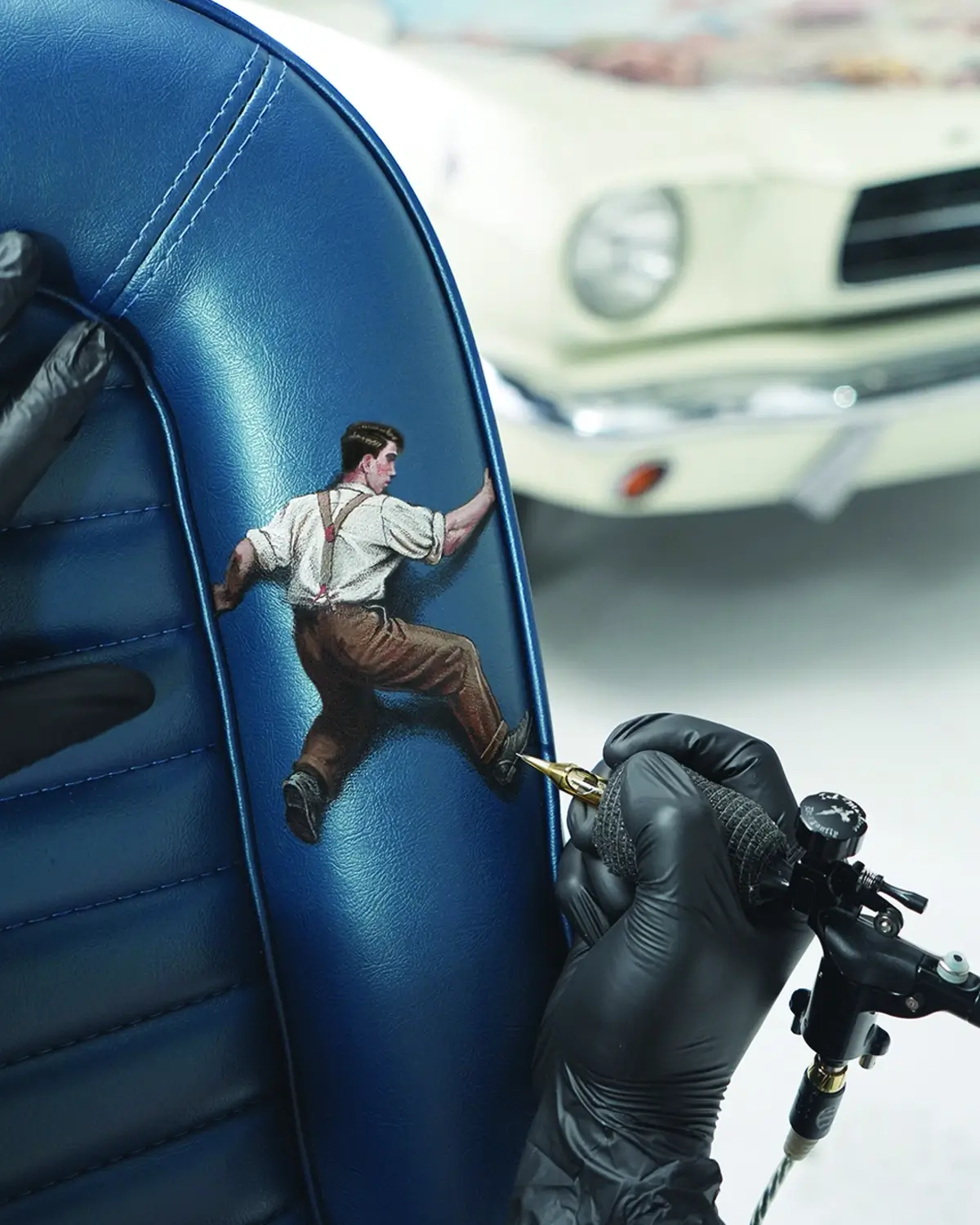
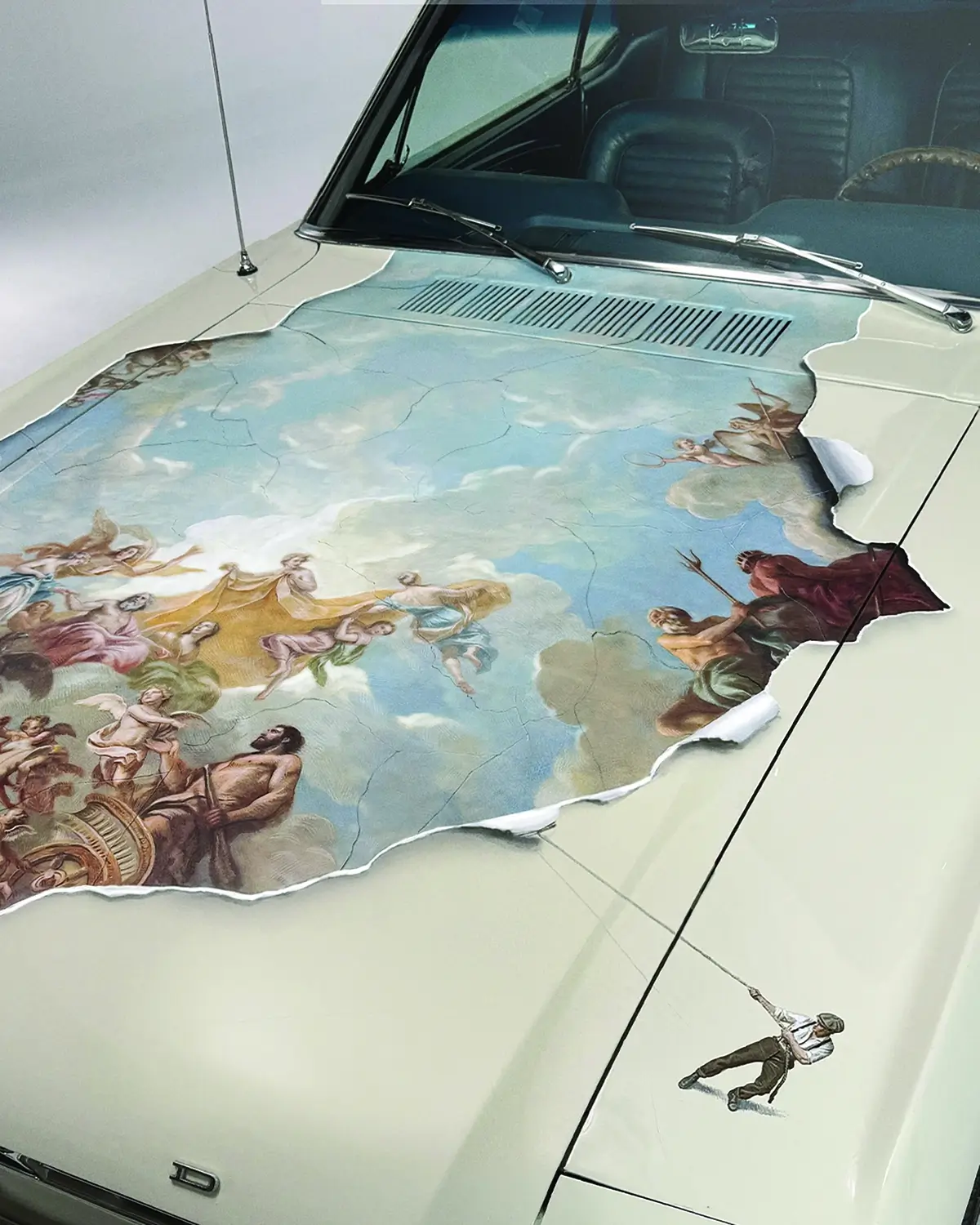
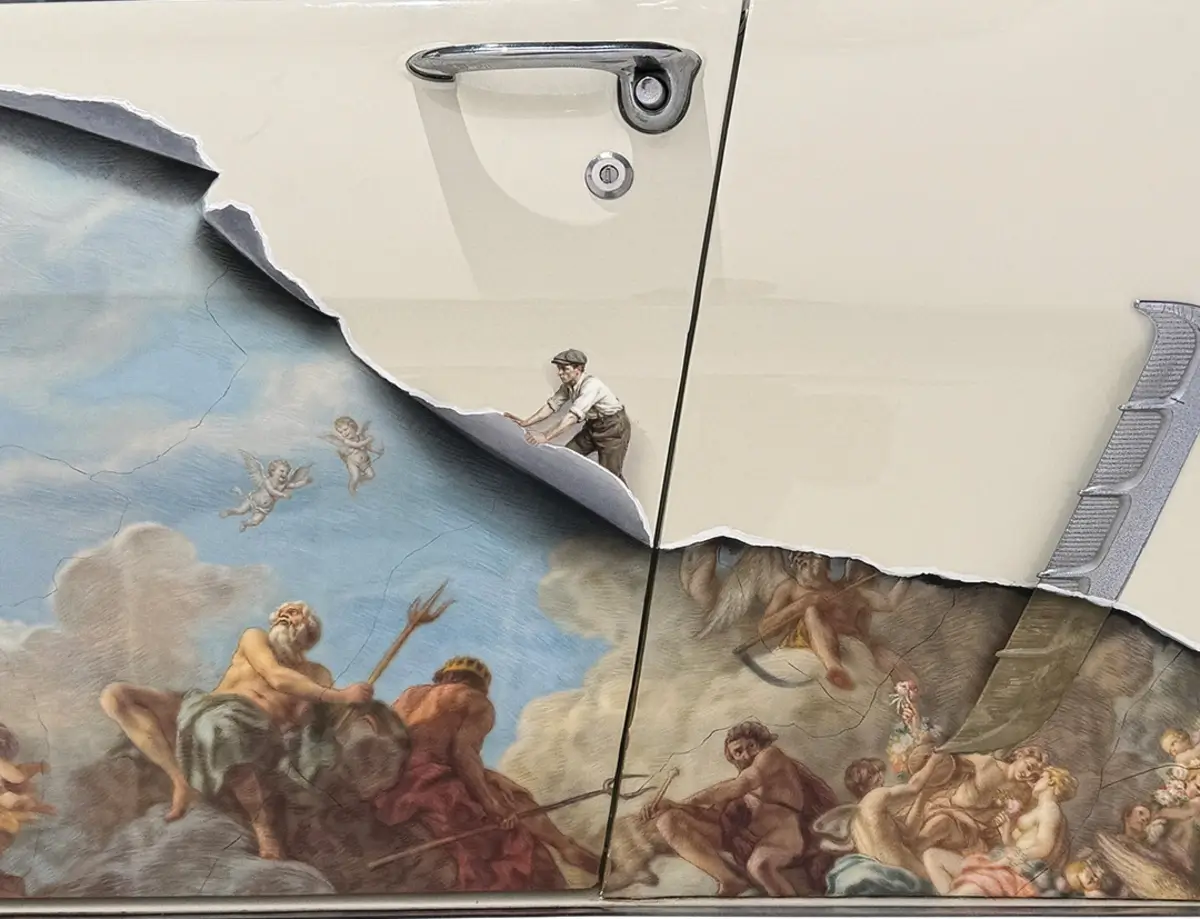
“The biggest challenge as an artist is trying to build a visual language that you’re able to translate across different mediums and still be recognizable,” Kozo said. As he added marble, leather, and metal to his portfolio of canvases, Kozo’s work began spanning genres, from high-fashion collaborations with Maison Margiela to automobiles, with the transformation of a vintage Mustang in one of his latest projects, “Permanent Impermanence.”
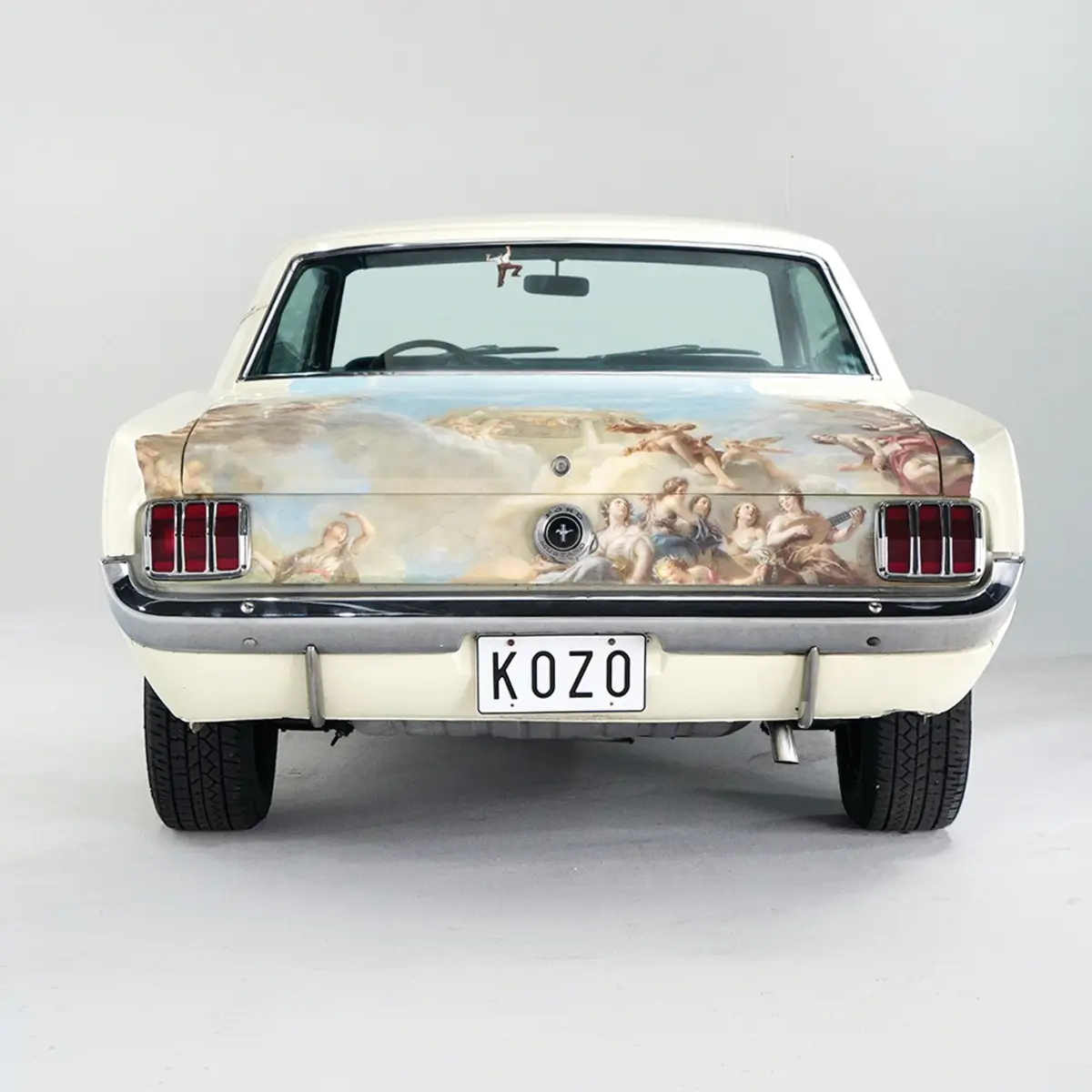
Inspired by the ceiling of the Palace of Versailles, Kozo explained how this new body of work, a Mustang enveloped in 30 paintings, is a contrast between the longevity of classical art and the temporary life of humans. He reflects this by portraying humans on a small scale in comparison to the oversized monuments and frescoes. “Despite their size, the scene shows how humans are able to make an impact through love and persistence,” he said. The layering effect contributes to the messaging, too, as “everyone leaves their mark on top of one another.”
Despite inking handbags, shoes, cars and paper, skin is still his favorite medium to work with. “There’s nothing better than creating artwork for someone that they get to have for the rest of their life,” he said. The feeling is so visceral, he explained, that it keeps him at the shop at least once a week. He’s found this is the sweet spot that maintains his creative energy with quality execution. Between gallery exhibits, constant sketching and future planning, if he were in the tattoo shop every day, he admitted he wouldn’t be able to uphold his best work for clients or himself. “I’m very attached to things I create; it’s not just a product.”
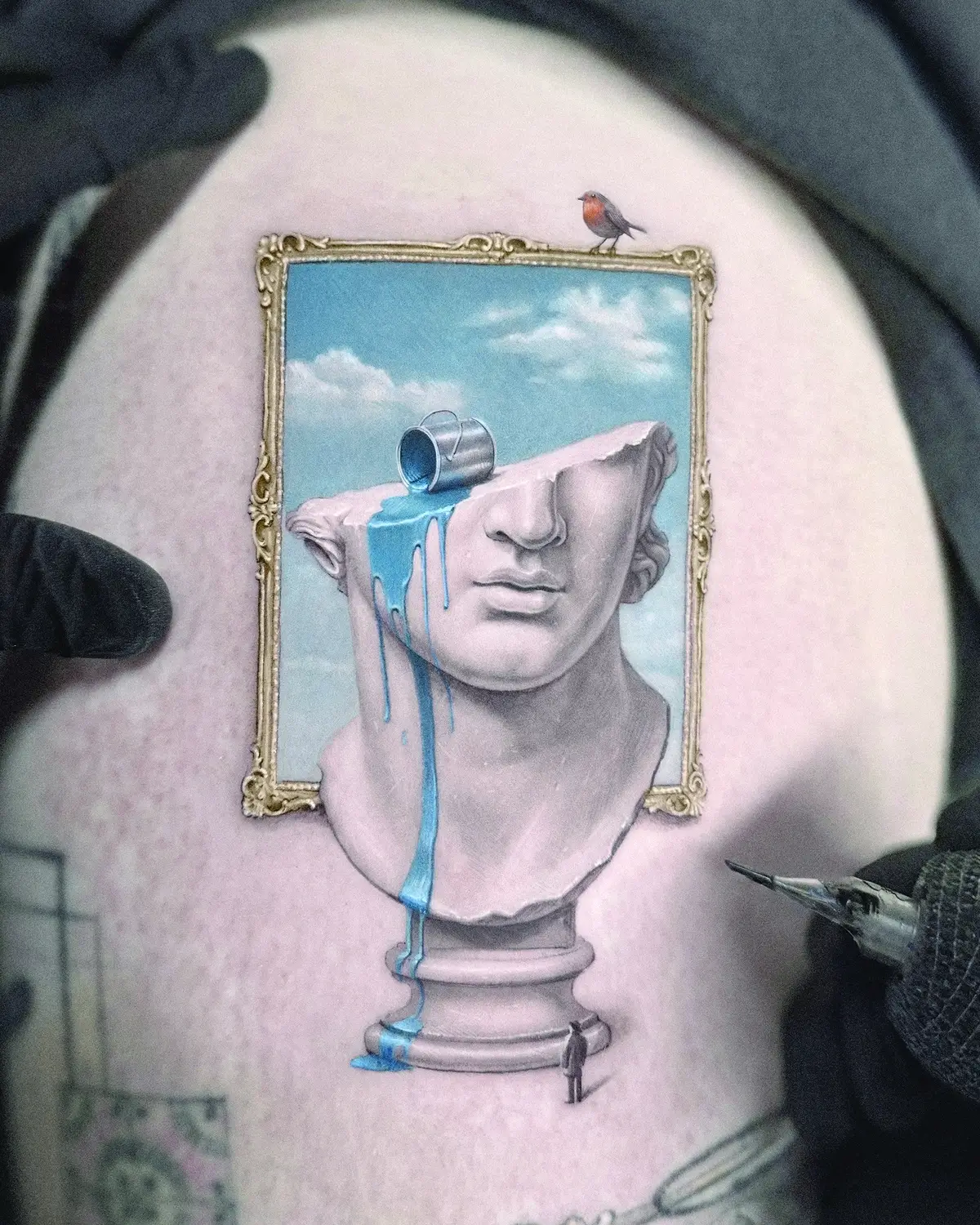
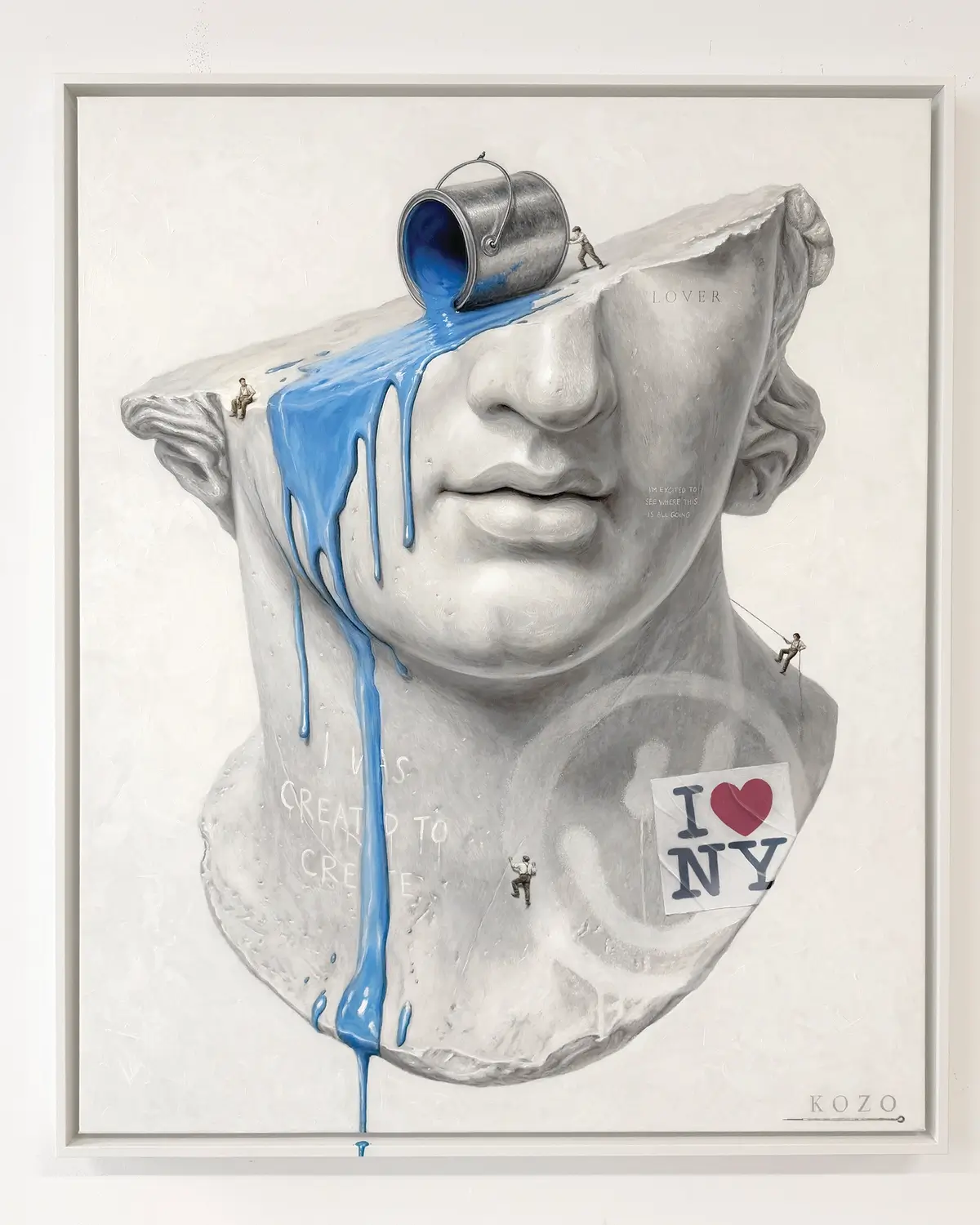
Simultaneously, Kozo feels detached from the outcome, especially when it comes to social media. “It’s a brutal thing,” he said. “Artists shouldn’t constantly be graded on their work.” Yet, that’s what platforms like Instagram and TikTok encourage. “We don’t have control over algorithms or followers, but we do have control over quality and the things we create,” he said.
That’s what he prioritizes: the craft and the day-to-day. “The work is the main thing, not the result it creates.”
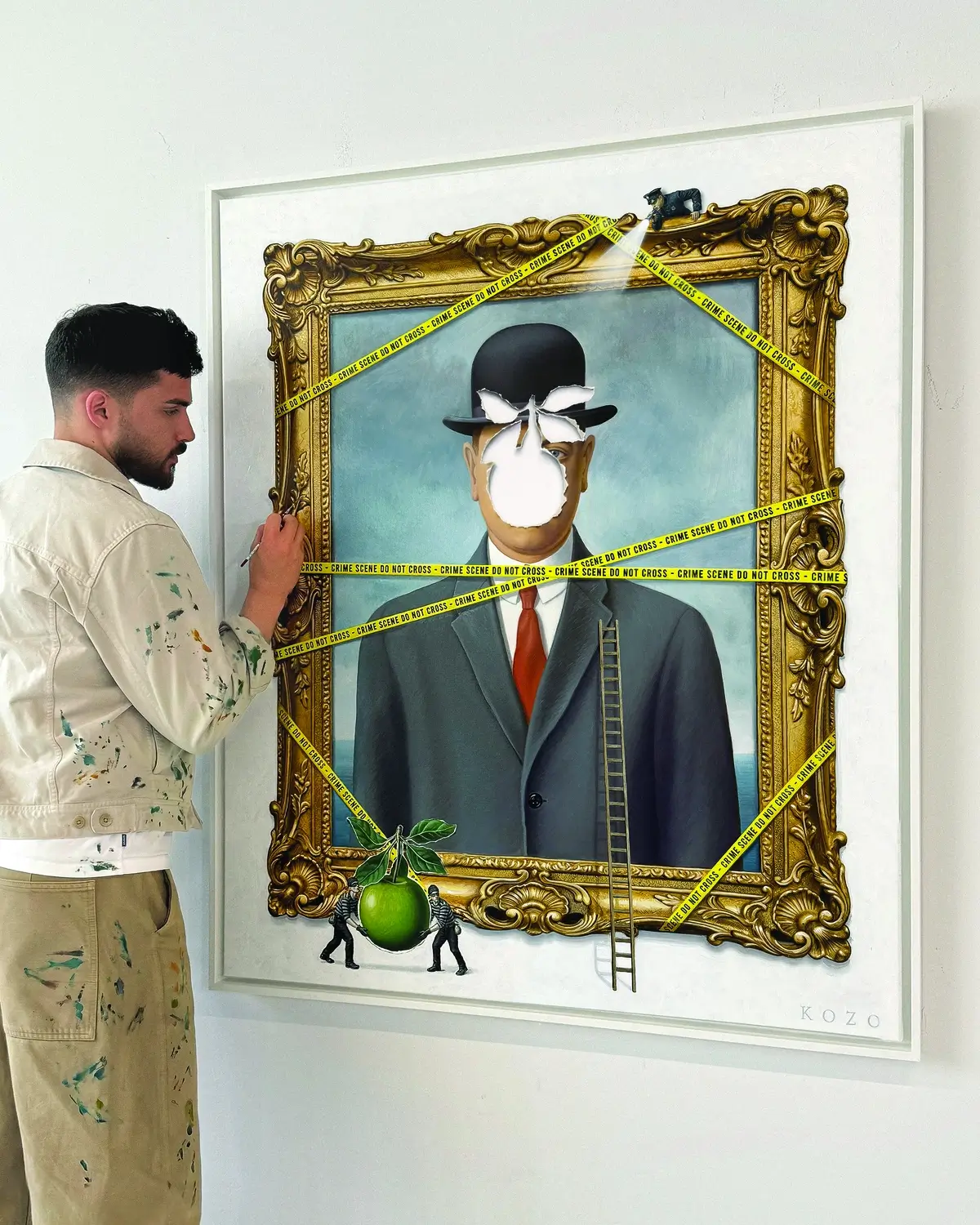
As Kozo looks toward his next opportunity, teasing sweeping scale mural work, he also practices mindfulness as he tries to remain grounded in the moment, using daily sketching as a way to evolve and focus on the areas he’s most interested in. “It’s almost like you’re filming a movie every single day and then when you look back after a year, you edit,” he shared.
After 12 years in the industry, this is Kozo’s advice for anyone trying to break in: “Be proactive and create every day to show the world what you got. It’s not an easy path to become an artist, but it’s the most rewarding.”
Editor's Picks
More From Culture

How One Father’s Tattoo Sparked a Greater Purpose
November 17, 2026
13 Tattoo Ideas From 13 Shops: Inked’s Friday the 13th Edition
November 13, 2026
Caesar The Hun: From a Hungarian Village to the American Tattoo Dream
November 11, 2026