Inked Mag Staff
March 30th, 2026
Building Marble in Skin
Where black and grey realism is pushed to meet the structural demands of classical sculpture
There’s a difference between referencing classical art and being held to its standards. Nazarii Kuryliak’s work sits in that gap, where black and grey realism isn’t just about likeness, it’s about whether tattooing can carry the same weight as sculpture.
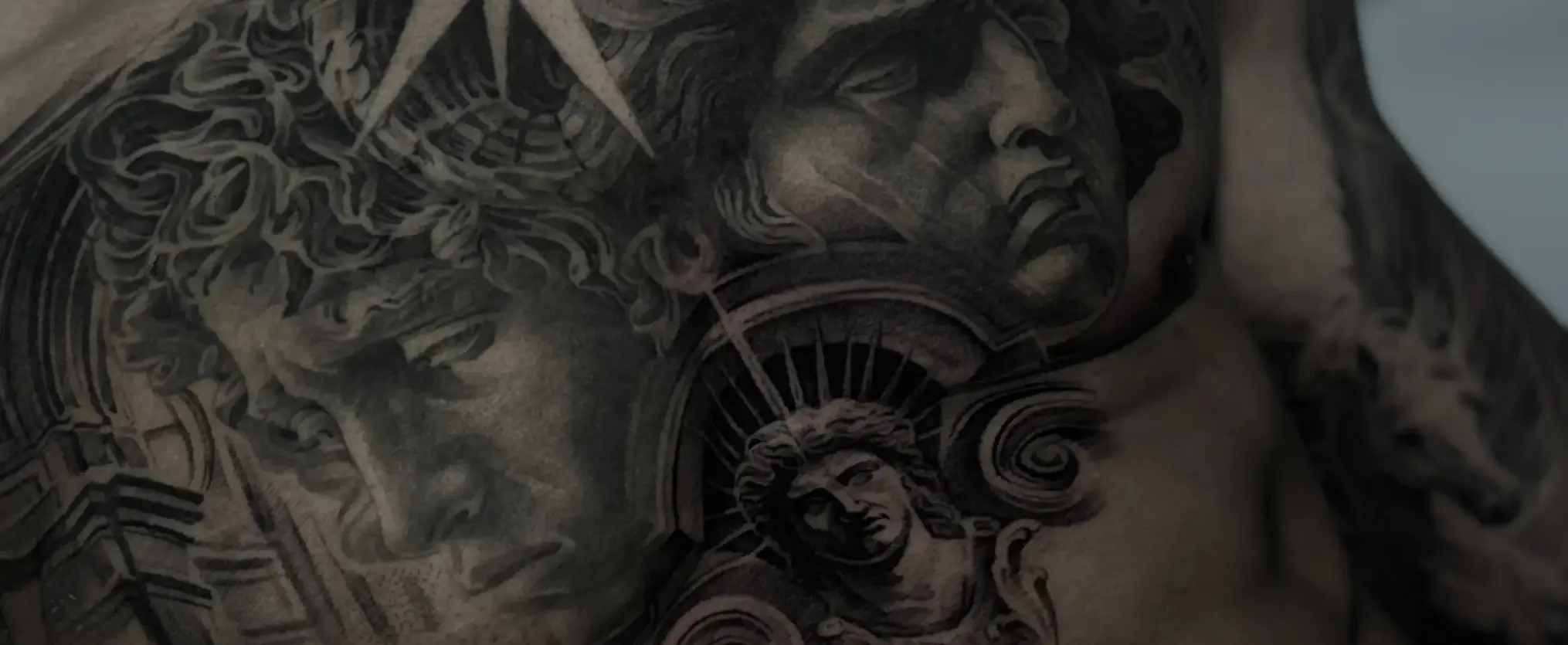
Kuryliak approaches skin the way a sculptor approaches stone, building depth through light instead of relying on outline or contrast to do the work. His focus is what he calls sculptural realism, grounded in classical Greek and Renaissance principles where anatomy, proportion, and lighting aren’t flexible.
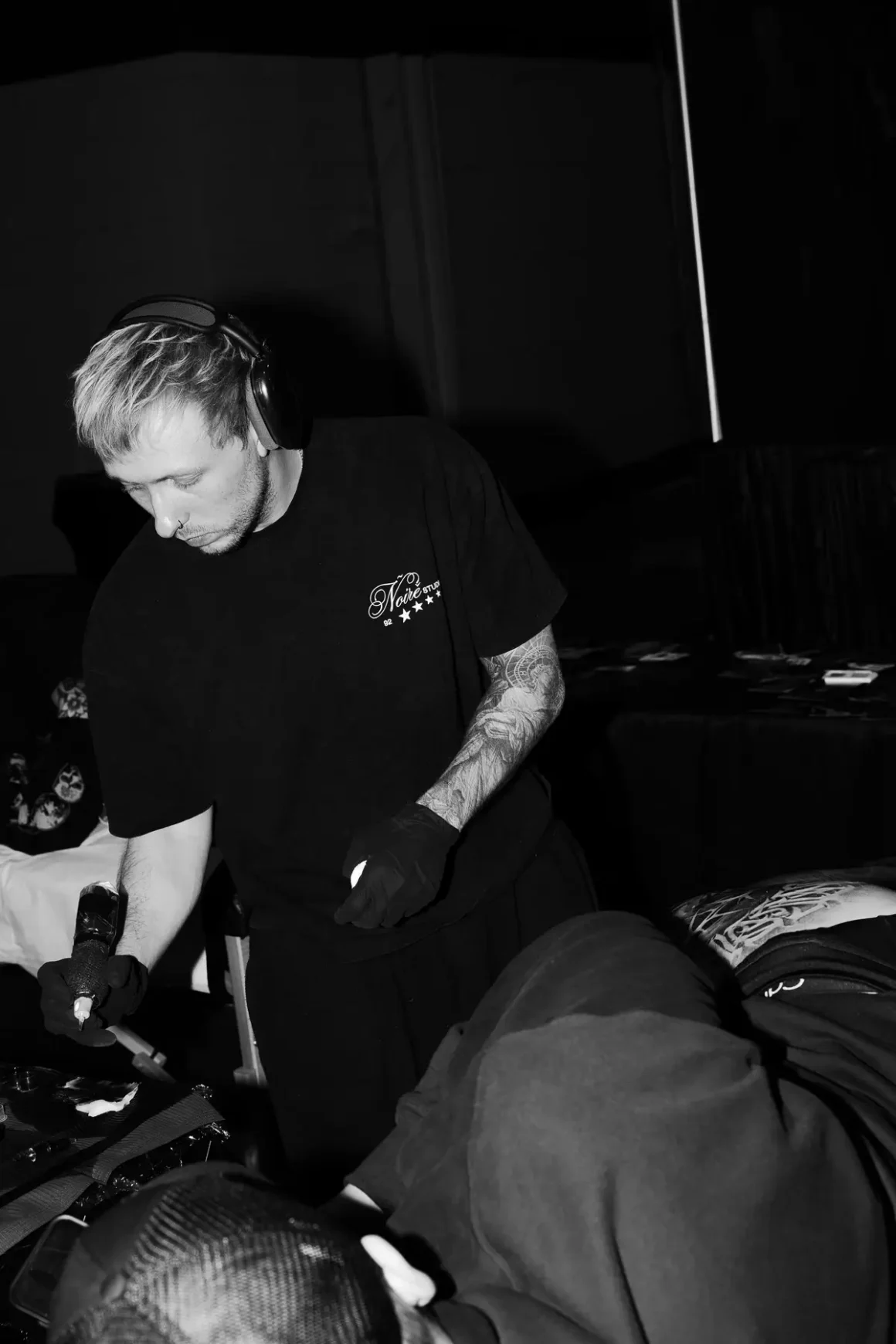
“My goal isn’t to make it look like a tattoo of a sculpture,” he says. “It has to feel like the form exists in the skin.”
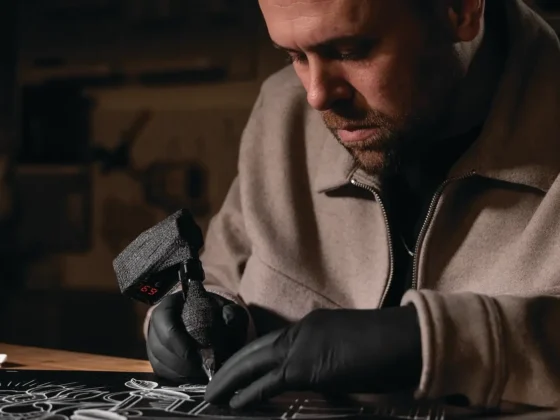
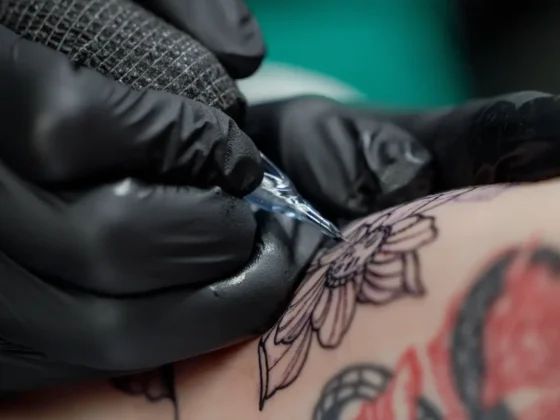
That standard changes how the work gets made. Much of his process relies on 3RL configurations, allowing him to build detail slowly and control transitions with precision. Instead of using larger groupings to move faster, he layers tone gradually, constructing depth in passes.
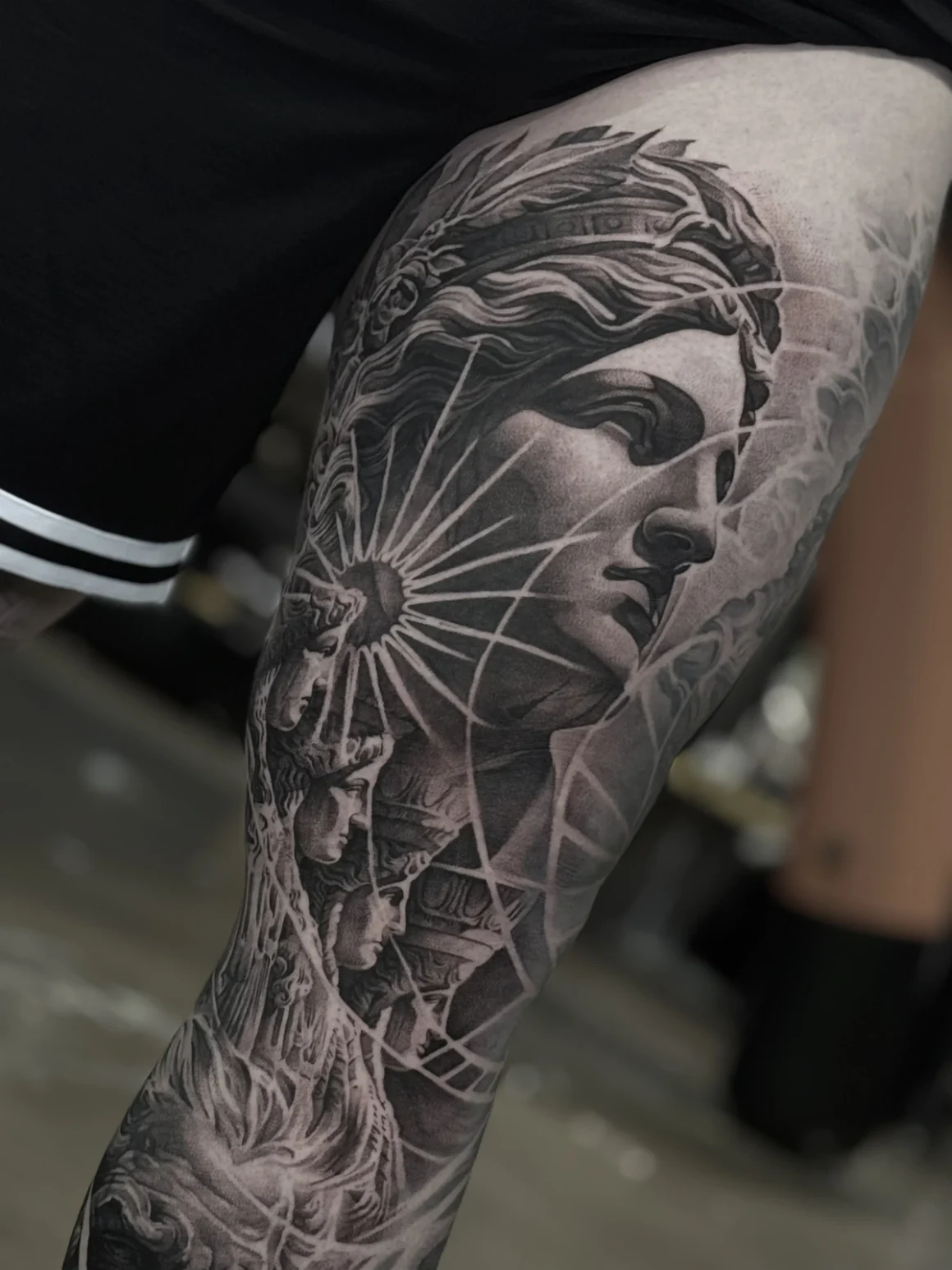
The tradeoff is time and margin for error. This approach demands longer sessions, more patience, and consistency from start to finish. Once the structure is set, there isn’t much room to correct it.
His process starts before the machine is even running, but not in the way artists usually describe it. Conversations with clients aren’t just about ideas, they’re about placement, movement, and how the design will sit on the body long term. From there, he studies references pulled from sculpture, mythology, and anatomy, building compositions that are meant to move with the body instead of sitting on top of it.
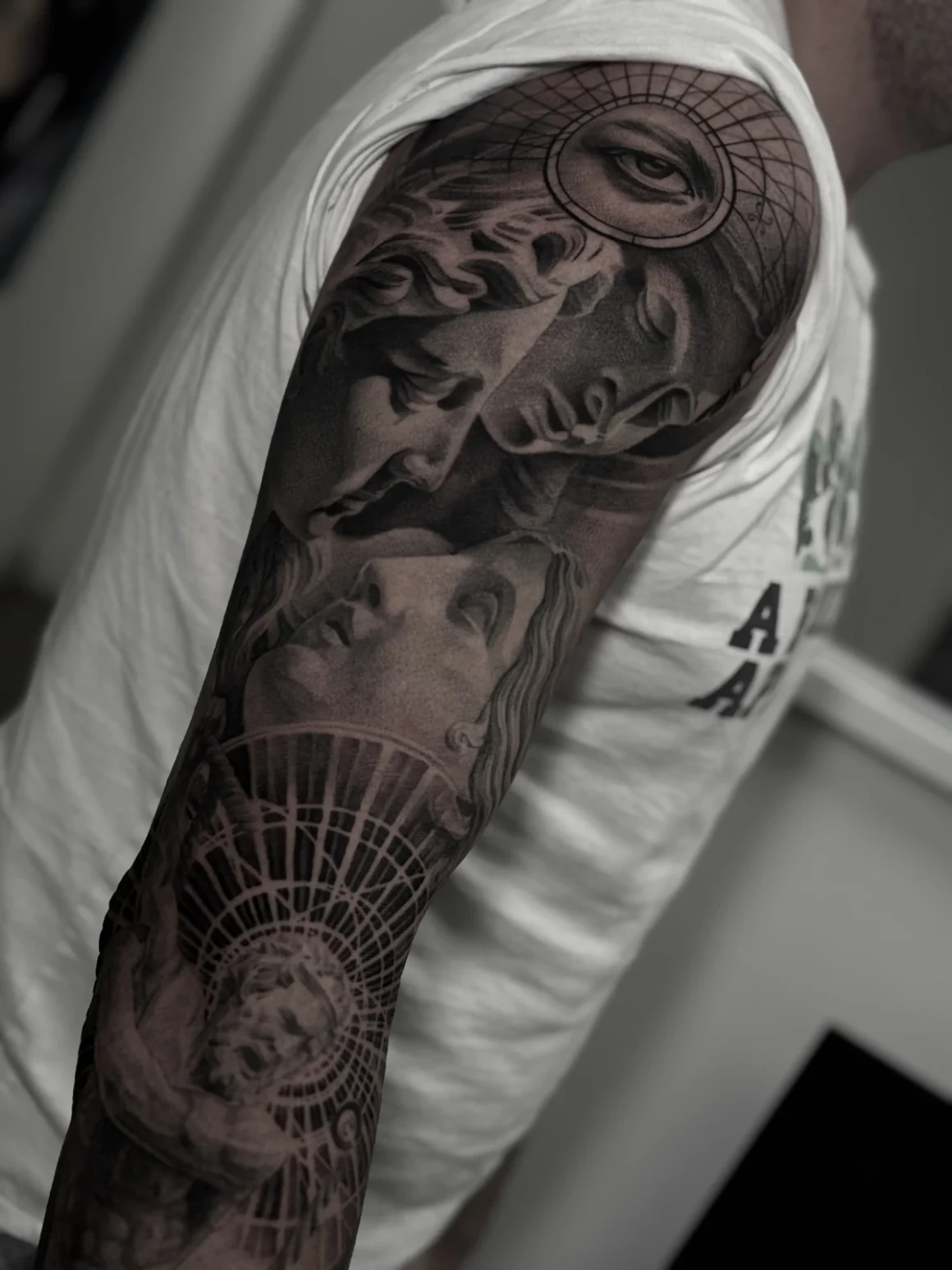
Lighting does most of the heavy lifting. In black and grey realism, it’s what determines whether a tattoo holds dimension or flattens out over time. Every highlight and shadow is mapped with healing in mind, not just how the piece looks fresh.
“Skin changes everything,” he says. “If the structure isn’t right, it won’t hold. You have to think about how it settles years from now.”
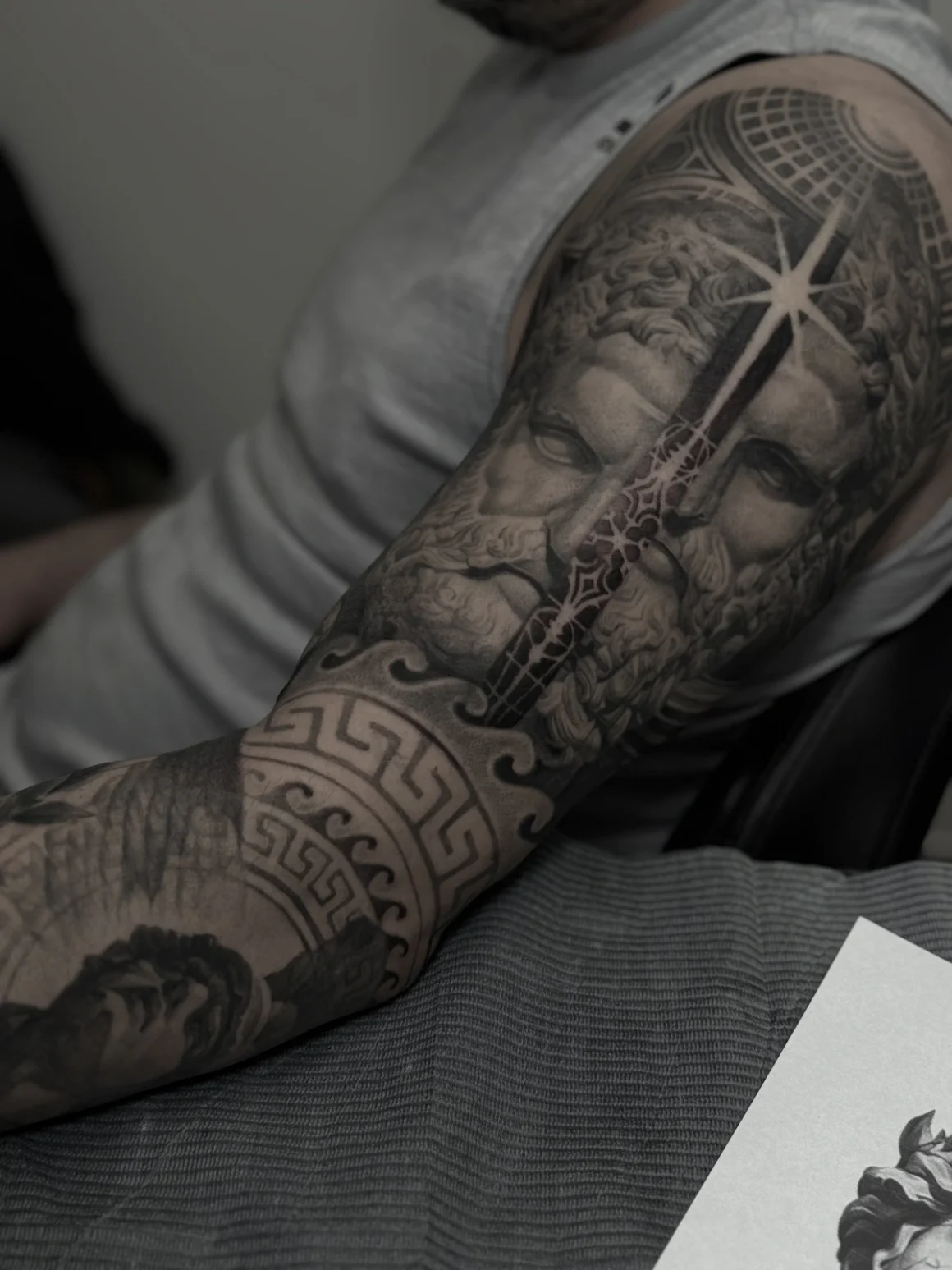
That pressure shows up in the details. Faces, hands, and smaller figures leave no room to hide mistakes. Proportions have to hold. Muscle structure has to read. If something is off, even slightly, it breaks the entire piece.
Large-scale mythological work gives him space to build narrative and contrast, but it also raises the bar. Greek gods and classical figures aren’t abstract references. People already know what they’re supposed to look like. The expectation is built in.
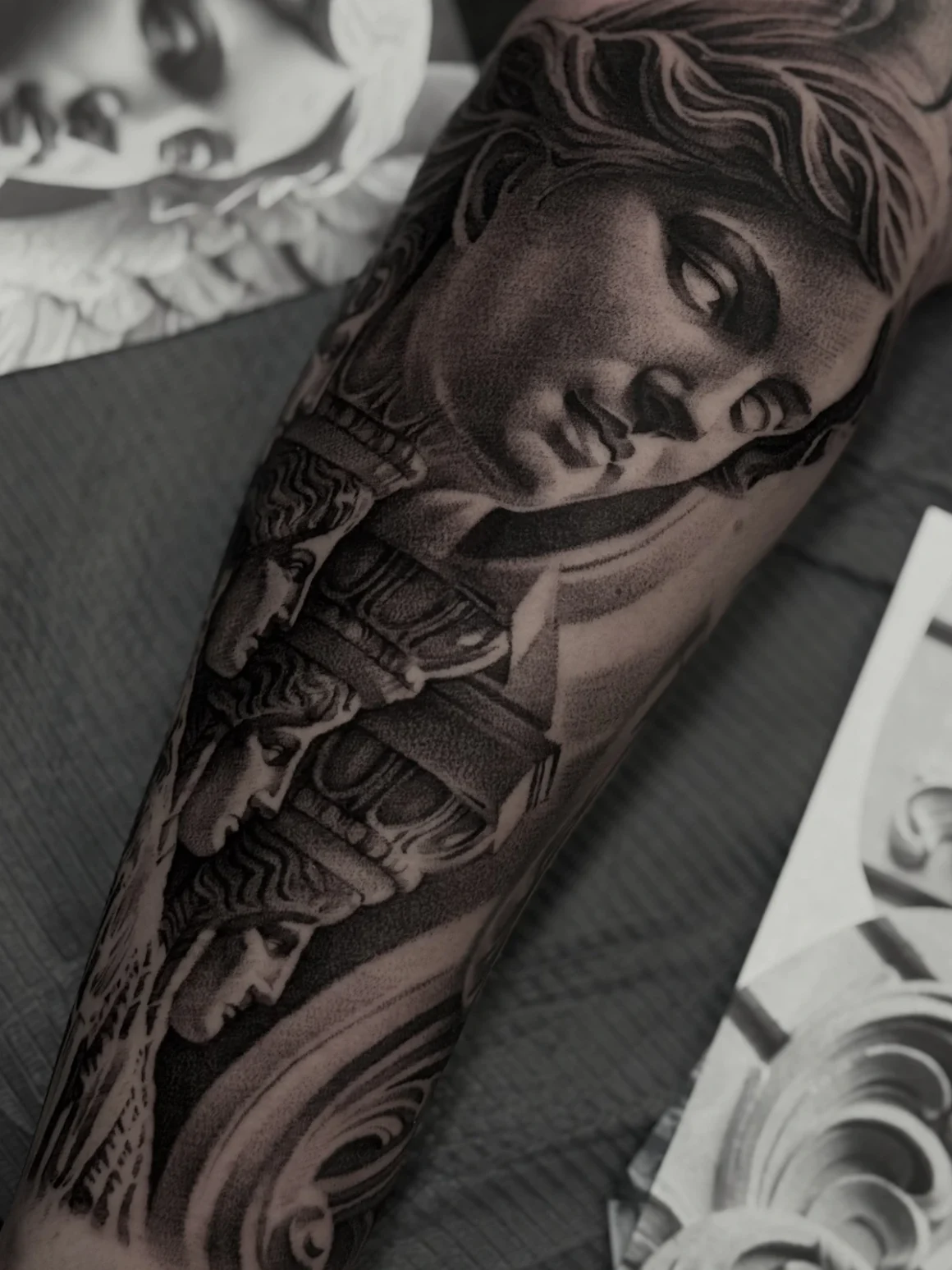
You’re not just designing an image. You’re reconstructing something familiar in a medium that doesn’t behave like stone, and expecting it to hold up over time.
That’s where most realism stops short. It can look convincing in the moment, but without structure, it doesn’t last. Kuryliak’s work leans in the opposite direction, built to hold its depth as the tattoo settles and ages.
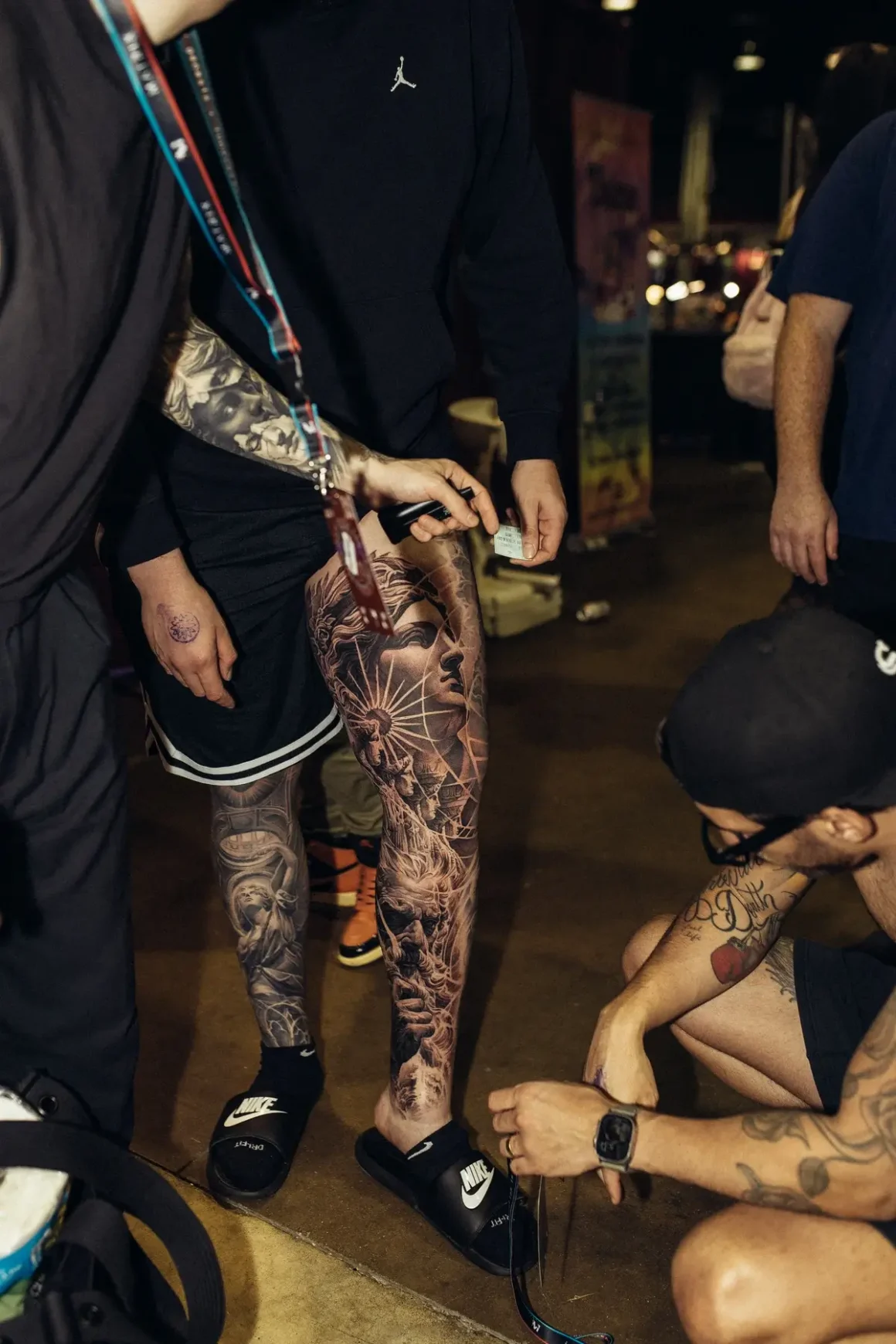
The industry is moving toward more specialized styles, but this kind of approach isn’t about style as much as it is standard. It asks more from the artist and leaves less room for shortcuts.
In the end, the comparison isn’t really between tattooing and sculpture. It’s whether tattooing is willing to be judged the same way.
Editor's Picks
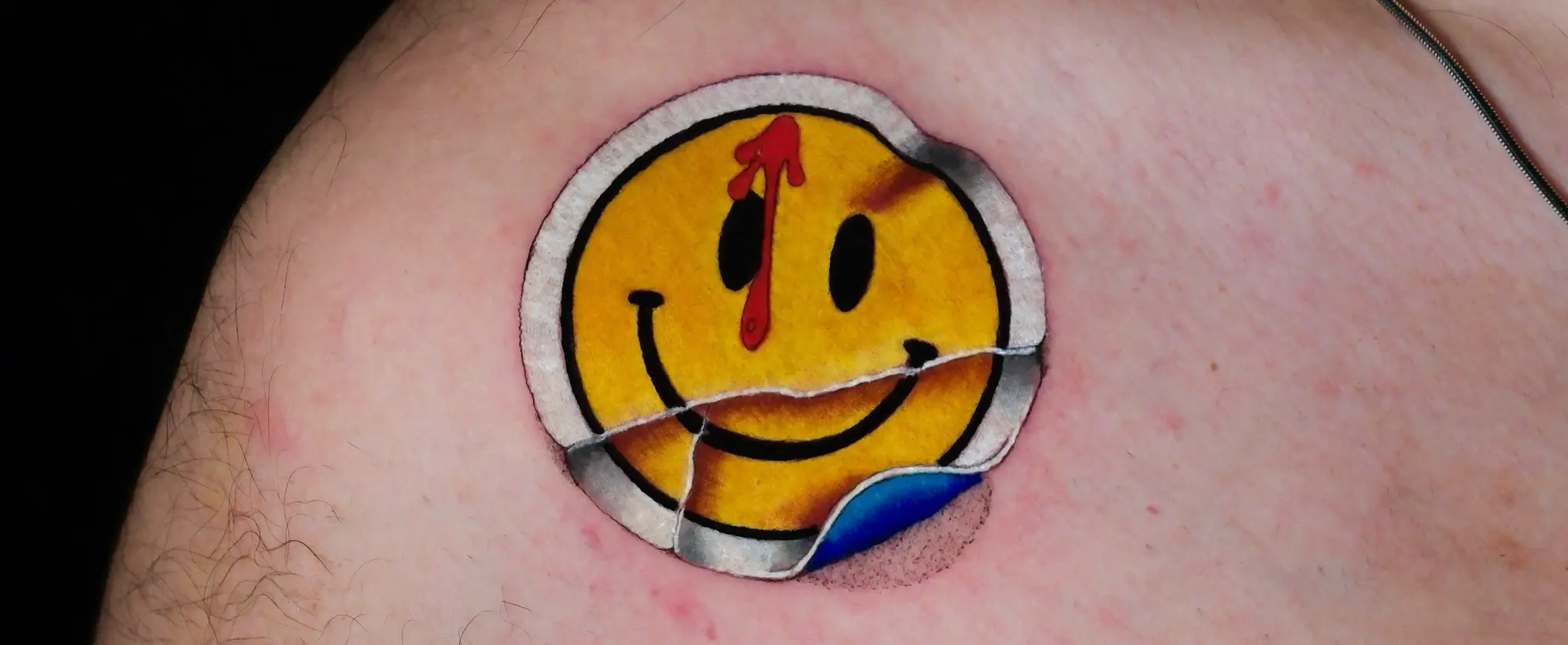
Meet the Artists Making Tattoos Look Like Stickers
These tattoos bring the look of classic stickers straight to skin.
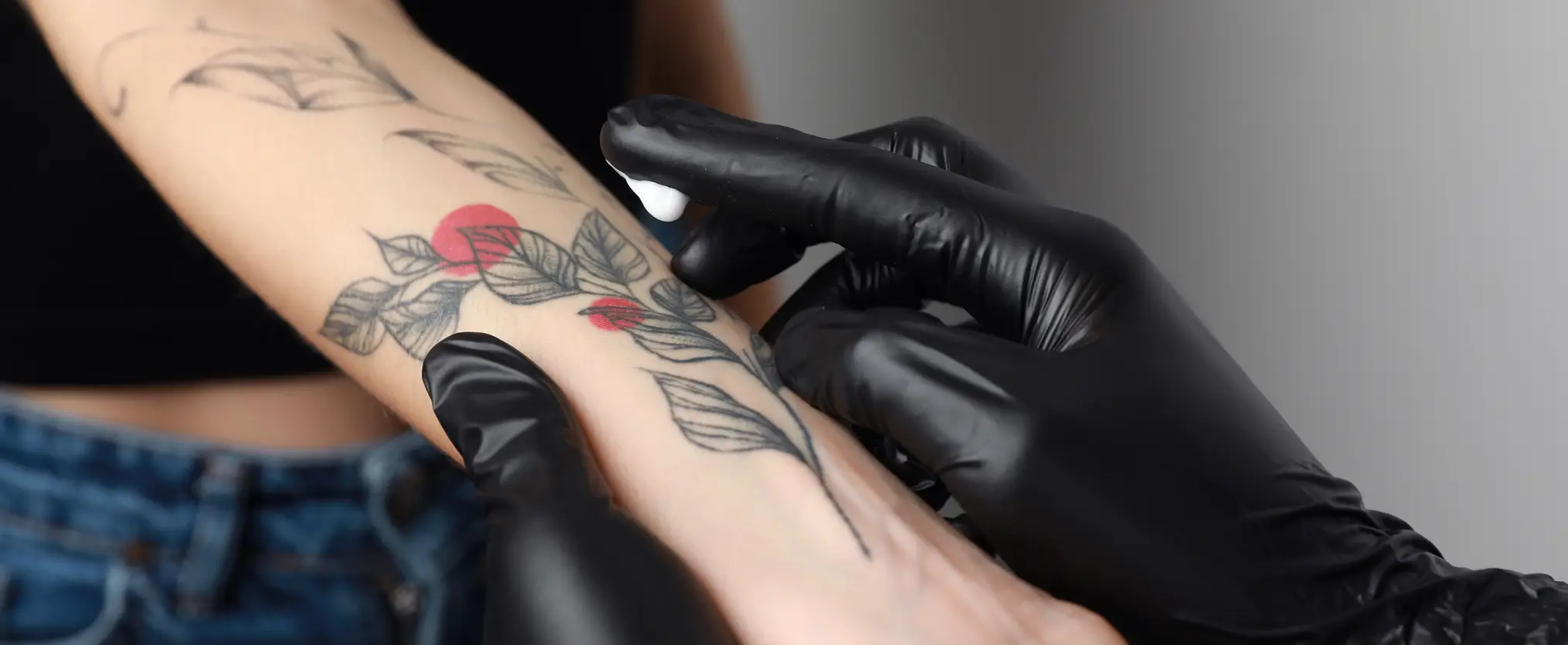
What Happens When Military Standards Meet Tattoo Aftercare
How one Navy serviceman turned military discipline into a new standard for protecting tattoos and the stories behind them.
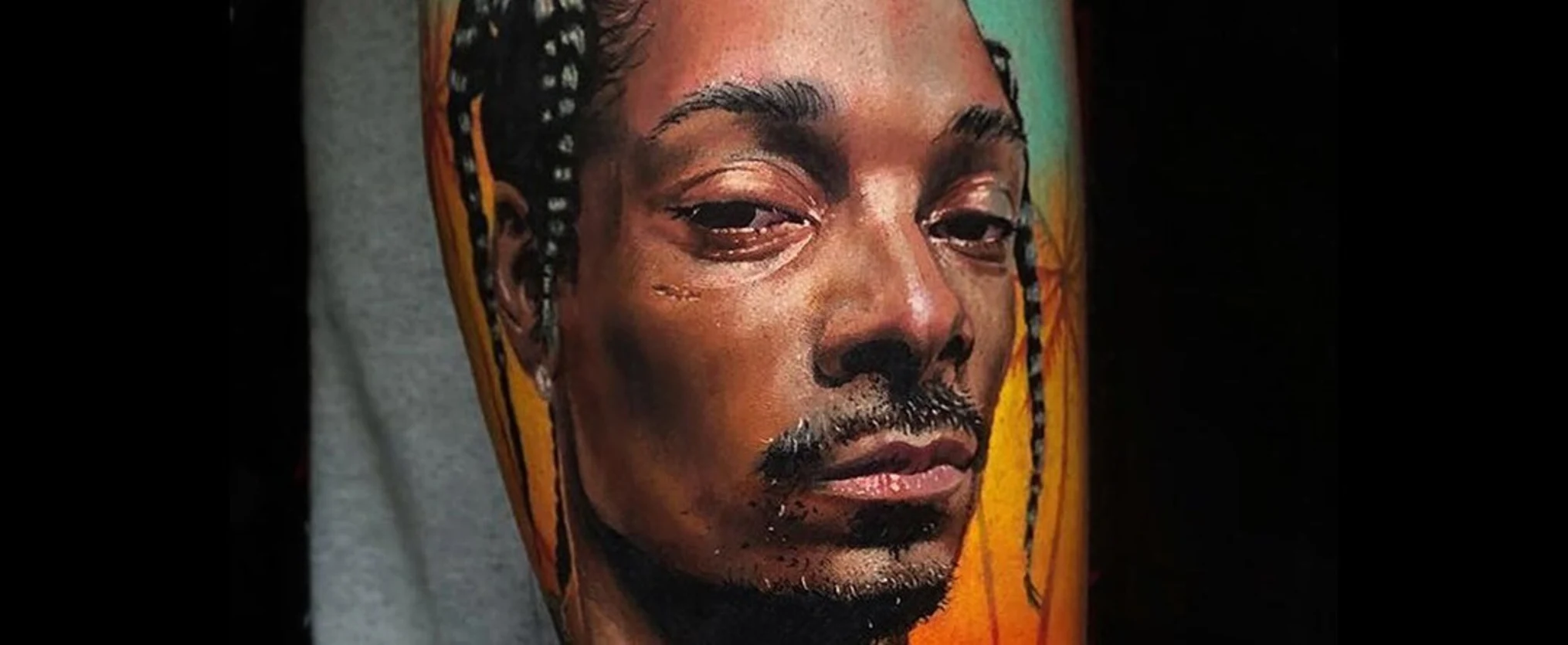
Snoop Dogg Tattoos Every Fan Should See
Celebrating Snoop Dogg’s birthday with tattoos honoring the hip-hop legend.
More From Culture
What Happens When Military Standards Meet Tattoo Aftercare
October 20, 2026
Steel to Sole
October 19, 2026
Breaking the (Skin) Barriers
October 19, 2026
Your Books Got Busy. Your Software Didn’t.
October 19, 2026