Amy Young
August 12th, 2026
Master of Control
Glen Middleton’s tightly engineered tattoos are built on a foundation of reverence for fine art.
Upon viewing the intricate work of tattoo artist Glen Middleton, it would not be shocking if a dig into his history revealed that he swapped a career as a stone mason for a life loaded with needles and ink.
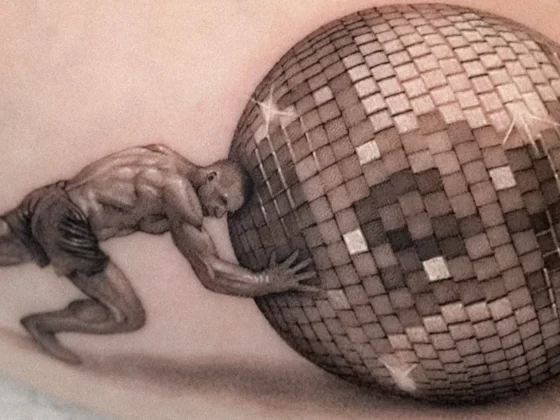
Black-and-gray realism is his specialty, and his ability to create deeply dimensional, sculptural work on the human body is awe-inspiring. No matter where the pieces sit on the human form, that depth remains, highlighting his ability to work with the body’s twists and turns.
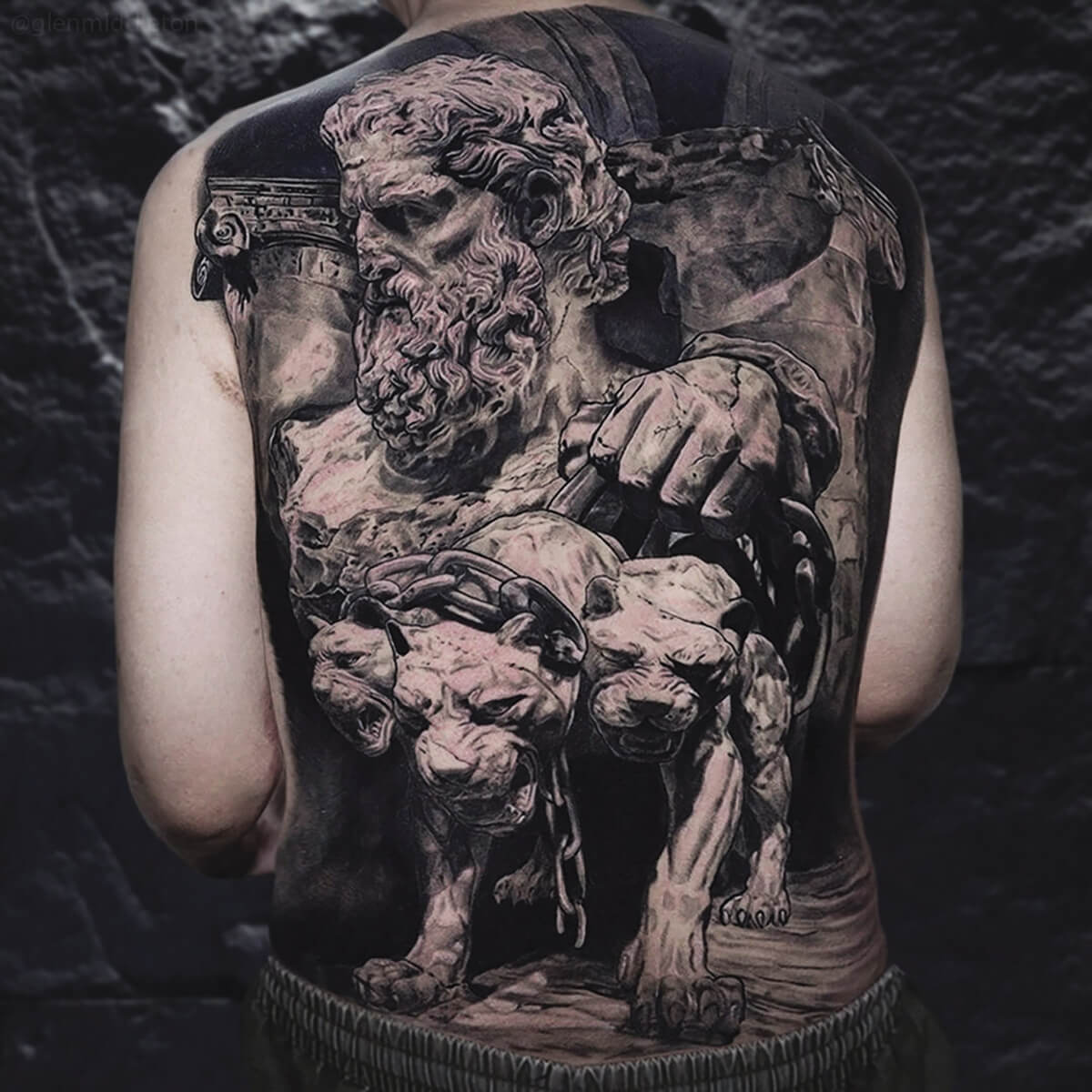
There’s a lot of historic imagery in his work, so it’s not surprising to see a recreation of a 17th- or 18th-century Baroque figure or a statue of Hercules, some dating back to the 2nd century. It’s especially fitting as Middleton, who is originally from Sydney, Australia, is enamored by artistic creations from bygone eras.
“I was always drawn to art,” Middleton tells Inked, but says it wasn’t in a conventional way.
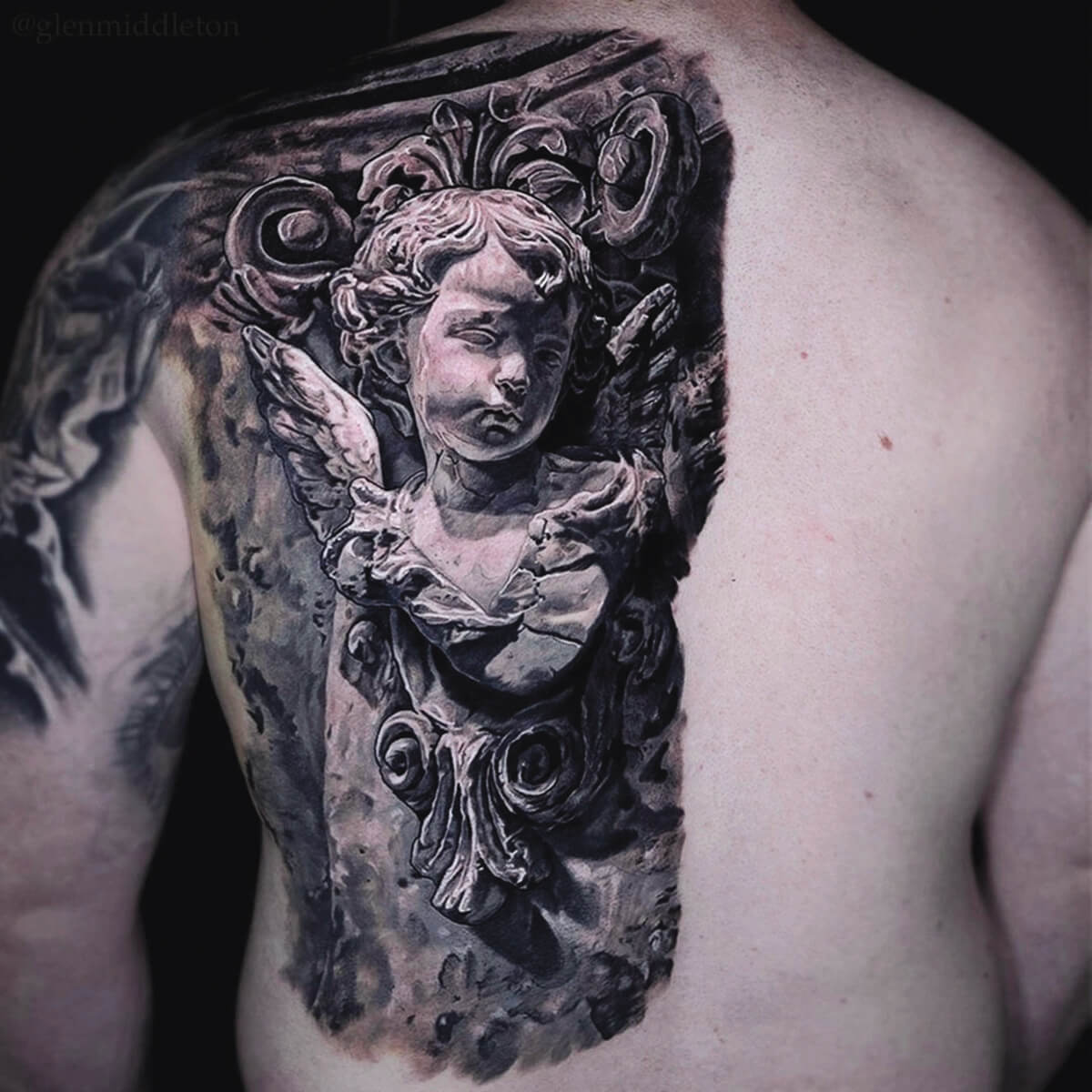
“Illustration never really held weight for me. I don’t look to individual artists for direction. It’s more about the work itself. Cathedral stonework, classical sculpture, architectural carving — they have always held my attention,” Middleton explains. “The way those works handle scale and depth is something I bring into every piece. You can study them repeatedly and still find more in them. That’s what I’ve been drawn to over time. Tattooing became the way to apply that to the body. It let me build with depth, structure, and light; not just surface.”
Examining his pieces, Middleton’s meticulous nature is undeniable. The whites and lighter shades used to highlight the work add the dimension that brings each to life. It emphasizes his attention to the smallest details, like the heavy eyelids on a Frankenstein tattoo that help define the legendary character, or the bit of teeth a slightly open mouth reveals. His precision-passion combination never leaves you guessing the subject’s emotion.
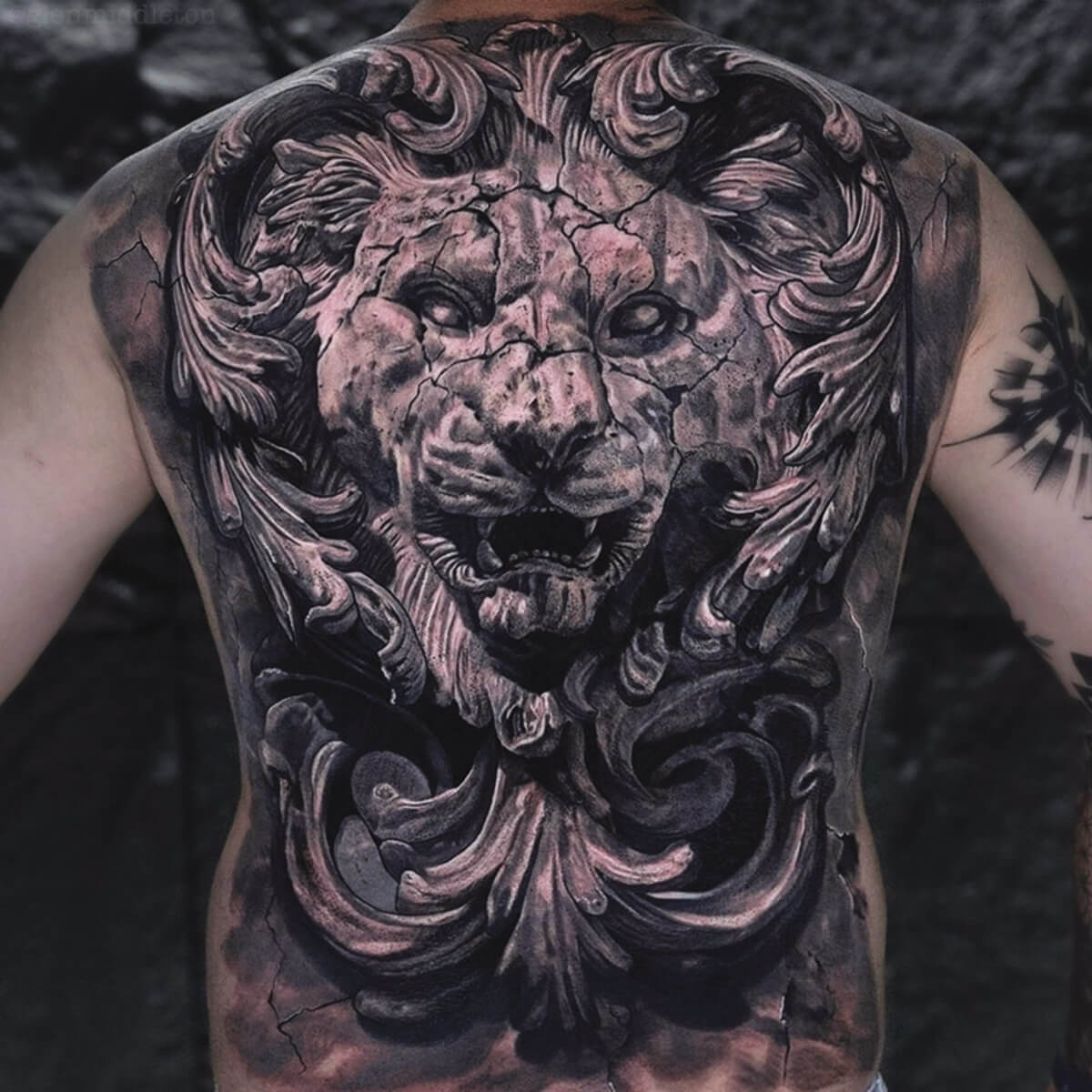
“My understanding of form came from time spent in Europe studying historical work up close,” explains Middleton, who has been paying attention to art for many years. “Being around it changes your eye. You start to see weight, proportion, and how light moves across a surface. That shifted my focus away from decoration and more toward building something that actually holds.”
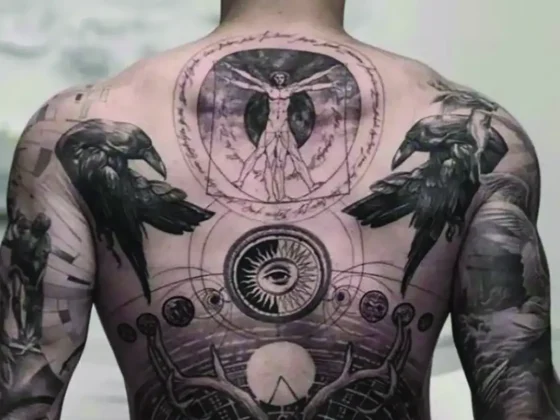
While he doesn’t point to any of his artworks specifically as notable, he offers a broader perspective on what “notable” means to him. “There are a few large-scale pieces that stand out, mainly because of the level of control required across multiple days. (These include) full-back work and chest pieces, where everything has to read clearly from a distance while still holding detail up close. Those are the pieces that push the standard,” he explains.
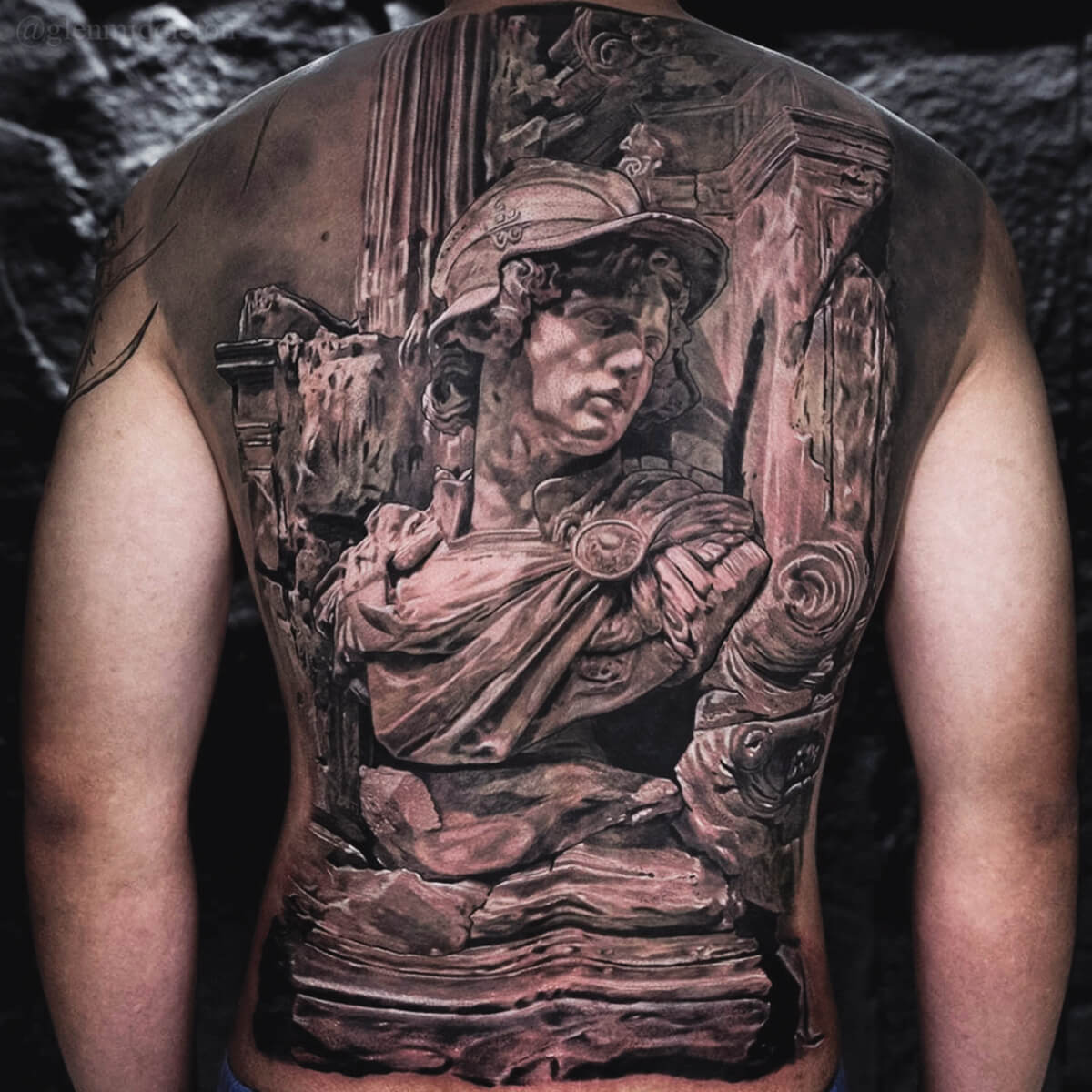
His elaborate work can take many hours and multiple sessions, but those components of the job don’t ruffle Middleton. “Growing up in Australia, I built a direct work ethic early. I started boxing at 9, so discipline, repetition, and control under pressure were there from the start. That carries straight over into how I work now: long sessions, precision, and consistency. No shortcuts,” Middleton explains. “I don’t train in boxing anymore, but the discipline from it hasn’t changed. I still train daily, mostly strength and conditioning. It keeps the same structure and consistency that carries into the work.”
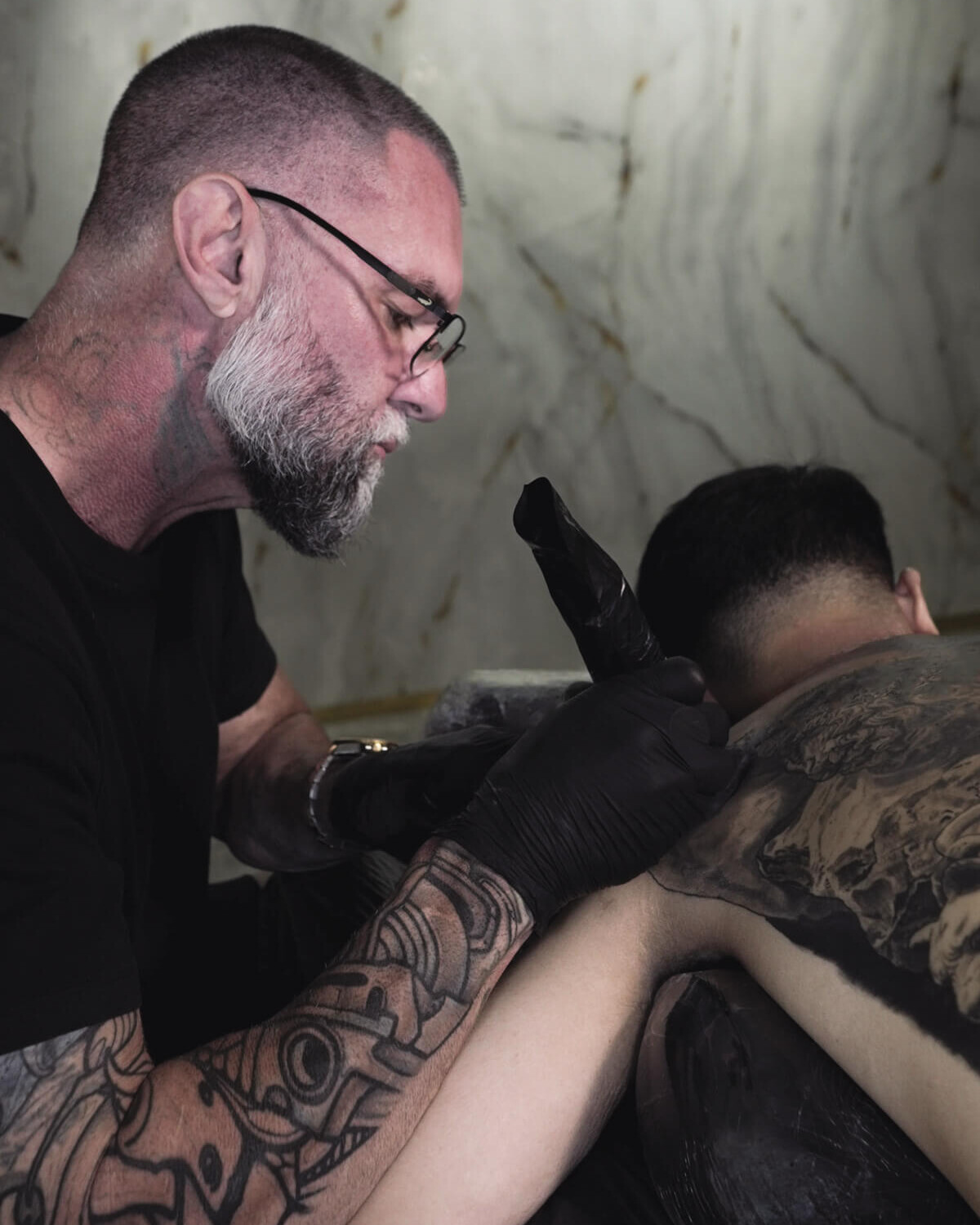
Middleton undoubtedly knows who he is and what he loves and appreciates. He has united that powerful sense of self with those artistic motivators, but that doesn’t mean it comes without some hurdles.
“The challenge is maintaining clarity at scale. Large work can fall apart quickly if it’s overworked. I keep it controlled through strong form, strong contrast, and nothing unnecessary,” he explains, adding, “Most of my clients commit to large-scale, multi-day work from the start, so I can control the piece all the way through.”
It stands to reason that this master of detail, both personally and professionally, likes a very specific work environment. “I keep the work environment controlled with minimal distractions. Usually, low, consistent music is on. It helps maintain concentration, especially during long sessions,” he says.
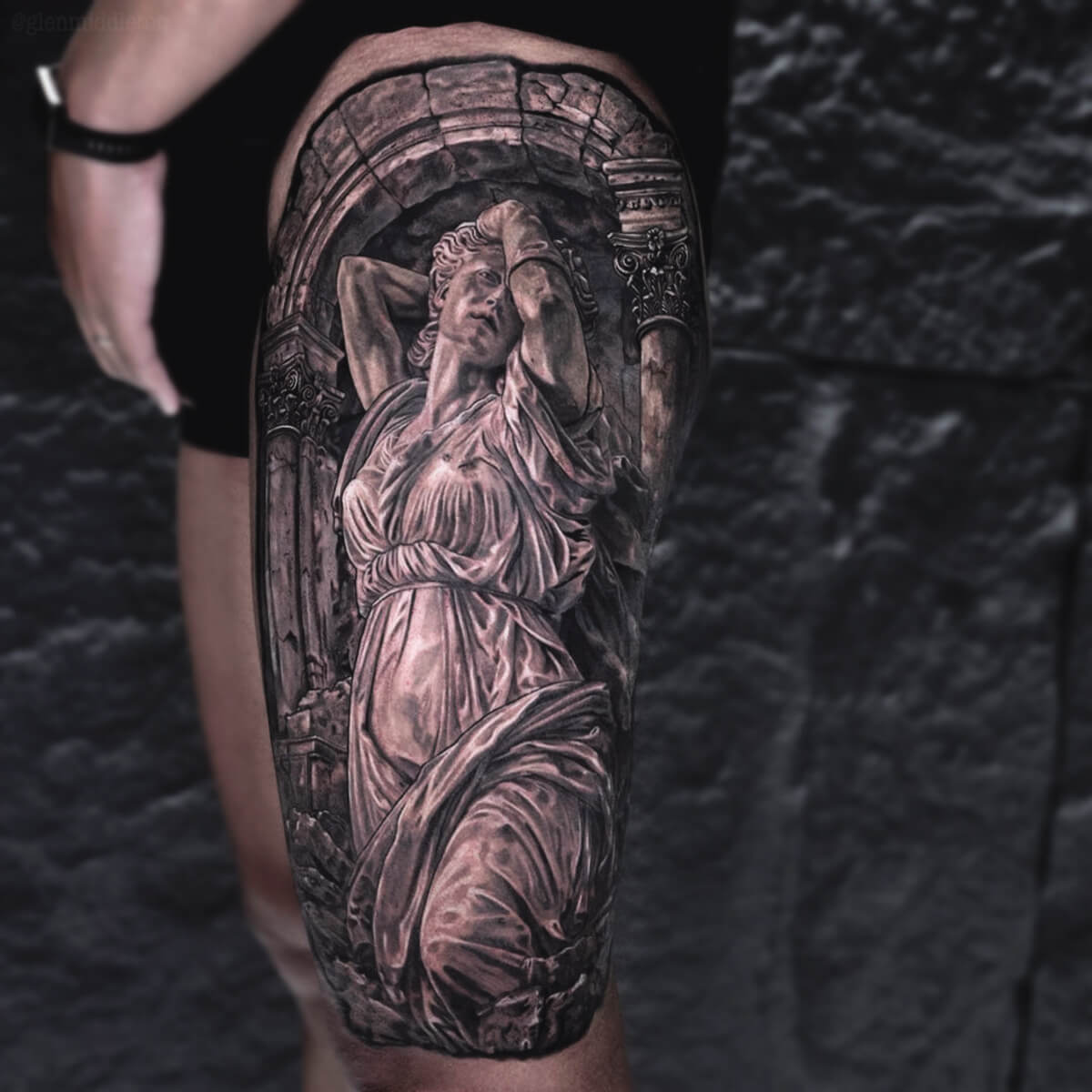
For Middleton, work is the constant current that permeates his time. Outside of tattooing, he says most of his time is still devoted to the work in some form, whether it’s training, studying references, or refining his process.
His job requires him to travel, but he delivers his globally influenced works mostly in New York. “Australia built the foundation. Europe refined the direction. New York is where the work gets tested; it keeps the standard high,” Middleton explains.
“The level of art, architecture, and collectors (here) aligns with where I’m taking the work,” he says of staying in New York long-term. “I’ll still travel, but selectively, with limited availability in specific cities. It’s about placement, not volume.” As Middleton looks ahead, he says that while he knows there will always be a commercial side to tattooing, the art remains the focus.
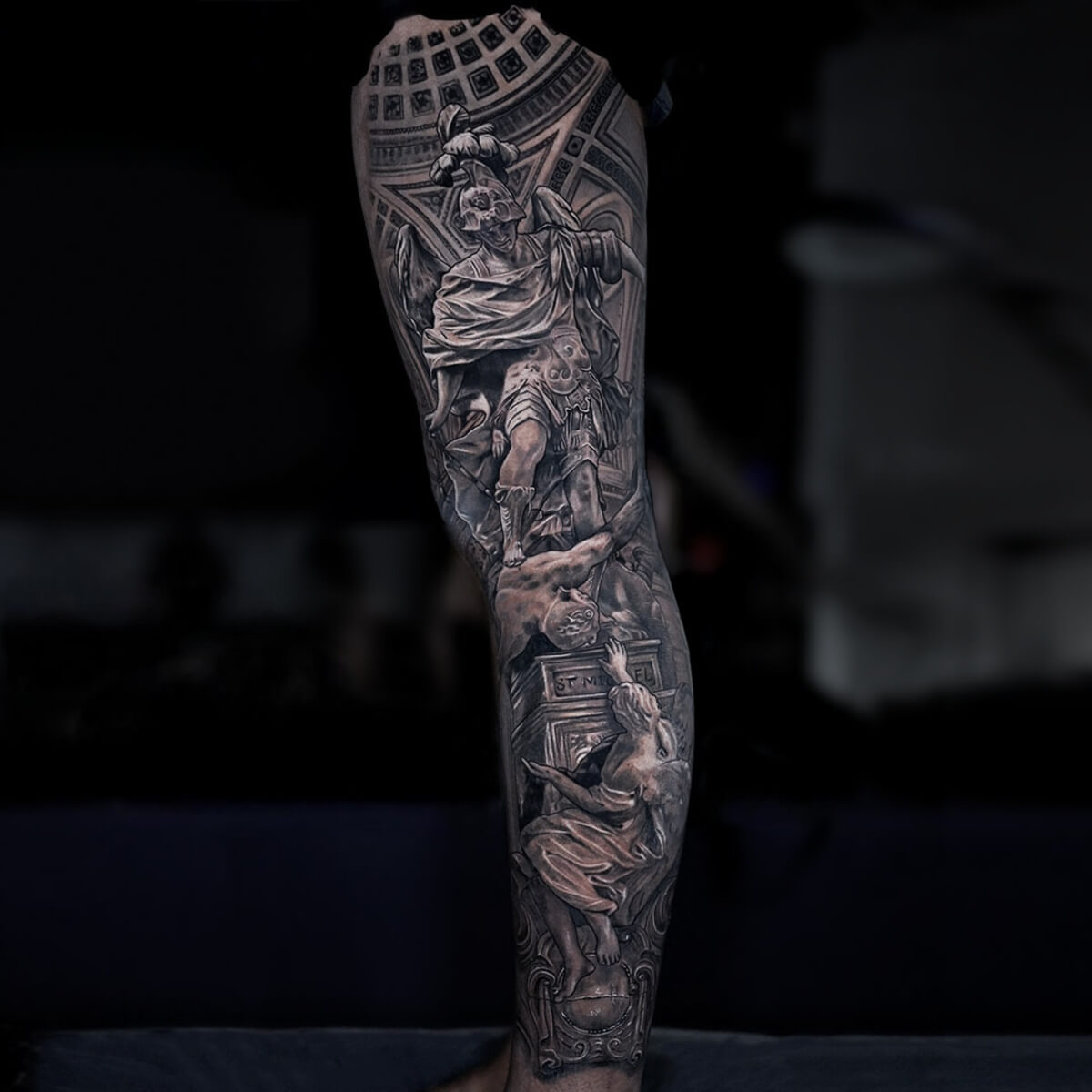
“The top end,” he says, “is moving toward refinement, structure, and long-term value. Closer to art, closer to collectors — that’s where I’m focused. Building work that holds over time.”
See more from Glen Middleton at https://www.glenmiddleton.art/
Editor's Picks
More From Culture

What Happens When the Tattoo Industry Won’t Let You In?
September 21, 2026
5 Tattoo Shop Mistakes That Quietly Cost You Money
September 21, 2026
Realism Reduced and Refined
September 21, 2026
The Tattoo Industry Has Evolved. Why Are Stencils Still Stuck in the Past?
September 17, 2026