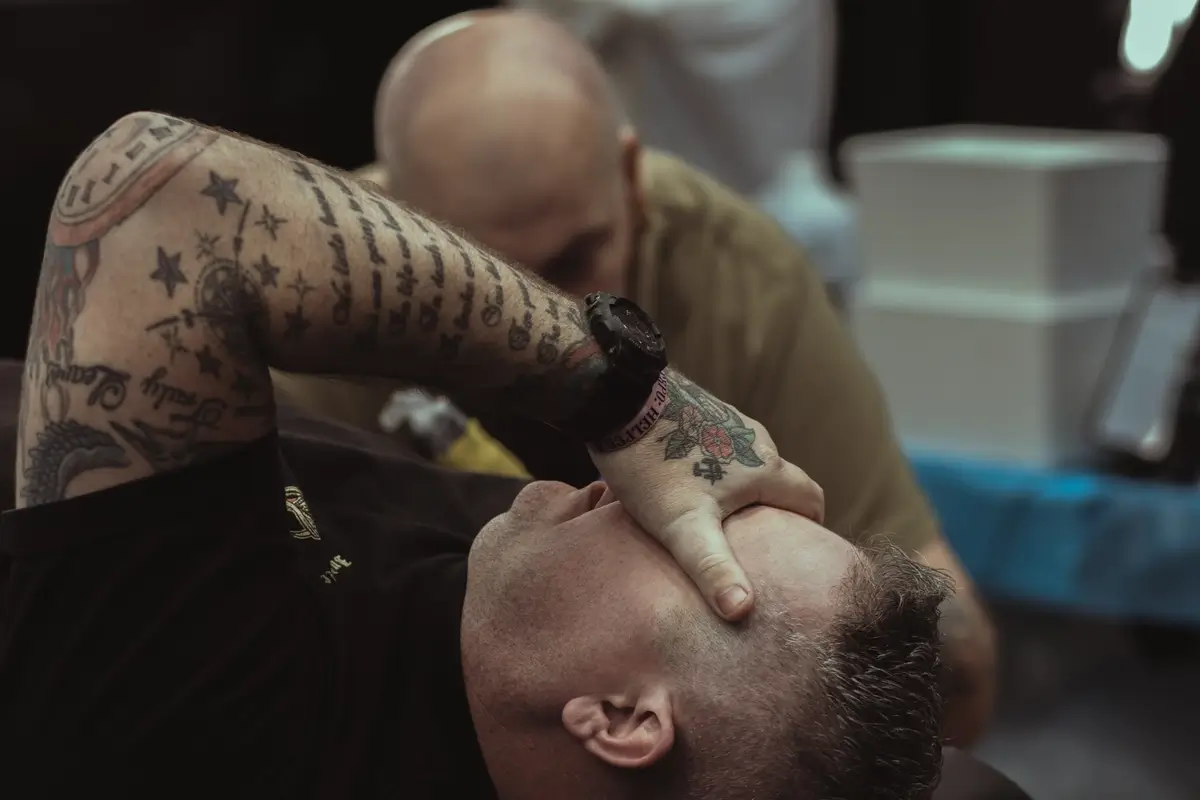
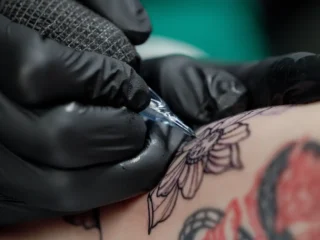
“No pain, no gain” may be a common expression used to motivate professional athletes, but the same mentality can also be applied to tattoo sessions. After all, some of the most intricate ink demands hours of distress as needles repeatedly sink into the skin until a final result — the gold medal of body art — is revealed and rewarded.
But not all tattoo pain is equal due to variations in location, shading techniques, and surface area. Whether you’re a tatted veteran or fearful first-timer, it’s important to know the level of discomfort you may experience before going into a shop and surrendering to the often long and taxing process.
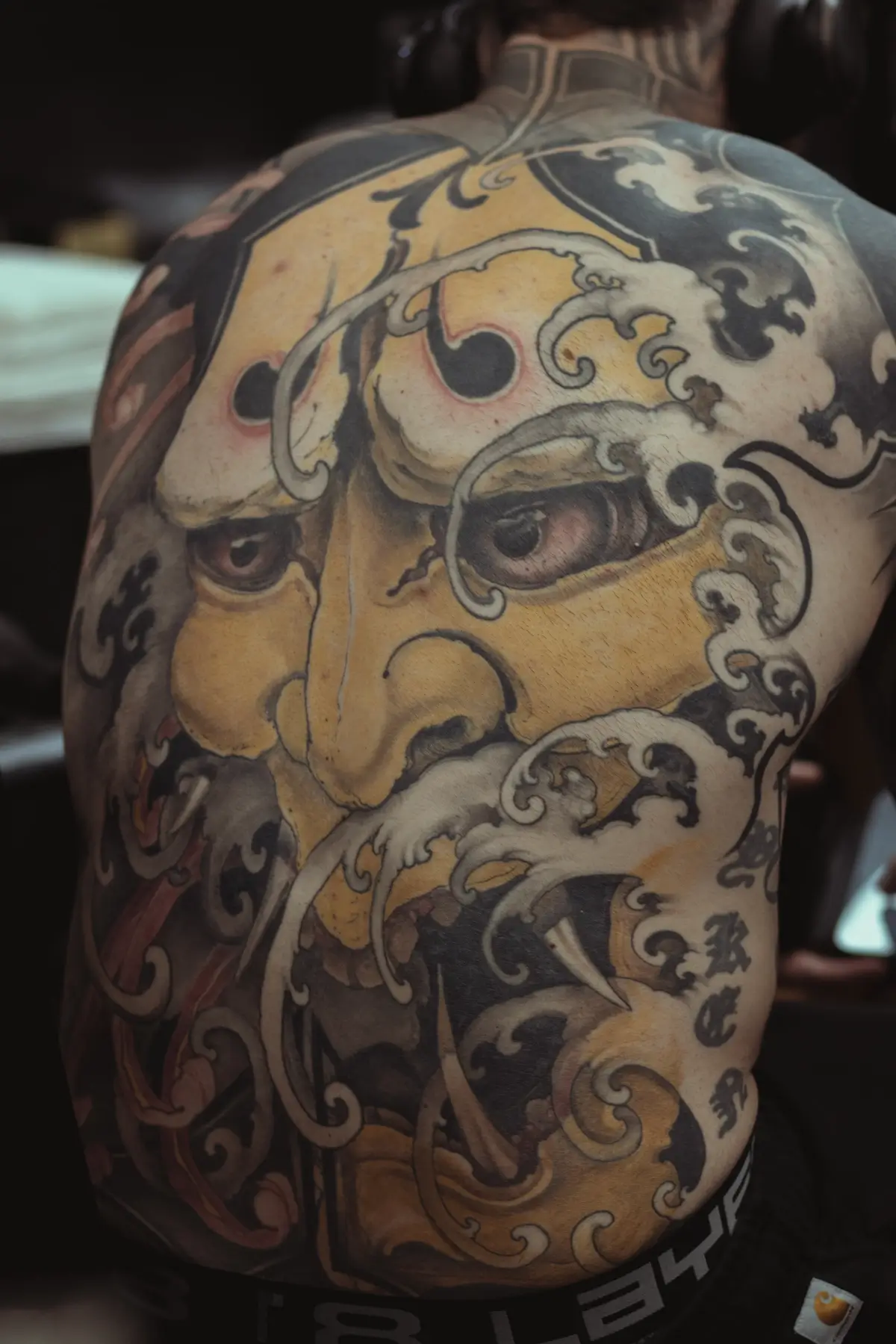
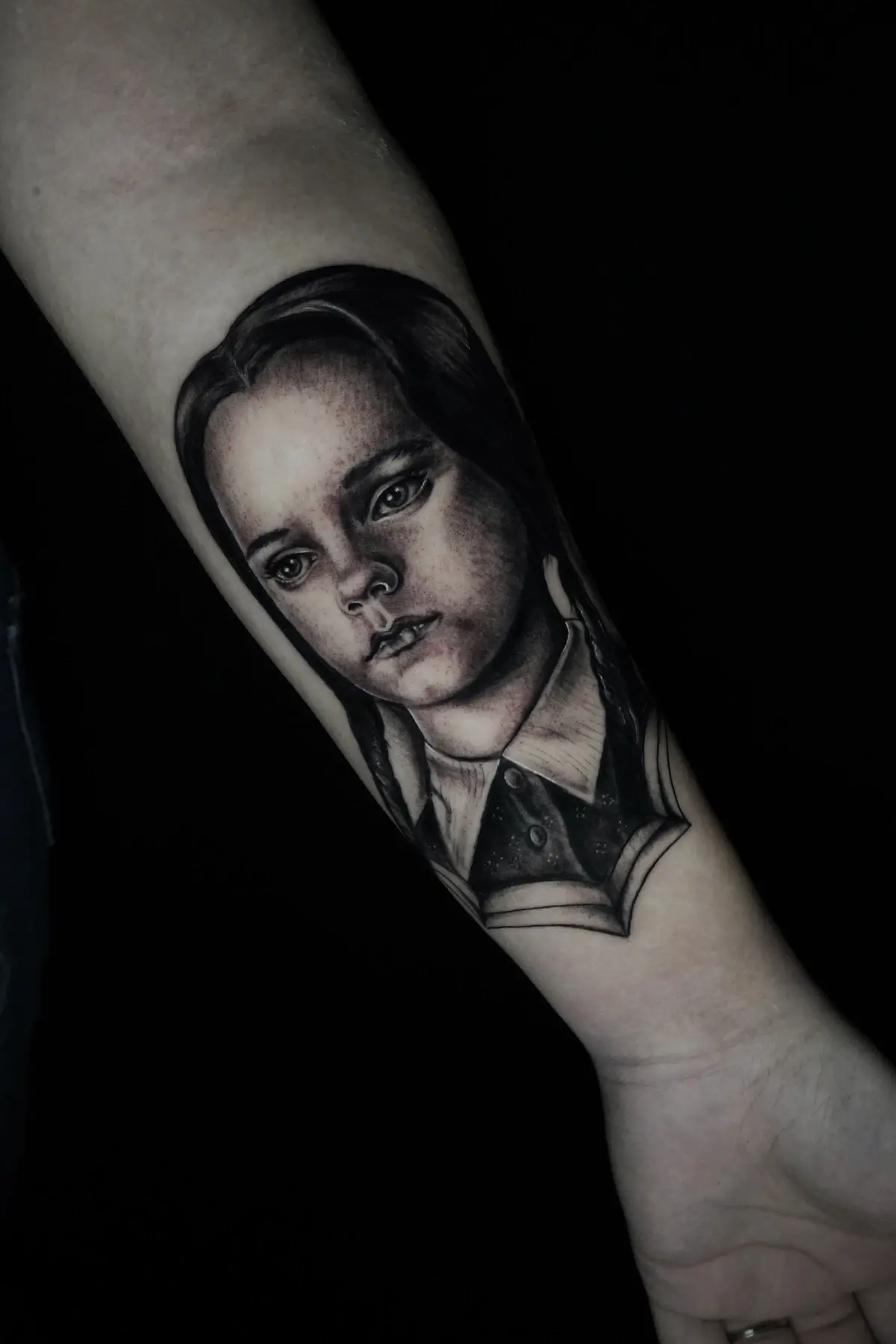
ANTHONY LOPEZ / @YOUNGLORD.ANT
Beyond Thick Skin
Dr. Robert Finney, founder of and dermatologist at NYC’s Soho Skin and Hair Restoration, confirms that from a physiological standpoint, the most sensitive areas of the body tend to be anything from the neck up, as well as the hands and feet.
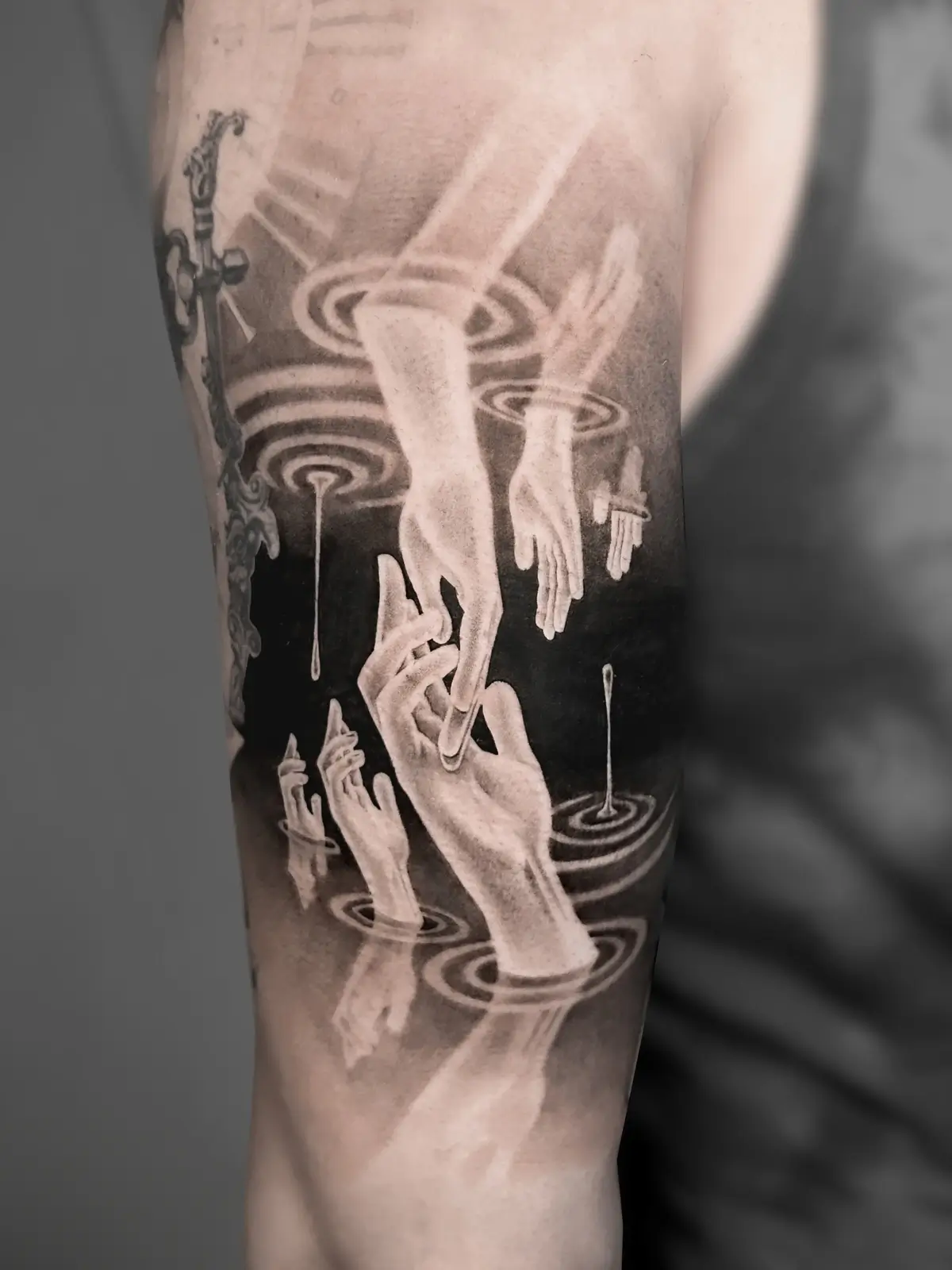
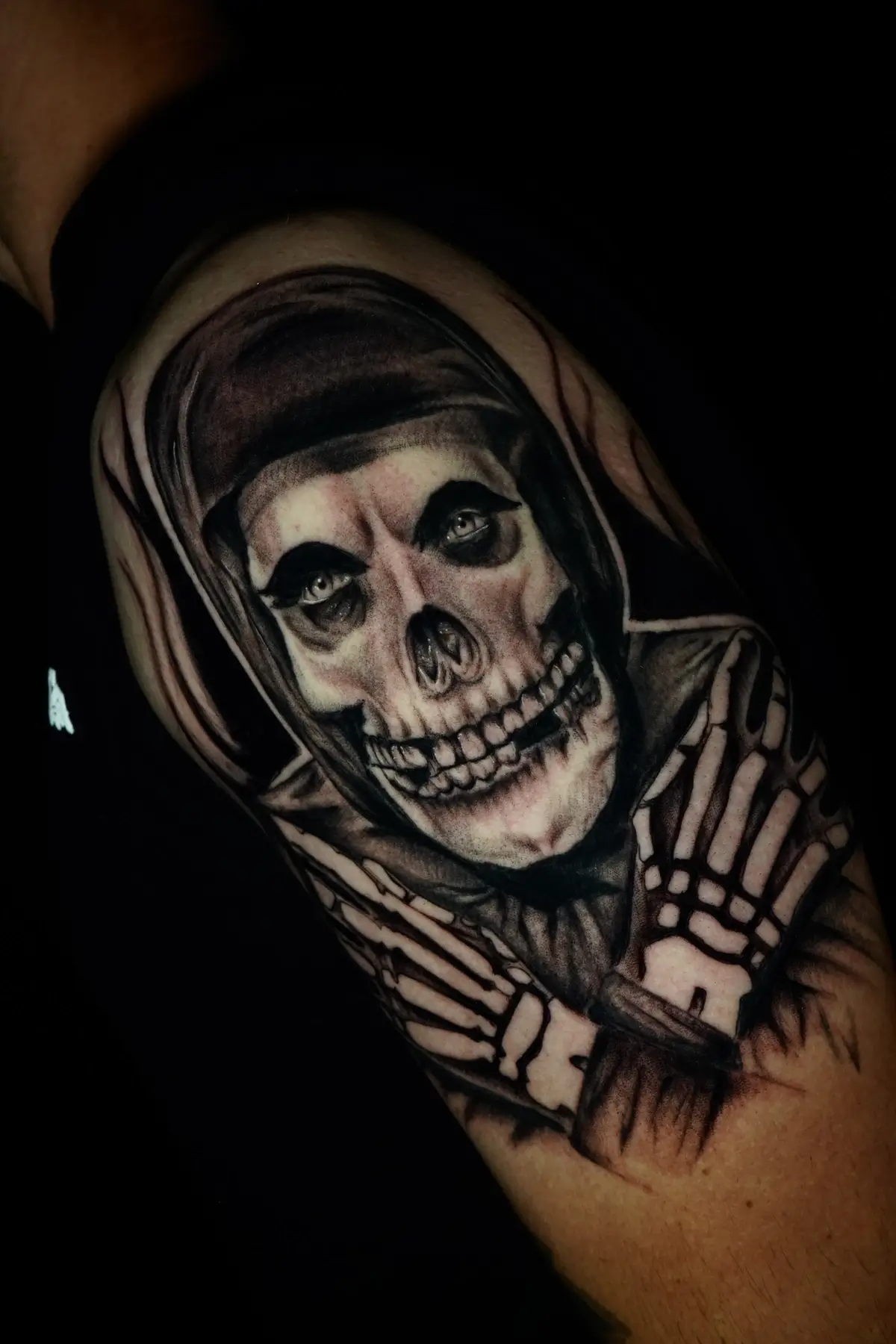
TRAVIS FOUNTAIN / @FOUNTAIN.NYC
“These regions have a higher density of nerve endings, which translates to more intense pain during tattooing,” he explains. “Pain is also amplified in areas with minimal padding. These are locations with less subcutaneous fat that allow more direct compression and stimulation of underlying nerves.”
In contrast, areas with more soft tissue tend to absorb some of that mechanical trauma, making them slightly more tolerable.
TRAVIS FOUNTAIN / @FOUNTAIN.NYC
“If it took above-average tolerance and bravery to get through it, there’d be a whole lot less tattoos out there.” -Travis Fountain
Travis Fountain, NYC- and Los Angeles-based tattoo artist, echoes these sentiments, noting that parts that bend like the ditch of an elbow, behind the knee, the lower wrist, and even the stomach are also notoriously tender. “The exception that I find interesting is how painful the back of the calf can be. It was one of the worst in my own experience,” he says, claiming that the sensation was equal parts sharp and stinging.
A quick yet tried-and-true self-assessment to determine if a tat will hurt is to pinch, twist, and scratch the skin you plan to ink. This will provide a preliminary indication of pain levels so that you’re not going into the chair completely blindsided.
TRAVIS FOUNTAIN / @FOUNTAIN.NYC
Covering Up Myths
When it comes to pain, there are a few longstanding myths that have plagued artists as they reassure and even convince clients that they’ll survive the poke and stick. One of the most popular is that specific ink colors, particularly white, tend to be more irritating than others.
“White ink is typically applied at the end of a session for highlights and shading. By that point, the skin is already inflamed, and your pain threshold has dropped,” Finney says. “Additionally, shading often requires multiple passes over the same area. The first pass creates a controlled wound. Repeated passes over already-inflamed skin will naturally feel more sensitive.”
ANTHONY LOPEZ / @YOUNGLORD.ANT
The next is that paler skin is more susceptible to soreness and inflammation. The reality is that there is no evidence to suggest that a lack of melanin leads to increased sensitivity.
“Everyone I’ve tattooed perceives pain differently,” says Miss Vampira, owner of Thorn Tattoo in upstate New York and resident artist at 5 Points Tattoo in NYC. “A fun fact is that redheads, who are commonly very pale, actually have a higher pain tolerance (due to a mutation in the MC1R gene), and that’s usually true.”
ANTHONY LOPEZ / @YOUNGLORD.ANT
The biggest myth that can now be accepted as fact is that the longer the tattooing session, the more painful it can become.
“Duration is the single biggest driver of tattoo pain,” Finney reveals. “As the session lengthens, your body’s stress response increases — cortisol rises, inflammation builds, and sensitivity heightens. At a certain point, it’s not about toughness — it’s about physiology.”
TRAVIS FOUNTAIN / @FOUNTAIN.NYC
To Numb or Not to Numb
Though numbing creams are an option for lengthy sittings, they’re generally frowned upon by the tattooing community.
“Most numbing creams are solutions that you soak the skin in for extended periods of time before the tattoo session. Skin that’s been soaking in a liquid for hours has a spongy, softer texture that can make it difficult to work on fine details,” Fountain says, adding, “I also don’t think it’s widely understood that it’s not a perfect ‘no-pain’ solution and that it wears off during longer sessions.”
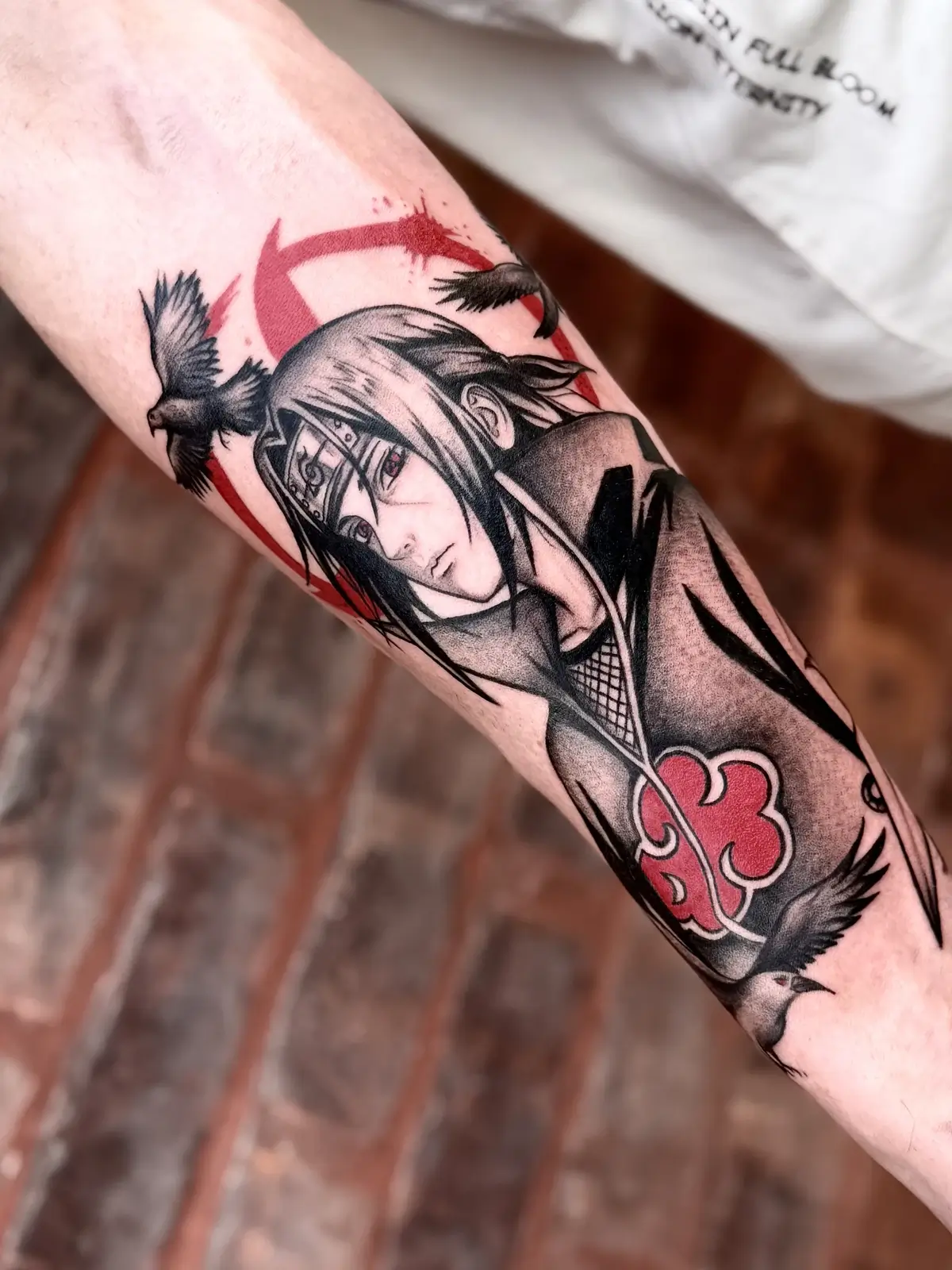
MISS VAMPIRA / @MISSVAMPIRA
“Everyone I’ve tattooed perceives pain differently. A fun fact is that redheads, who are commonly very pale, actually have a higher pain tolerance (due to a mutation in the MC1R gene).” -Miss Vampira
That said, those who feel they can’t get inked without it should consult their artist prior to meeting. “We need to know what you are using,” Vampira warns. “If you show up with it on and without letting your artist know, be prepared to possibly reschedule.”
Use of these products should also completely depend on size and duration, Finney advises. “When used appropriately for small surface areas and limited time, the risks are very low. Problems arise with excessive use: large body surface areas, prolonged application, or occlusion,” he says, stressing, “Systemic lidocaine toxicity is real and potentially fatal. Used responsibly, they’re helpful. Used improperly, they’re dangerous.”
MISS VAMPIRA / @MISSVAMPIRA
Forget Regret
Perhaps more painful than the tattoo itself is the decision to remove it, at least according to Carmen Vanderheiden Brodie, VP of clinical operations at Removery. Depending on the size, colors, and saturation, it will also require multiple sessions.
“The same spots that tend to sting more during tattooing usually feel more intense during laser removal,” she says. “It all comes down to skin thickness, nerve density, and how much soft tissue sits between the laser and your bones.”
The good news is that technology advancements have incorporated pain management into modern treatments. “Devices like the Zimmer Cryo cool the skin continuously during the session, keeping the surface comfortable while picosecond pulses do deeper work on the ink,” says Brodie, who also recommends picosecond laser systems for “ultrafast pulses that tend to be gentler and more effective than older nanosecond devices.”
MISS VAMPIRA / @MISSVAMPIRA
MISS VAMPIRA / @MISSVAMPIRA
Tit for Tat
While tattoos have long been considered masochistic forms of self-expression, they’re also worn as badges of honor. Despite the temporary suffering, an appointment can actually be enjoyable with the right headspace and the right artist.
“The biggest factor in making that happen is creating a safe and comfortable environment for clients,” says Fountain, who implores anyone with hesitancy not to shy away from booking. “If it took above-average tolerance and bravery to get through it, there’d be a whole lot less tattoos out there.”
But if your first or next tat is making you feel particularly uneasy, channel your inner athlete and favorite motivational cliche. These just may provide the mental fortitude you need to get through the finish line, no matter the level of agony.