
Inked Mag Staff
March 16th, 2026
The Payment Problem Tattoo Studios Don’t See Until It Becomes One
What your payment system might be getting wrong
Most tattoo studios don’t think of their payment system as a financial risk. It’s just how clients pay. The card goes through, the tattoo gets finished, artists get their share, and the shop takes its cut.
From an accounting perspective, though, how money flows matters just as much as how much comes in. In many tattoo studios, the payment trail doesn’t actually reflect how the business operates.
Most shops are using payment systems built for retail stores with employees, not for studios run by independent artists. Over time, tattooers have learned to make those systems work through habit and workaround, even when the structure doesn’t quite fit.
That mismatch can create headaches. Not because anyone is doing something wrong, but because the tools weren’t built for this industry.
One studio owner discovered this during a routine accounting review with her accountant. On paper, the business appeared to be earning far more than it actually kept. Every card payment passed through the shop’s account first, even though a large portion of that money belonged to independent artists.
The concern was simple and unsettling. If the records showed the shop receiving all of the income, the business could be exposed to tax, reporting, or compliance issues on money that was never truly theirs.
Rather than accept that risk or continue relying on informal fixes, the studio owner asked a basic question: what would a payment system look like if it actually matched how tattoo studios work?
That question didn’t stay theoretical for long.

Why This Matters to U.S. Tattoo Studios
Most tattoo studios in the United States operate with independent contractors, not employees. Artists earn their portion of each tattoo. The shop earns its percentage or rent. On the floor, the arrangement is clear.
On paper, the money flow tells a different story.
Regulators don’t evaluate contractor relationships based on culture or intent. They look at documentation. They look at financial independence. And they look closely at how income is received.
When all card payments flow through the shop’s account and artists are paid later through transfers or commission payouts, the financial record adds unnecessary complexity to an already scrutinized area. Contracts matter, but the IRS weighs many factors when evaluating contractor relationships — and a clear, consistent payment trail is one less thing to explain if questions arise.
Accountants don’t rely on handshake agreements. They rely on what the numbers show.
“If the payment trail doesn’t match how your studio actually works, that’s where problems start.”
How the Issue Came Into Focus
This wasn’t a hypothetical concern. It surfaced through real conversations with an accountant trying to reconcile how the studio operated with how the numbers appeared.
Each review led back to the same issue. The payment system treated the studio like a retail business, even though it operated as a contractor-based shop. Artists earned their income independently, but bank statements and transfers showed a different story.
This wasn’t anyone’s fault. Most payment systems are designed for traditional retail businesses with employees. Tattoo studios have been adapting those systems to contractor-based models, even when the underlying structure doesn’t align cleanly.
Instead of continuing with cash-only policies, multiple card readers, or manual payouts, the studio owner focused on where the problem actually began: the payment itself.
What if the split happened at the moment the card was charged?
That question became the foundation for SplitSum.

Why Payment Flow Is the Real Issue
From an accounting standpoint, when all funds move through the business account first, revenue can appear inflated. Ownership of income becomes less clear. Reporting becomes more complex and time consuming than it needs to be. Even when artists are paid correctly later, the original transaction record may not support the reality of the relationship.
Separating income at the point of payment creates documentation that aligns with how the studio actually works. It shows, in real time, who earned what, without relying on after-the-fact adjustments.
A System Built Around Reality
SplitSum integrates with Stripe, allowing a single card transaction to be split automatically between the studio and the artist the moment it’s processed.
Percentages are set once. From there, the artist’s share goes directly to the artist, and the shop’s portion goes directly to the business. There’s no manual commission math, no delayed transfers, and no ambiguity about ownership.
The transaction itself reflects the economic reality of the relationship.
For U.S. studios, this structure can also support cleaner year-end reporting. When contractor income is separated at the point of payment, year-end reporting becomes cleaner and more consistent with how the studio actually operates. It doesn’t replace contracts or proper 1099 filing, but it means the numbers tell the same story your paperwork does, from the very first transaction.
There’s a practical difference at tax time too. When all payments flow through the shop first, the business receives a 1099 reflecting the full amount, including the artists’ earnings. That means the shop must then issue individual 1099s to each contractor to account for their portion. With SplitSum, studios can go further: using direct or separate payment routing through SplitSum means each party receives a 1099 reflecting only what they actually earned. The shop’s books show the shop’s income. The artist’s records show theirs. For studios on standard payments, SplitSum still simplifies the process, the earnings data is already calculated and separated, making it significantly easier to prepare accurate 1099s come year-end.

How This Applies Depending on Your Payment Setup
Whether this issue applies to your studio depends largely on how you take card payments today.
If your studio uses a single POS system like Square or Clover with manual payouts: This is the most common setup in US tattoo studios, and where the mismatch between payment flow and business reality is most pronounced. All card revenue lands in the shop’s account, artists are paid later, and the 1099 burden falls entirely on the business. SplitSum was built specifically for this scenario, splitting income at the moment of payment and simplifying what would otherwise be a manual year-end process.
If your studio relies on spreadsheets or end-of-week transfers: The math may be right, but the paper trail still shows the shop receiving everything first. A split-payment system creates a real-time record that matches your contractor structure without changing how you operate day to day.
If your studio is cash-heavy or cash-only, the issue is less about payment flow and more about practicality. Cash naturally separates income, but it introduces other risks and limitations, especially as fewer clients carry cash.
If each artist has their own card reader:
Payments go directly to the artist, so the shop only sees its own income. But this doesn’t eliminate the documentation burden, it shifts it. Each artist becomes individually responsible for their own payment processing, reconciliation, and reporting. For the shop, coordinating rent, shared expenses, and tracking across multiple accounts adds its own layer of complexity. SplitSum can consolidate that without putting the administrative weight on individual artists.
Most tattoo studios aren’t doing anything wrong. They’ve just been handed tools built for a different kind of business and told to make them work.
The artists on your floor are independent. Your books should say the same thing.
SplitSum doesn’t change how your studio operates, it changes how clearly your finances reflect the business you’ve already built. And when tax season comes, when an accountant asks questions, or when your studio grows and the stakes get higher, the answer is already there in the numbers.
No one started a shop to become a bookkeeper or because they like managing money. Using a system designed for your business model can go a long way to helping ease your administrative burden. By routing the artist’s portion directly to the artist and the shop’s portion directly to the business at the moment of payment, they create a record that mirrors how the studio actually operates.
In short, if your studio does not already split card payments, this is worth paying attention to. If payments are already separated at the point of sale, much of this guidance may already be reflected in your setup.

The Accounting Bottom Line
Most tattoo studios aren’t doing anything wrong. They’re using tools that weren’t built for how their businesses actually operate.
When the payment trail matches how the studio actually works, there’s less to explain and less to fix later.
SplitSum exists because one studio owner recognized that the wrong payment system can quietly create problems long before anyone notices them.
Tattoo studios have spent years making tools work that were never built for them. There’s now one that is.
Editor's Picks
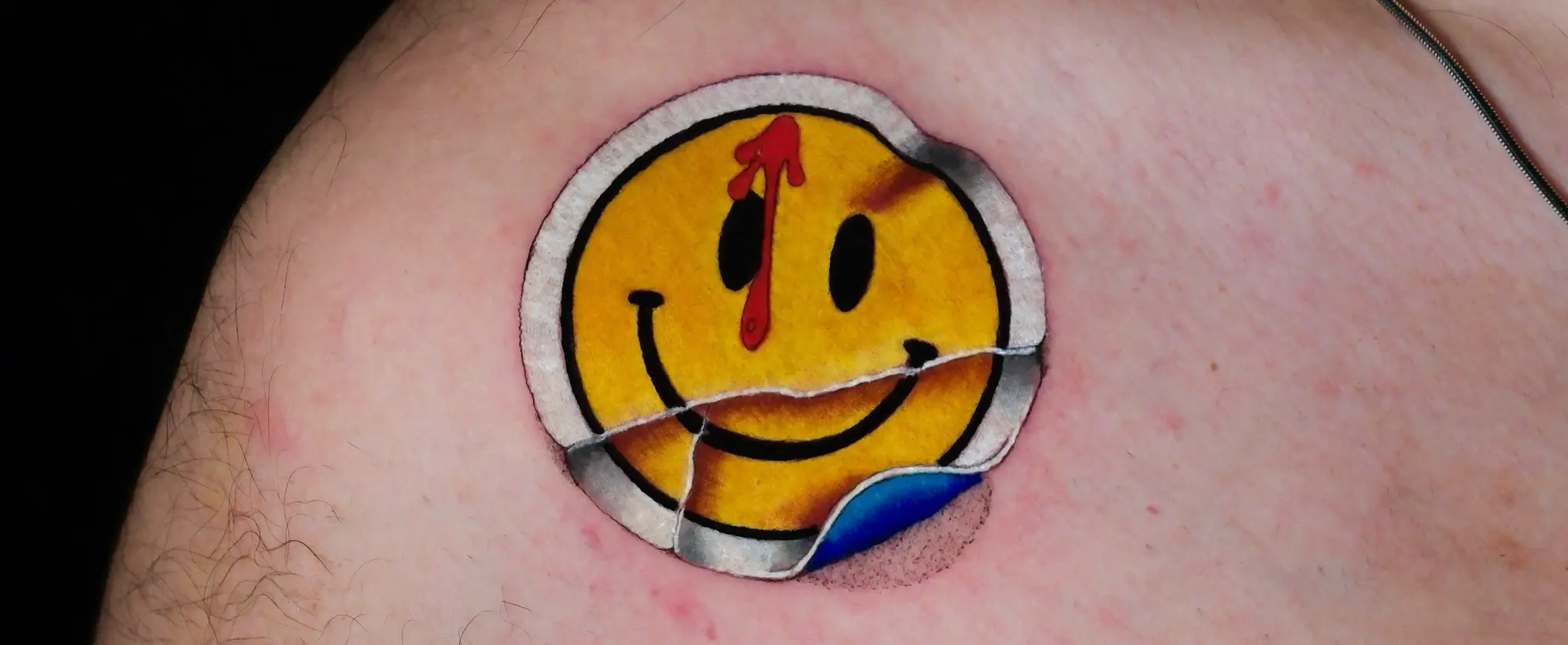
Meet the Artists Making Tattoos Look Like Stickers
These tattoos bring the look of classic stickers straight to skin.

What Happens When Military Standards Meet Tattoo Aftercare
How one Navy serviceman turned military discipline into a new standard for protecting tattoos and the stories behind them.

Snoop Dogg Tattoos Every Fan Should See
Celebrating Snoop Dogg’s birthday with tattoos honoring the hip-hop legend.
More From Culture

What Happens When Military Standards Meet Tattoo Aftercare
October 20, 2026
Steel to Sole
October 19, 2026
Breaking the (Skin) Barriers
October 19, 2026
Your Books Got Busy. Your Software Didn’t.
October 19, 2026