Lauren Ertl
September 17th, 2026
The Tattoo Industry Has Evolved. Why Are Stencils Still Stuck in the Past?
Modern tattooing demands more precision. Stencil technology is finally catching up.
While the hum of a tattoo shop has not changed much over the years, the array of tools required to make it all happen has been pared down and digitized. Hand-drawn sketches on tracing paper have given way to styluses and iPad screens. Appointment books splayed open on front desks have been replaced by management software on desktops. Even many of the machines themselves have transitioned from heavy, vibrating coils to whisper-quiet rotary pens.
Yet, for all this innovation, a critical piece in a tattooist’s creative process has largely remained frozen in time: the stencil.
Thermofax machines are the unacknowledged dinosaur in the room. For decades, thermal paper has ruled the roost when it comes to translating an artist’s vision onto a client’s skin. Modern tattooing trends like fine-line realism, micro-work and hyper-detailed shading, however, increasingly demand a method far more precise.
To keep up with this shift, artists began experimenting with inkjet printing to bridge the gap. While it is brilliant, often producing razor-sharp detail, crisp tonal gradients and instantaneous output, the DIY inkjet movement hit a wall. Aftermarket inks were being poured into standard desktop units that simply were not engineered for microscopic printheads. As a result, clogged nozzles, streaky transfers, ruined hardware and wasted hours spent troubleshooting took time away from the actual work.
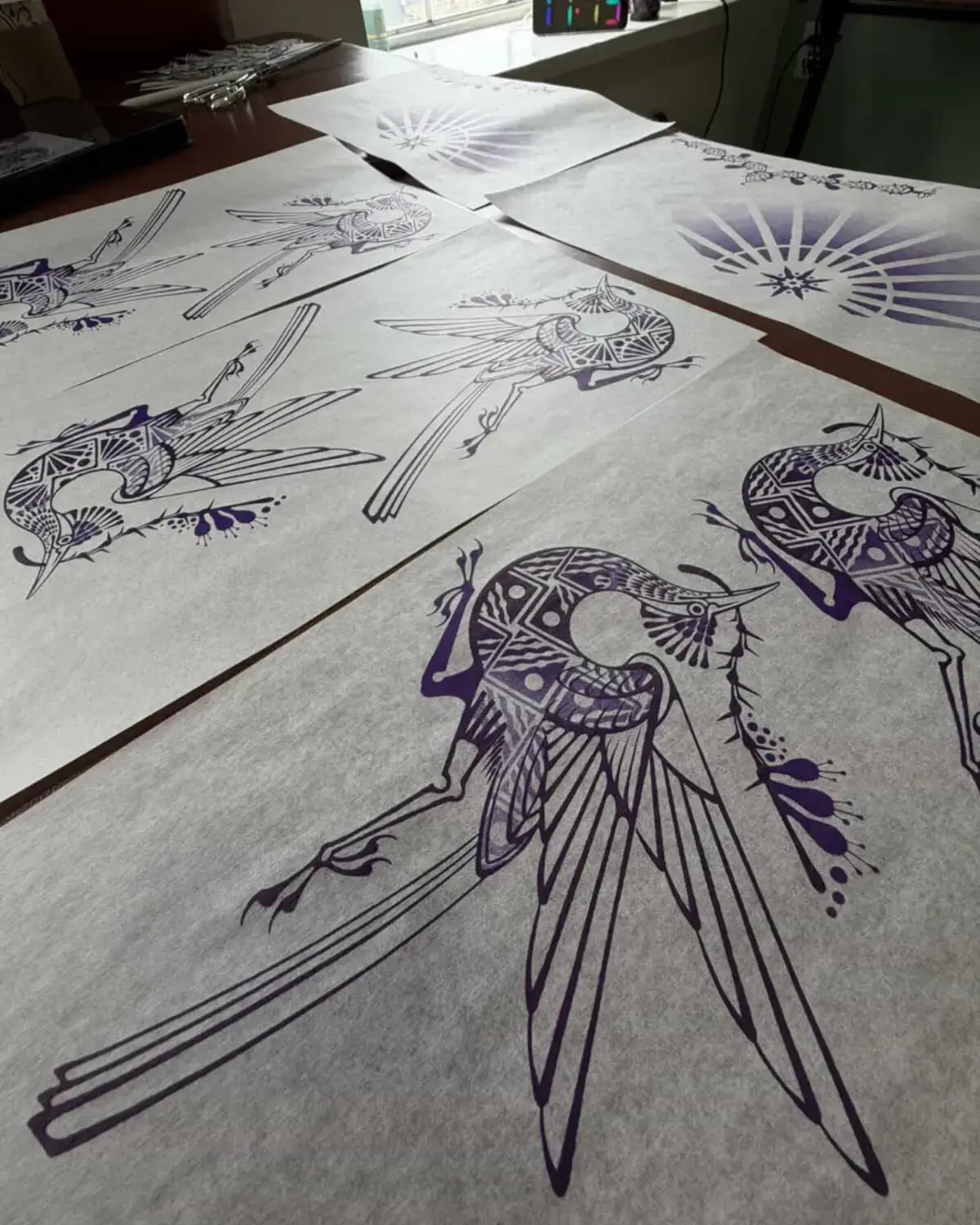
“Artists were already seeing the advantages of inkjet stencils, but the inks they were using weren’t actually designed for those printers,” notes the team behind Purple Stencil. “We knew we could solve that problem by developing an ink specifically engineered to work with the printer, rather than asking the printer to work around the ink.”
Backed by decades of specialized ink formulation expertise from its parent company, TROY Group, Purple Stencil approached the problem holistically. Instead of forcing artists and shop owners to hack off-the-shelf printers, they engineered a complete system that matched purpose-built inks with paper, dedicated technical support and desktop, mobile and scanning options designed around the different ways tattoo artists actually work.
For an artist, that precision matters long before the first line is pulled. Fine linework, subtle gradients, changes in line weight and small details all have to survive the transition from the original design to the stencil. And when a piece needs to be resized or adjusted to sit correctly on the body, being able to make the change digitally and print another clean stencil in seconds keeps the focus where it belongs: on placement, execution and the tattoo itself.
“The goal is to make the stencil process one less thing an artist has to think about,” they explain. “They should be able to print a clean, detailed stencil, make adjustments quickly if they need to, and get back to focusing on the tattoo and the client.”
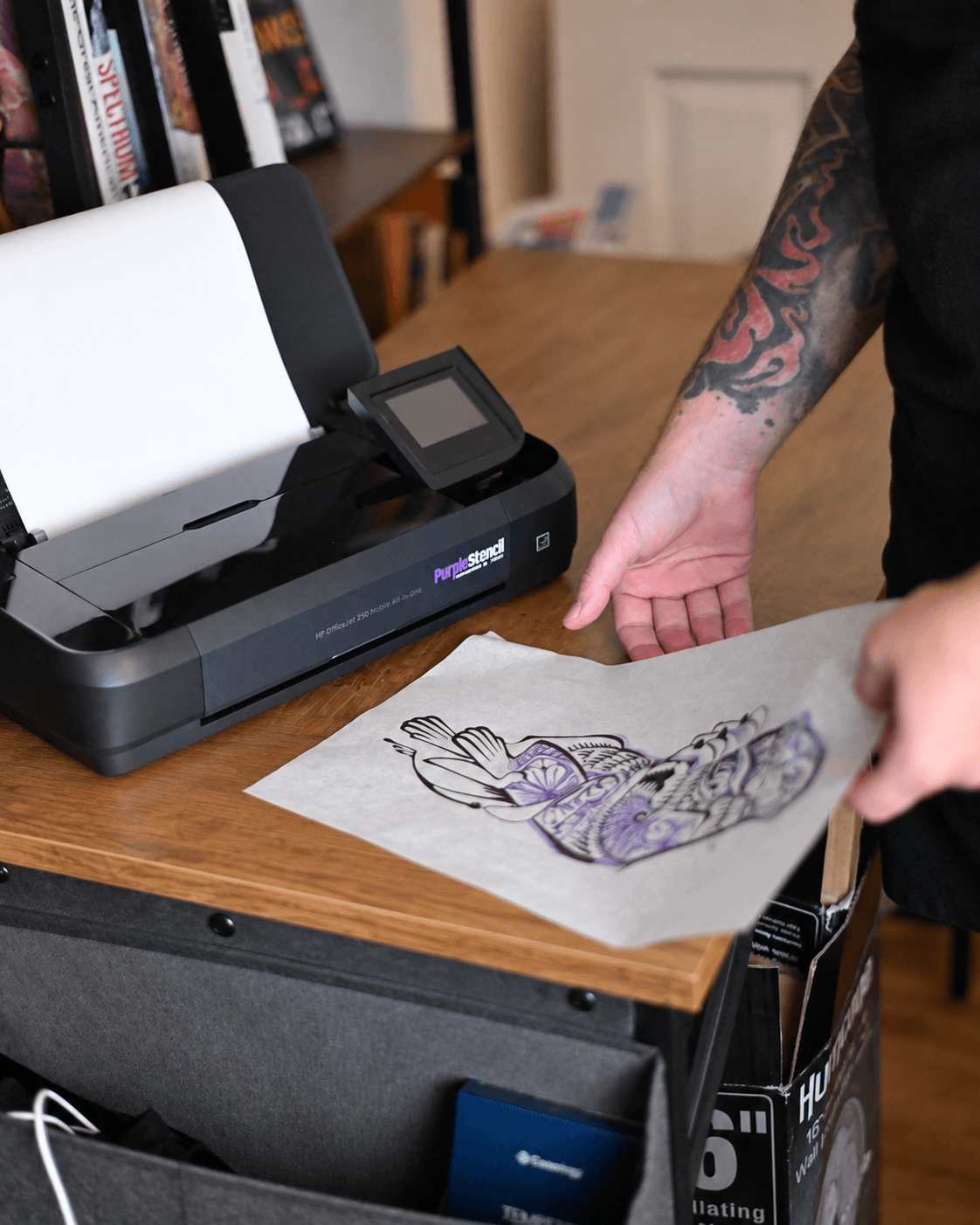
That reliability becomes even more important outside the controlled environment of a home studio. Guest spots and conventions can mean unfamiliar workstations, limited space and a steady rotation of clients, leaving little room for equipment problems. Purple Stencil has tested its systems in that environment, running dedicated stencil stations for hundreds of artists during major three-day conventions.
“We don’t look at Purple Stencil as just a printer,” they reflect. “We’re building a complete stencil system around the way tattoo artists actually work, whether they’re in their studio, traveling for a guest spot or working a convention.”
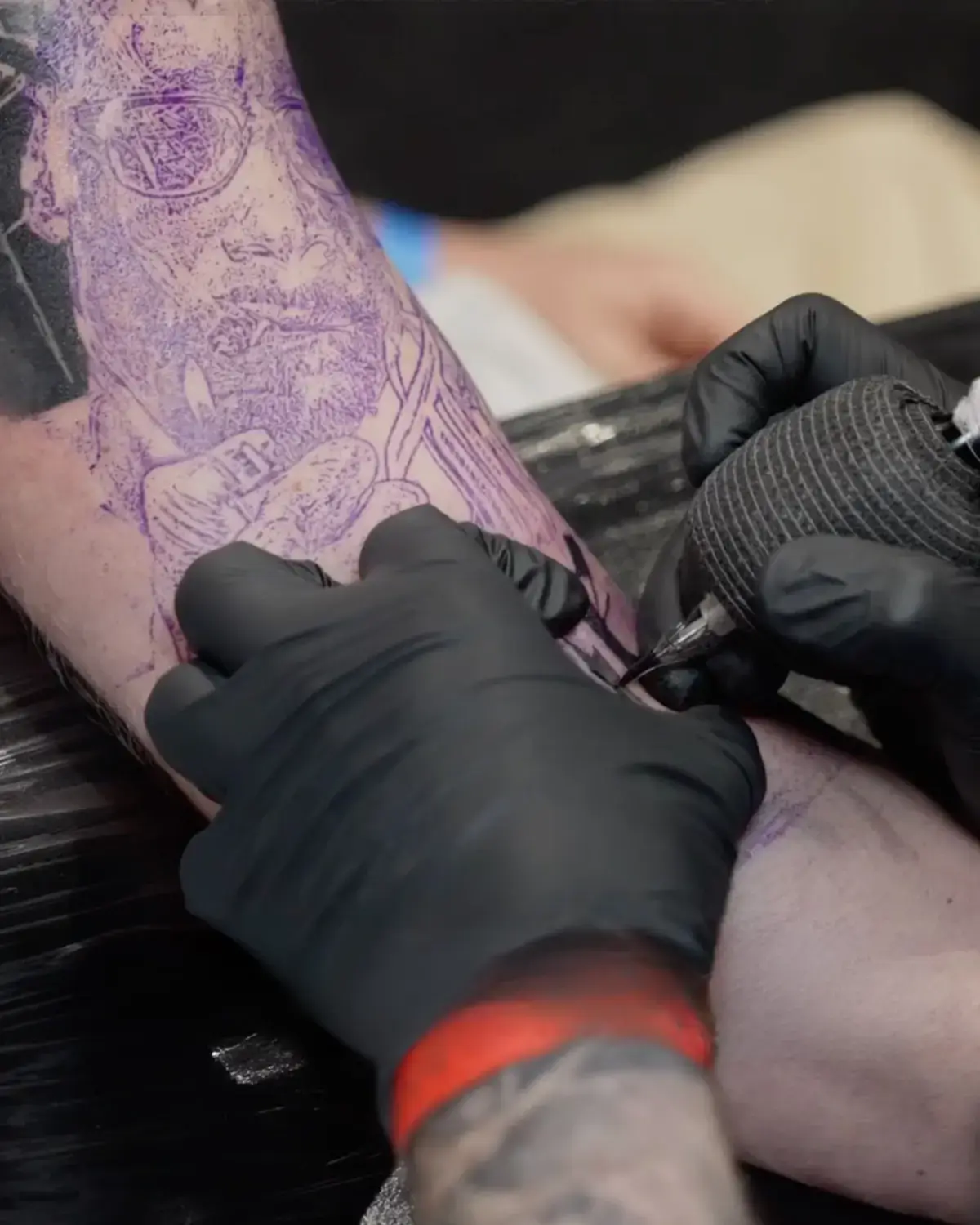
Ultimately, the future of tattoo technology is about stripping away those technical barriers between an artist’s idea on the screen and the needle on the skin. The stencil may only be one step in that process, but when every line matters, it’s a step worth getting right.
For more information on Purple Stencil, visit PurpleStencil.com.
Editor's Picks

Marina Volk’s Painterly Color Realism Is Made for the Body
Drawing on classical painting, she uses light, controlled color and composition to turn each client’s idea into a tattoo that belongs to its wearer.
Automation Should Take the Paperwork and Leave the Craft Alone
Apprentice was built inside a Philadelphia tattoo shop to handle the admin that eats artists’ time. The art stays with the artist.

What Happens When the Tattoo Industry Won’t Let You In?
The artist who couldn’t find a way in is now opening doors for the women coming next.
More From Culture
It’s Shnow Season!
October 13, 2026
When the Relationship Ends but the Tattoo Stays
October 7, 2026
Marina Volk’s Painterly Color Realism Is Made for the Body
October 7, 2026
Automation Should Take the Paperwork and Leave the Craft Alone
October 5, 2026