
Lauren Ertl
October 7th, 2026
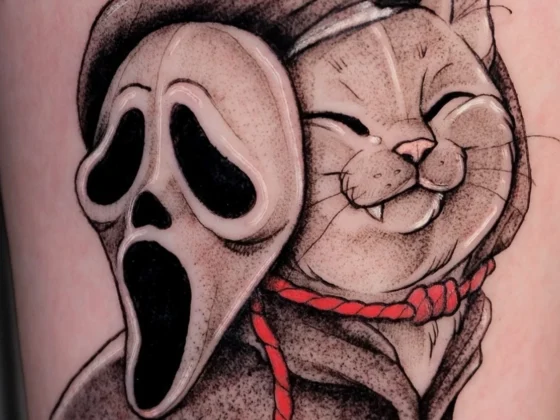
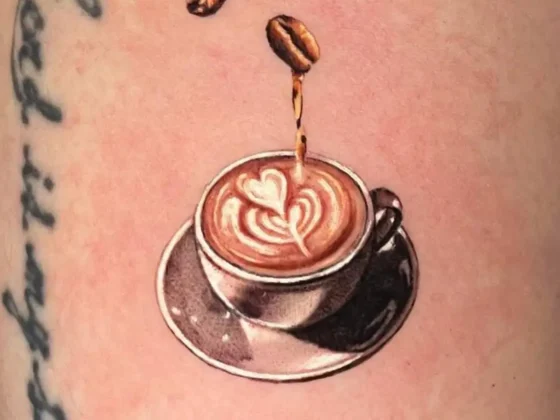
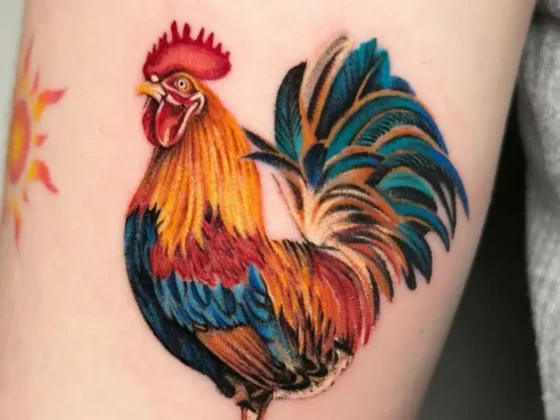
Marina Volk’s Painterly Color Realism Is Made for the Body
Drawing on classical painting, she uses light, controlled color and composition to turn each client’s idea into a tattoo that belongs to its wearer.
Marina Volk is an artist through and through, but she did not set out to become a tattoo artist specifically. That is, until a period between jobs led her to experiment with an entirely different kind of canvas, and her world opened up to a medium whose canvas is ever-changing.
A painting can survive its creator, pass through generations and eventually hang in a museum centuries after the final brushstroke. Marina Volk’s work lives exactly as long as the person carrying it. Her painterly color realism exists on bodies that move, breathe, age and change with the seasons of life.
“A canvas normally has the decency to stay still and keep the same shape,” she said. “A body does not.”
Rather than treating that impermanence as a limitation, Volk built a philosophy around it. To her, a tattoo is not an image to be copied onto a body, nor should it be a piece of art that simply sits on the body. Volk is driven by the notion that a tattoo belongs to its wearer more than anything they’ll ever own.
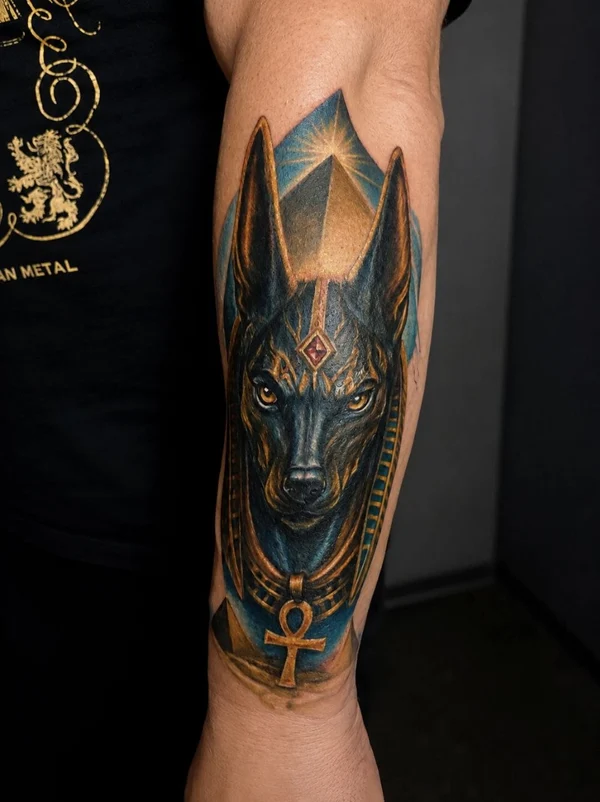

From a young age, Marina Volk enjoyed painting. She grew up in the Ural region of Russia, near Siberia. There, tattoos were largely associated with prison culture and were not welcomed in polite society. So it seemed a bit of an unconventional choice to her family when, in between jobs, she chose to purchase a tattoo machine and begin practicing.
She started with oranges, an inexpensive, accessible, and, as she puts it, “very tolerant client.” What began as an experiment to pass the time became a serious investigation into the intersection of painting, anatomy and a living surface.
Volk applied methods gleaned from the admiration of Italian classical artists’ work. Caravaggio’s understanding of light, Raphael’s theatricality, Bernini’s ability to communicate movement in a static form all shaped the development of her tattooing style.
Early in her career, Volk admits she was drawn to detail for its own sake. Now, she is more concerned with composition, focal points, controlled color and knowing when to allow an image to breathe or disappear into the skin.
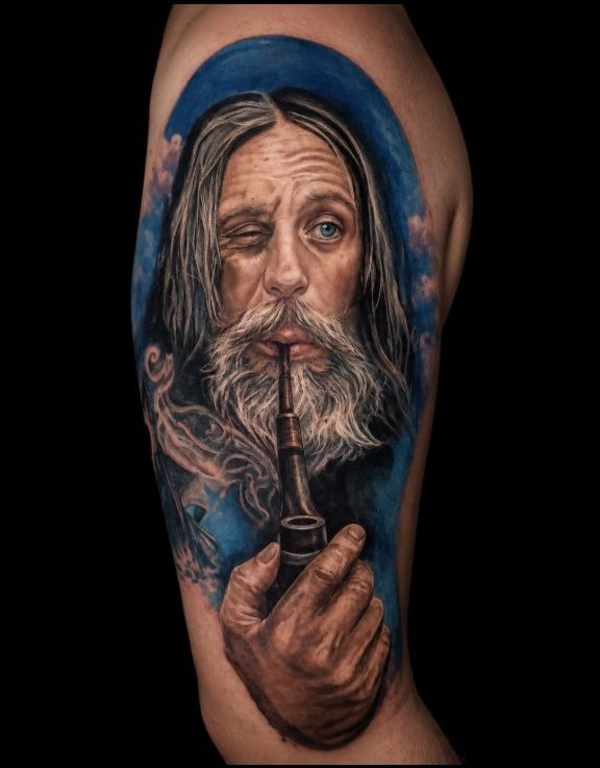
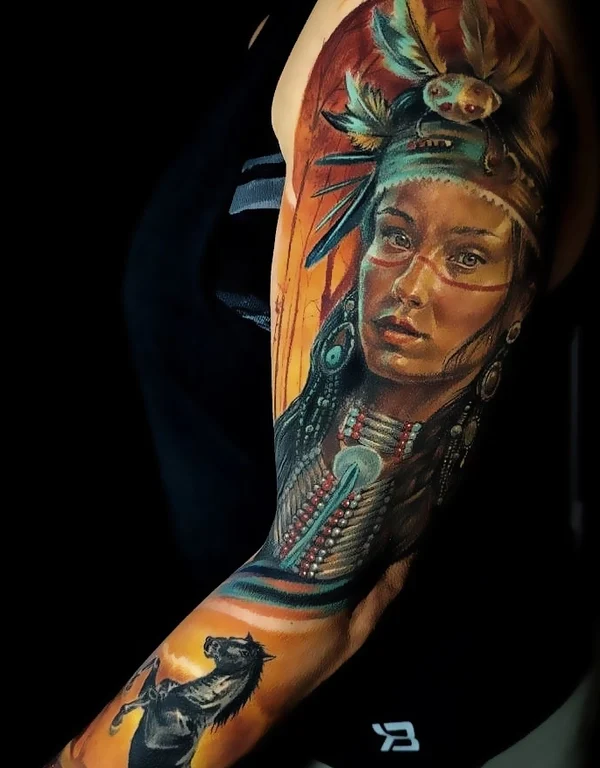
“Apparently, I spent years learning how to add things, and now I’m learning when to leave them out,” she said.
Clients reap the benefits of this philosophy in clear ways. They bring an idea, subject or personal meaning into the studio, and can trust Volk to be intentional about what’s included and why. Her method is to search mythology, symbolism and art history for a richer interpretation of the same meaning.
“Give me the destination,” she says. “I may choose a slightly unexpected road to get there.”
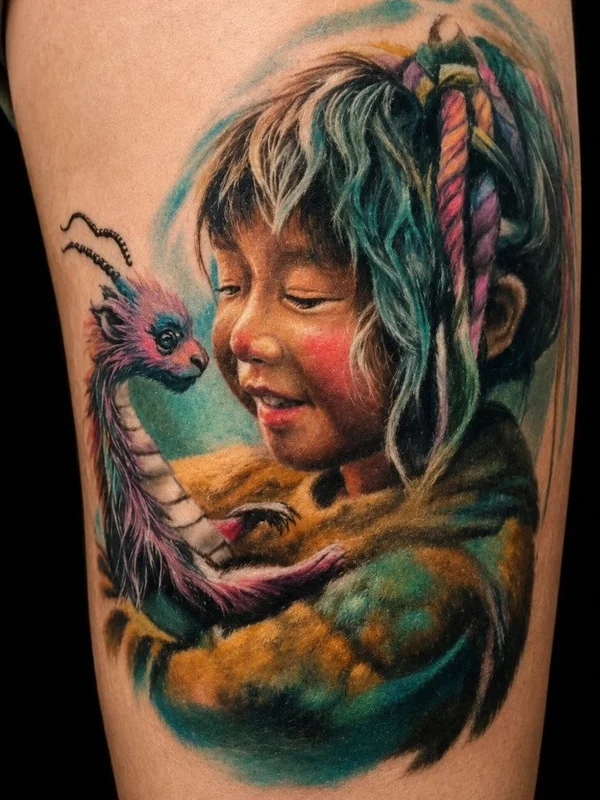
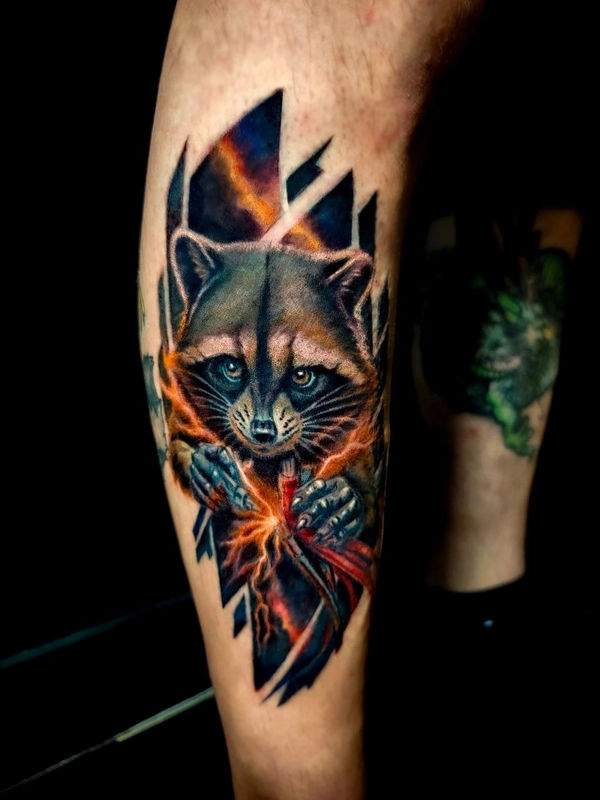
While Volk may take the road less traveled, she makes it a point not to abandon a client’s story in the process. Instead, she refuses to illustrate the idea literally or simply follow a trend, with the intention of helping them honor the deeper meaning behind a piece.
Nothing captures this philosophy quite like a portrait tattoo Volk tattooed on her thigh. The piece is a depiction of herself as Johnny Depp in “Dead Man.” As terrifying as the process was, the challenge of portraiture fascinated her. It was under the mentorship of Joshua Carlton that she refined this fascination into mastery. His influence extended beyond technique, and Marina still finds herself returning to what he taught her, even years later.
“There are many artists who still have Joshua quietly standing behind their shoulder while they work,” she said.
What Carlton and other mentors and influences gave her was a philosophy that would outlive any single tattoo. Yet none of her work will outlast its wearer. Marina has made peace with that reality, though not completely. Her pieces exist only as long as the bodies that carry them, moving through the world as living evidence of something that mattered.
Editor's Picks
Automation Should Take the Paperwork and Leave the Craft Alone
Apprentice was built inside a Philadelphia tattoo shop to handle the admin that eats artists’ time. The art stays with the artist.

What Happens When the Tattoo Industry Won’t Let You In?
The artist who couldn’t find a way in is now opening doors for the women coming next.
5 Tattoo Shop Mistakes That Quietly Cost You Money
From deposits to chargebacks, these overlooked gaps may be hurting your bottom line.
More From Culture
When the Relationship Ends but the Tattoo Stays
October 7, 2026
Automation Should Take the Paperwork and Leave the Craft Alone
October 5, 2026
The Best Kind of Rebellion Is the Kind You Can Taste
October 1, 2026
Inking the Impossible
September 28, 2026