Nia Groce
September 28th, 2026
Inking the Impossible
Marble artist Fabio Viale tattoos sculptures to fuse artistic worlds.
Fabio Viale didn’t stumble into art so much as get redirected toward it. In his younger years, growing up in a small Italian town, he enrolled in art school for a reason that wasn’t exactly artistically linked: there was no foreign language requirement. “Living in a small town, I knew nothing about contemporary art,” he states. “My only connection was MTV videos on television.”
The world of chisels and galleries was not, by any obvious measure, his “calling.” Until the call came straight to his classroom. At 16, an art teacher noticed something in the way Viale worked clay — a natural ease with material that for most takes years to develop. One afternoon, the teacher placed him before a small block of dark stone and issued a simple directive. “‘Fabio, now work on this small block of marble,’” he recalls.
Viale did as he was instructed, picked up a hammer and chisel, and began to transcend from student to artist. “I suddenly saw a white, brilliant shard getting out from the marble,” he says. “Let’s say that in that moment I decided to be a sculptor.”
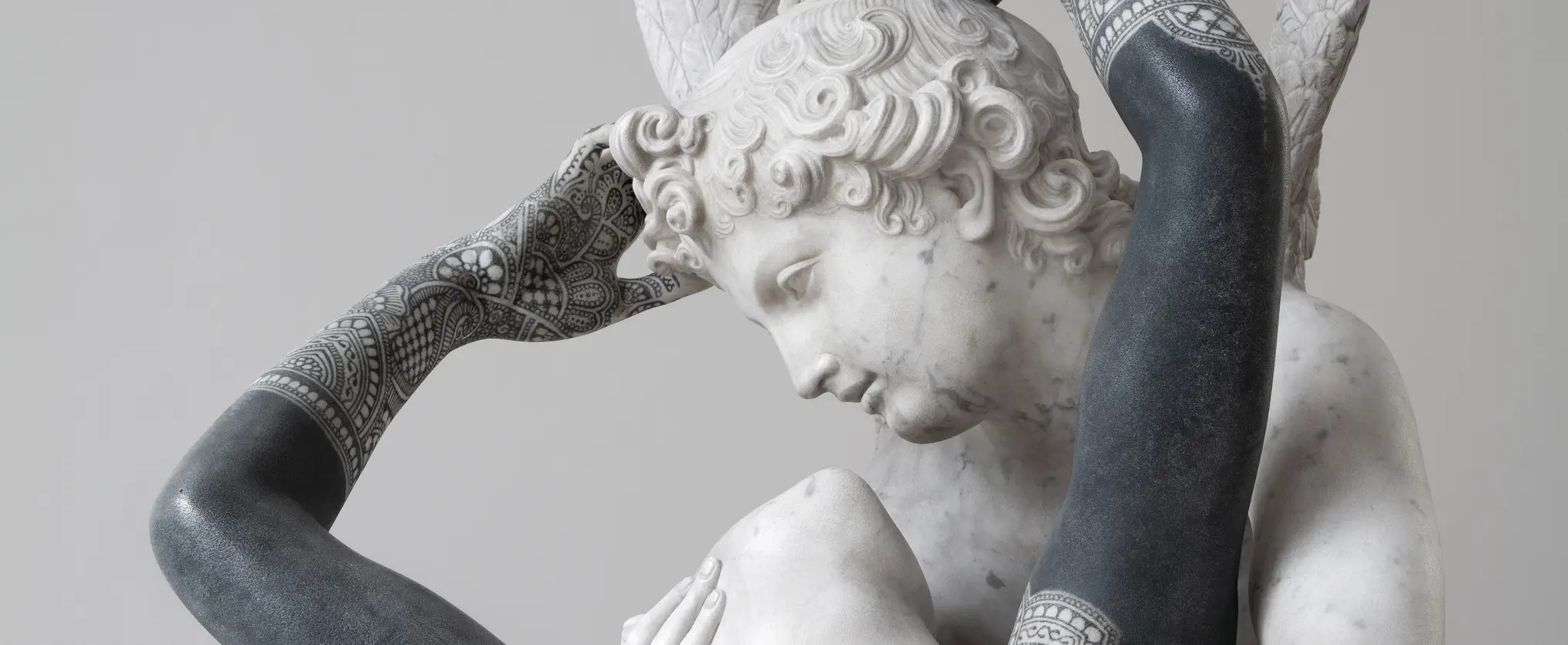
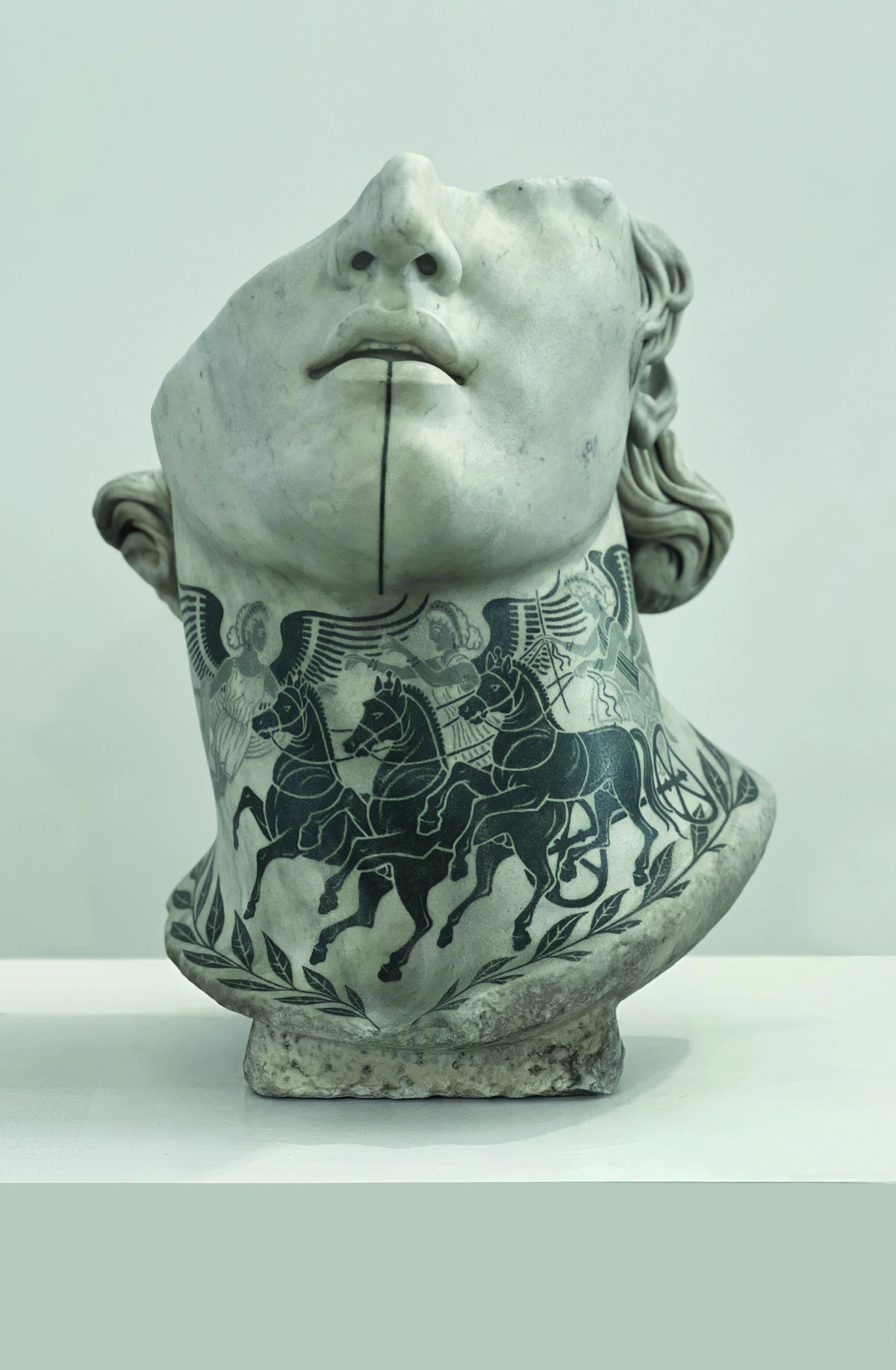
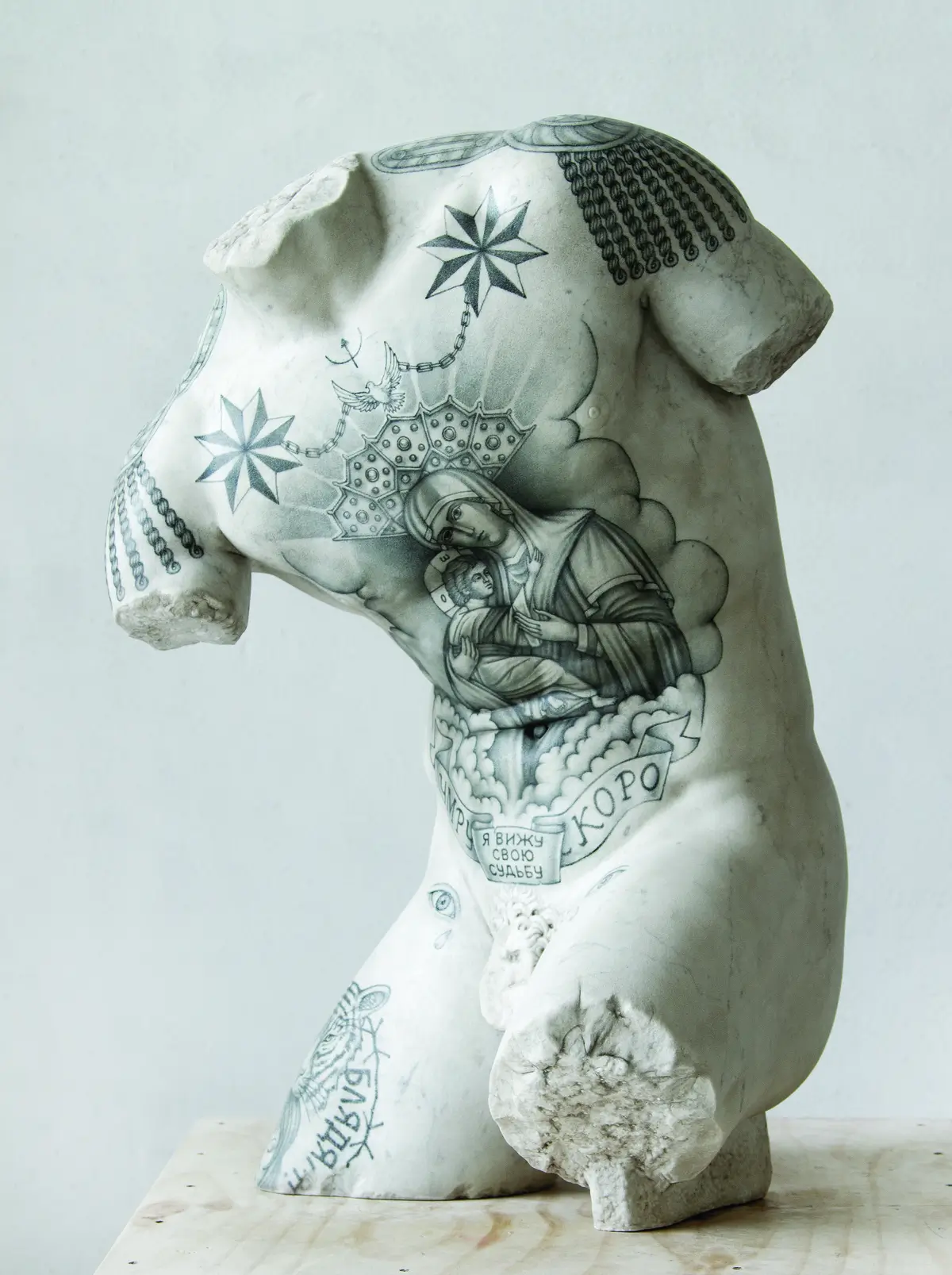
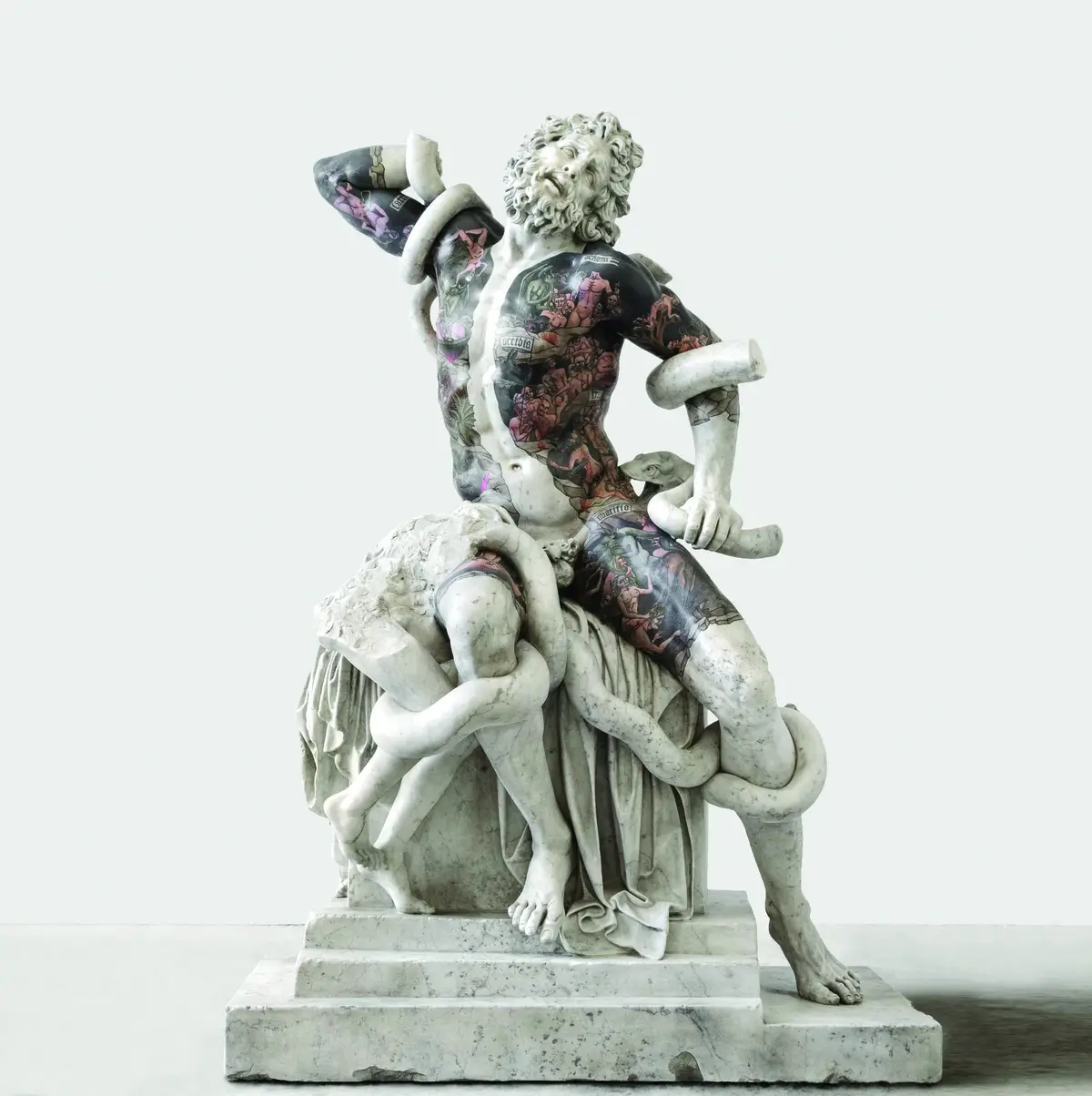
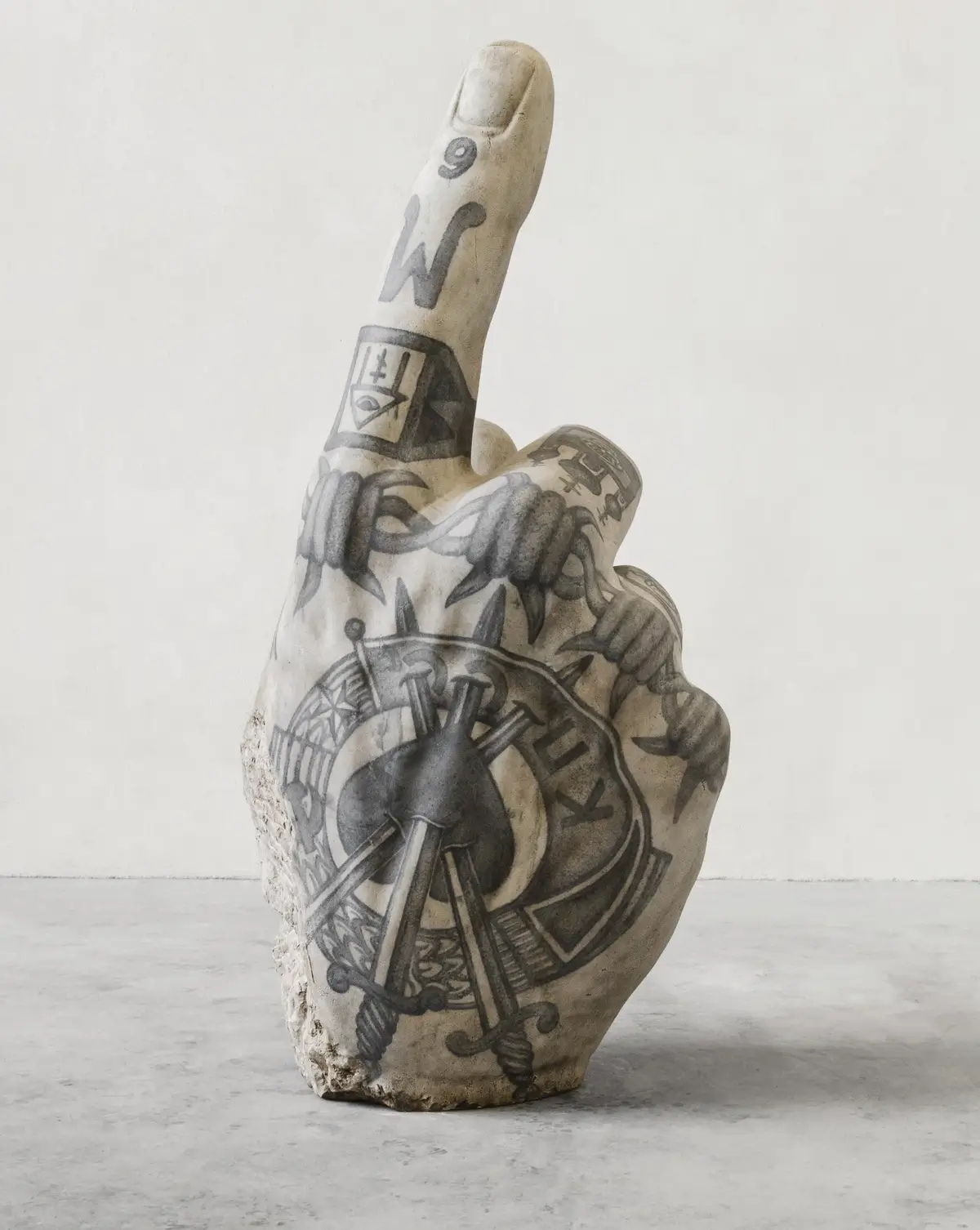
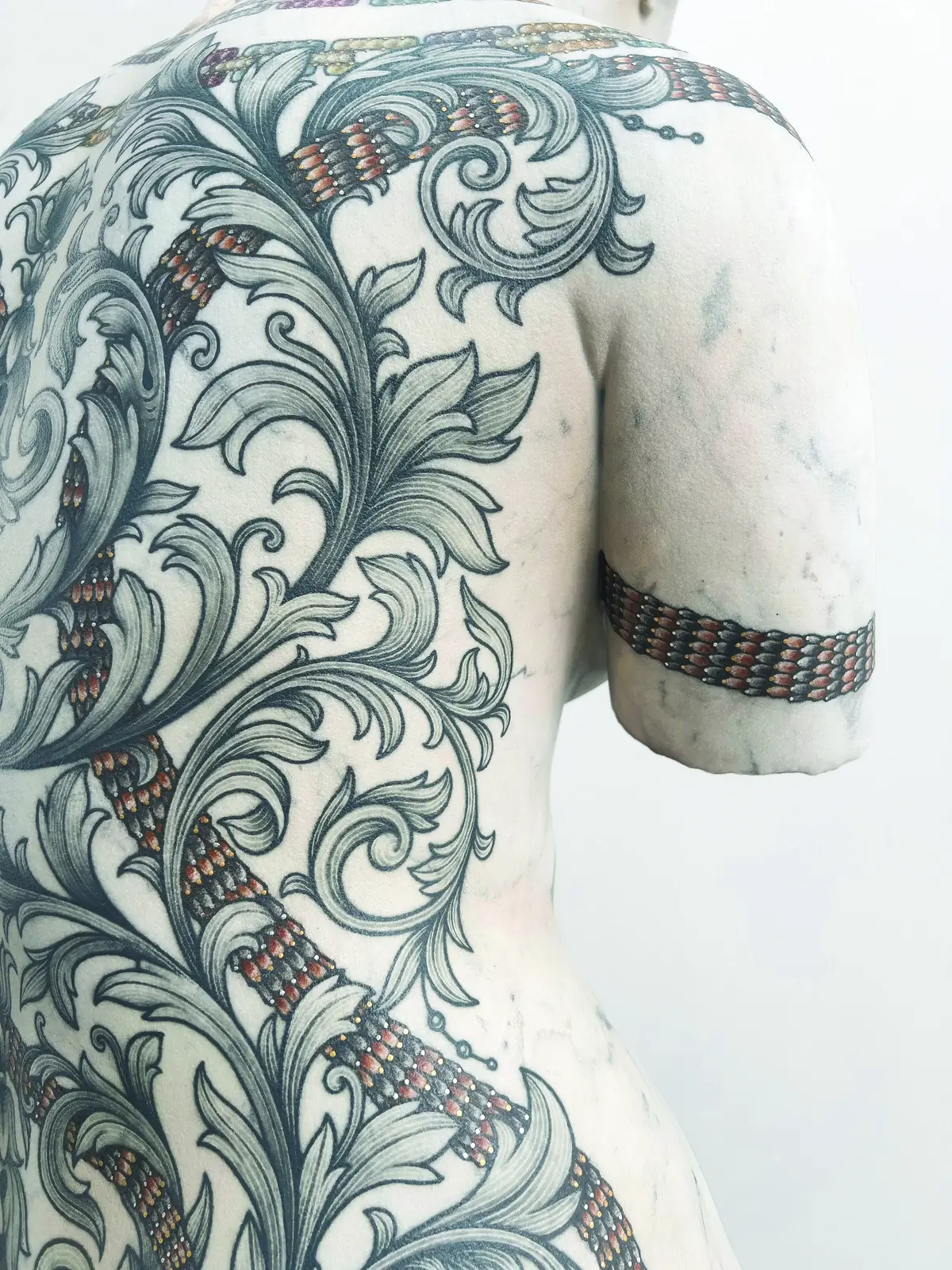
That flash of white, the marble revealing itself from within, has guided his practice ever since. Today, Viale is known not only for his sculptural mastery but for an innovation that has made his work unmistakable in the contemporary art world: adding tattoos to his pieces. Classical forms — columns, torsos, busts — are adorned with elaborate, realistic tattoo designs drawn largely from the visual vocabulary of Russian criminal tattoos, a tradition steeped in coded meaning and fierce iconography. The result is inimitable and, once seen, impossible to forget: stone manipulated like skin.
Pigment Meets Marble
Marble is not a forgiving medium. Viale describes it plainly as “a heavy and hostile material” that demands patience, consistency, and deep intention. The sheer labor of coaxing form from stone, the months of cutting, grinding, and finishing, requires a sustained commitment that can outlast inspiration on its own. “Without motivation,” he says, “it’s difficult to sustain this pace over time.”
Which makes what comes out of his practice all the more intentional. Once the sculptural form is complete, Viale introduces color. “Tattoos are perhaps the lightest and most carefree part of it all,” he says — a counterintuitive admission that speaks to how fully he has mastered both halves of his craft. But the lightness is relative; the technical challenges of tattooing stone are formidable in their own right. Viale collaborated with chemists to develop pigments capable of sinking into marble without looking applied.
“When ‘tattooing’ a sculpture, it’s very important not to give the impression that it’s been painted. For the tattoo to appear realistic, the color and the marble must be perceived as they appear on the skin,” Viale explains.
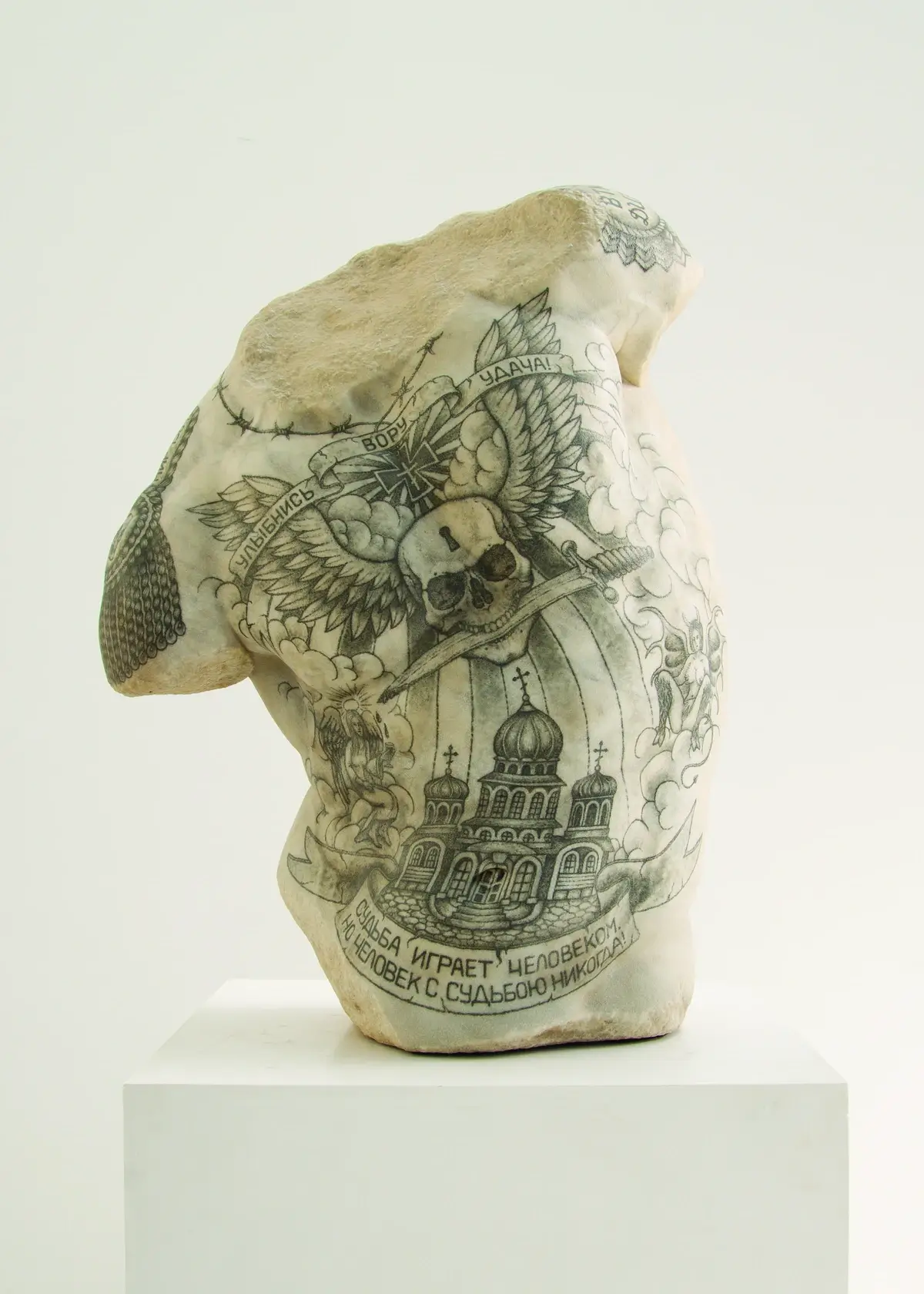
Durability is equally critical. Marble exposed to the elements deteriorates, and conventional pigments would shift or fade unevenly over time. Working alongside technical professionals helped Viale identify compounds that could weather those changes in harmony with the stone itself. The result is a surface that reads not as decorated marble, but as stone and image unified.
His chosen aesthetic deepens that unity. Viale is drawn specifically to Russian criminal tattoos, a genre where every symbol carries weight, where, as he puts it, a design “transcends simple aesthetic questions.” He has little patience for purely decorative work. The tattoos on his sculptures are not ornamental; they are argumental.
“I’m fascinated by these dualities, these opposites that manage to find a meeting point and convey harmony,” Viale explains.
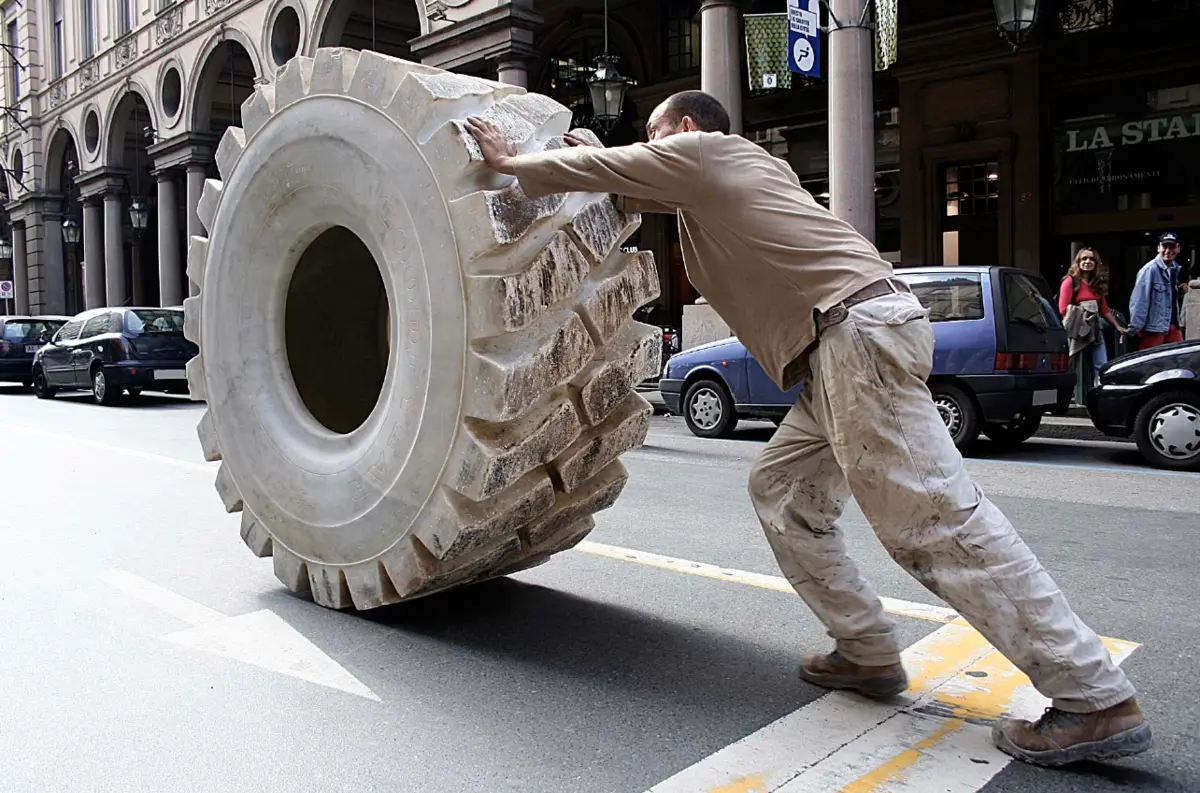
Among Viale’s most ambitious works is ROTAS, the largest piece he has ever made. The sculpture, a massive wheel uniting an ancient rosette on one face and a modern tire tread on the other, took more than a year to complete, with months lost simply to sourcing a suitable block of marble large enough, and flawless enough, to hold his vision. The process, he says, was shaped by duality from the start.
“For years I’d wanted to create a wheel that would bring together the ancient and the contemporary,” Viale says of the inspiration behind the monumental piece. “They are both distant images, yet in this work they merge as if they had always existed.”
That fascination with opposition — ancient and modern, heavy and light, hostile and carefree — runs through Viale’s work like a seam in the stone. Even his approach to subject matter carries a kind of parallel philosophy: “I simply like to give importance to something that doesn’t have it,” he says.
Man Versus Marble
Viale’s career has not lacked for spotlight moments. A defining memory is the 2002 launch of Ahgalla, a marble boat set afloat in the port of Carrara, a city whose name is synonymous with the stone itself. The image of a marble vessel on water distills everything Viale does: a material defined by its weight and immovability, made to exist in a way one wouldn’t expect.
More recently, he has shifted toward commissioned work, letting client proposals shape his direction. Whether his subjects arrive by request or intuition, the work finds new audiences, primarily through Instagram, where his sculptures reach viewers worldwide. Viale notes that to truly experience the pieces, one must wait for the next exhibition and encounter them in person.
He speaks of the future with a candor that is revealing but not resigned. His eyesight is changing. His stamina is not what it was. “My desire for perfection is weakening,” Viale says. “I believe my future works will either compensate for all this or will inevitably take a very different path.”
It is the statement of a man who has spent decades listening closely to his material — and who, after all this time, still trusts what it has to say.
Editor's Picks
Breaking the (Skin) Barriers
Harrison Alcock ran out of room on skin, so he built an industry on leather instead.
The Ink That Heals: Inside Veteran Ink’s Mission to Help Heroes Through Art
For many veterans, tattoos are more than body art—they’re a way to process pain, honor service, and remember the stories that shaped them.

Reka Nyari – Body Language
Reka Nyari captures powerful portraits of tattooed individuals, blending storytelling, art, and raw human expression through her lens.
More From Culture
Steel to Sole
October 19, 2026
Breaking the (Skin) Barriers
October 19, 2026
Your Books Got Busy. Your Software Didn’t.
October 19, 2026
Halloween Essentials to Die For
October 14, 2026